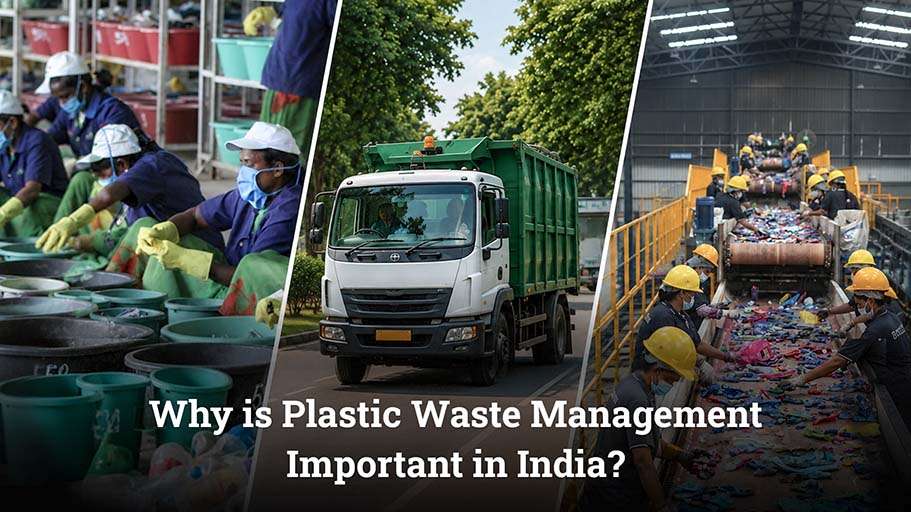
Plastic waste management has evolved from a secondary concern to national priority in India. The high volume of plastic generated daily presents massive challenges to our ecosystems, public health, and economic stability as our urban landscapes expand, and consumer behaviour goes closer to convenience. Effective plastic waste management demands much more than cleaning streets and surroundings; it is fundamentally rethinking the lifecycle of all the plastic products and reducing its impact on our waterways, soil, and food chain. India can reduce its impact of plastic pollution and build a more sustainable future by adopting better waste management and plastic recycling methods. The environmental challenges we ignore will only increase without efficient plastic waste management solutions.
Introduction
Around 3.4 million tonnes of plastic waste is generated in India annually and yet a large portion remains uncollected or treated improperly. To understand the importance of waste management, we must first recognize that plastic is often used for minutes but is designed to last forever. This disconnect in understanding leads us to a typical ‘buy-use-throw’ model which is not sustainable. By implementing effective plastic waste management solutions, we can turn a surging crisis into a catalyst for sustainable innovation and industrial growth across the subcontinent.
Introduction About Plastic Waste Management
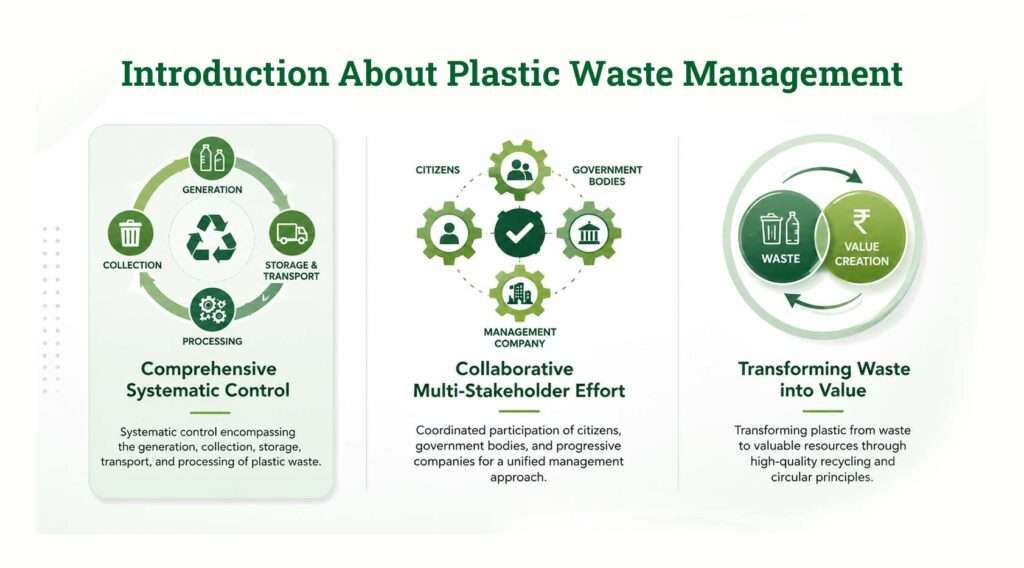
At its core, plastic waste management is the systematic control of the generation, collection, storage, transport, source separation, processing, and disposal of plastic materials. It is a multi-disciplinary effort that requires the participation of citizens, government bodies, and any forward-thinking plastic waste management company. The Vision is to transform plastic from waste to value creation by ensuring high-quality recycling and circular economy principles.
The Importance of Waste Management for a Sustainable Future
The importance of waste management extends far beyond compliance. As we look toward a greener future, the role of plastic management becomes a primary factor of environmental policy.
- Conservation of Resource: Recycling plastic reduces the usage of virgin plastic production which is made from fossil fuels.
- Reduce Energy Consumption: Manufacturing products from recycled plastic has lesser energy consumption compared to virgin production
- Climate Change Mitigation: Plastic recycling and systematic waste management reduces the carbon emissions associated with both production and landfill decomposition.
- Marine Life Protection: Effective management prevents the leakage of microplastics into our water bodies, protecting marine life
Why Plastic Waste Management is Important in India
The importance of plastic waste management increases because of our high population density and unique cultural diversity. Due to lack of proper waste management, plastics end up in drains leading to urban flooding and spreading of diseases. Moreover, there are millions of informal waste pickers who are the backbone of the system who deserve to be part of a formalised system building dignity and respect towards their efforts. There are many sectors in India that are affected by improper management of waste.
- Open burning of plastic releases toxic gases leading to respiratory illnesses which affect our public Health systems.
- Plastic waste stuck in the soil prevents rainwater from entering the ground, affecting groundwater availability and agricultural productivity.
- The imported oil dependency for virgin plastic production can be drastically reduced, improving the economic stability of the nation.
Key Benefits of Proper Waste Management
The benefits of proper waste management have a diverse impact on every facet of society. The benefits of effective waste management when prioritized helps to improve the following changes:
- Reduced Landfill Pressure: Maximizing recycling diverts tons of waste reaching the landfills.
- Job Creation: The recycling industry can provide thousands of new green jobs in various sectors such as collection, logistics, sorting, and processing.
- Enhanced Brand Reputation: In the current market, businesses that adopt solutions for plastic waste management and recycling gain trust from eco-conscious consumers.
- Economic Value: Recovering high-quality resins creates a secondary market for materials that were previously considered waste.
Extended Producer Responsibility (EPR) in Plastic Waste Management
Extended Producer Responsibility (EPR) updates have created a positive momentum, improving India’s shift toward a highly accountable and circular plastics ecosystem. Over the past year, India’s EPR regulations have evolved significantly, particularly with the introduction of mandatory use of Minimum Recycled Content in Plastic Packaging (UReP Targets) requirements from FY 2025–26 and the January 2026 tightening of compliance mechanisms.
The January 2026 amendments have introduced critical measures that improve the credibility of our entire industry:
- Ending Category Arbitrage: Cross-category certificate offsetting is now permanently prohibited. This ensures genuine recycling impact by requiring each plastic category to be responsibly processed, rather than merely balanced on paper. The change fosters a fairer, more transparent market and drives greater investment into hard‑to‑recycle plastic streams.
- Prioritizing Genuine Recycling: the use of end‑of‑life disposal certificates to meet recycling obligations is no longer valid. This shift eliminates paper-based compliance and ensures a focus on true material recovery rather than simple disposal.
- UReP Inclusion in Plastic Production: Starting from FY 2025-26, the mandate to incorporate Recycled content scaling from 30% to 60% by 2028-29, represents the most significant shift in policy. Unlike waste collection, this is an input obligation that requires brands/convertors/producers to physically integrate certified recycled resin into their products.
Innovative Solutions for Plastic Waste Management
Innovation and Technology stands as the bridge between a waste crisis and a circular economy. Modern technological solutions for plastic waste management include chemical recycling, waste-to-energy plants, and advanced mechanical recycling with washing technologies. By using data-driven tracking and AI-based sorting, a plastic waste management company can ensure that recycled plastic meets the same quality standards as virgin material.
Banyan Nation’s Recycling Initiatives for Sustainable Plastic Waste Management
Banyan Nation is considered as a vertically integrated company who is a pioneer in plastic waste management in India which redefined the recycling industry focusing on recycling polyolefins including high-density polyethylene (HDPE) and low-density polyethylene (LDPE). This stream of waste constitutes a major portion of post-consumer plastic waste. Banyan Nation began the journey by building a data intelligence platform to support informal waste workers, which helped in formalizing the supply chain. Accordingly, they introduced effective washing and decontaminating technology that helps to produce high-quality, human-contact-safe recycled plastic resins. This approach demonstrates the importance of recycling in waste management processes by closing the loop for major global brands, ensuring that plastic stays in the circular economy and out of the environment.
Conclusion
The importance of plastic waste management cannot be overstated. It is the defining environmental challenge of our era, but also one of our greatest opportunities. By embracing extended producer responsibility plastic waste management and supporting innovative plastic waste management solutions, India can lead the world in sustainable development. The journey toward a plastic-neutral future requires collective action from the policy level down to individual household segregation. Let us commit to a cleaner, greener India today.
FAQ's
How does plastic waste management support the circular economy?
It ensures that plastic is recovered and reused as a raw material for new products, rather than being discarded after a single use. This keeps resources in a continuous loop of value.
What are the major challenges in plastic waste management?
The primary challenges include lack of source segregation at household, the high cost of collecting low-value plastics (like multi-layered packaging), and the need for more advanced recycling infrastructure.
How does EPR help improve plastic waste management in India?
EPR holds brand owners accountable, providing the necessary funding and logistics to ensure that the plastic they put into the market is eventually recovered and recycled.
How does responsible plastic waste management benefit businesses economically?
Beyond compliance, recycled plastics help brands build localized supply chains, gain a sustainability-led competitive advantage, and strengthen long-term brand equity by meeting the expectations of environmentally conscious consumers.
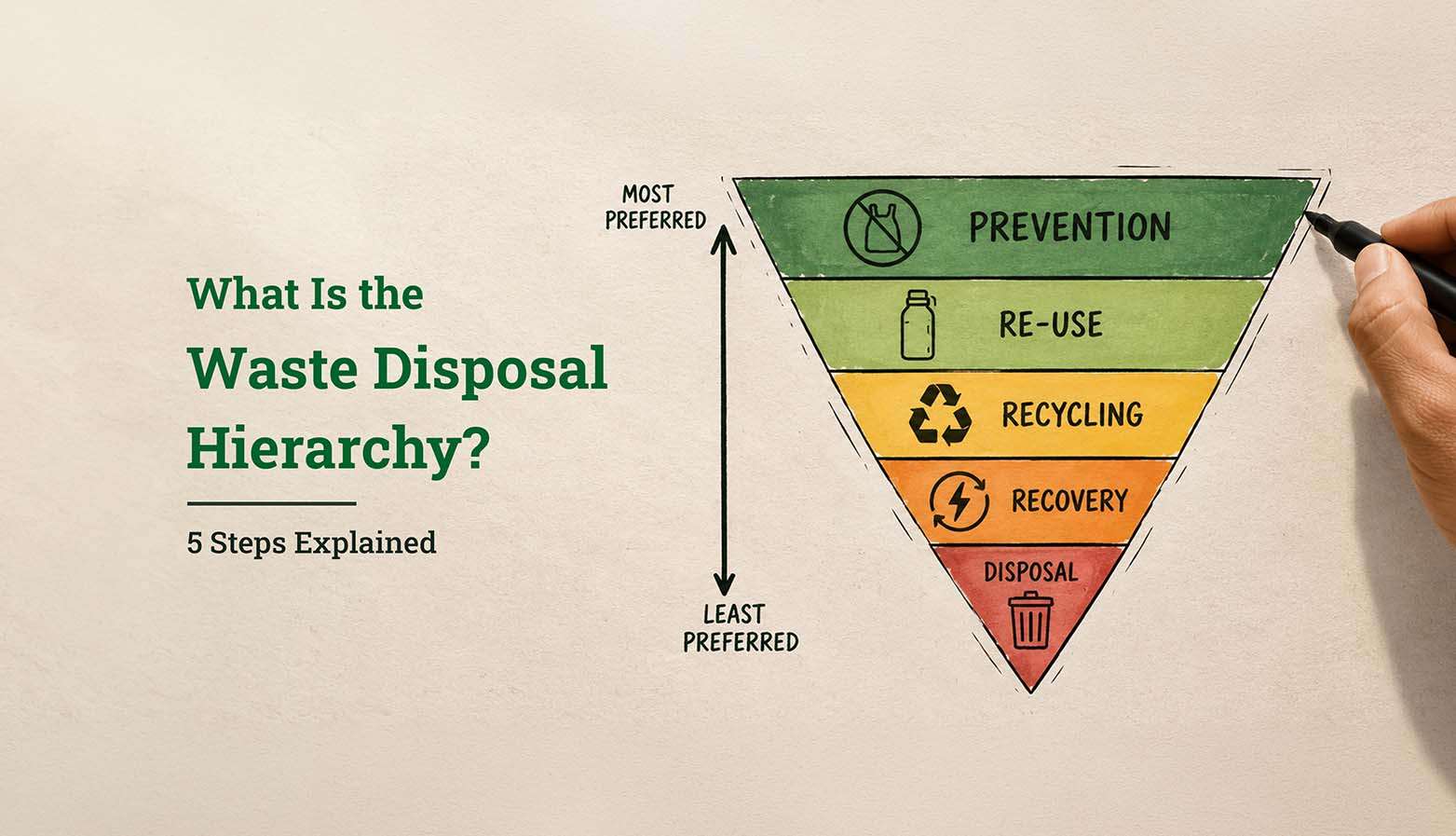
 What Is the Waste Disposal Hierarchy? 5 Steps Explained
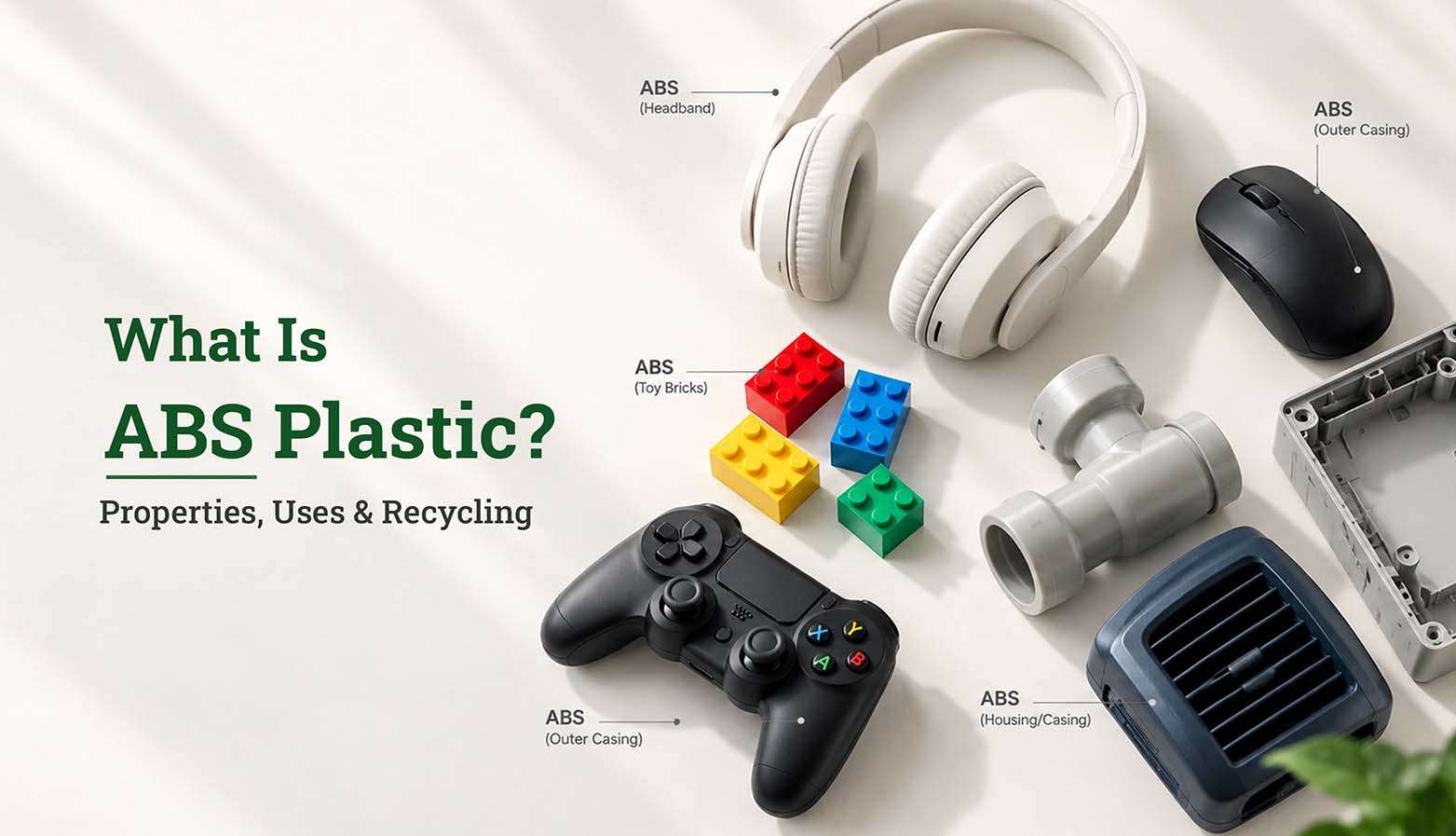
 What Is ABS Plastic? Properties, Uses & Recycling
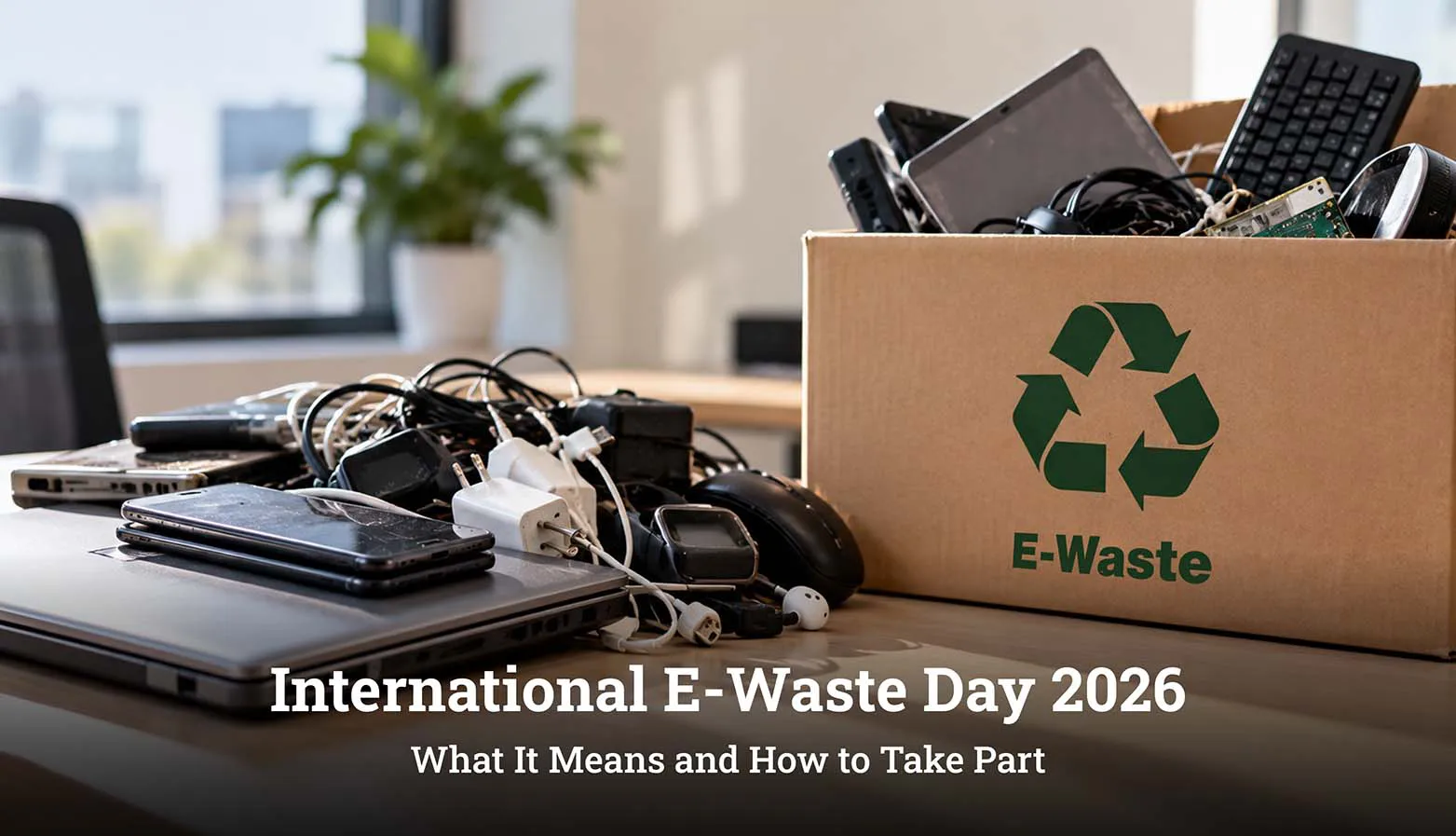
 International E-Waste Day 2026: What It Means and How to Take Part
 What is Waste Disposal: Methods, Types, and Real-World Examples
 What Is Polyolefin? Types, Properties, Uses and Recyclability