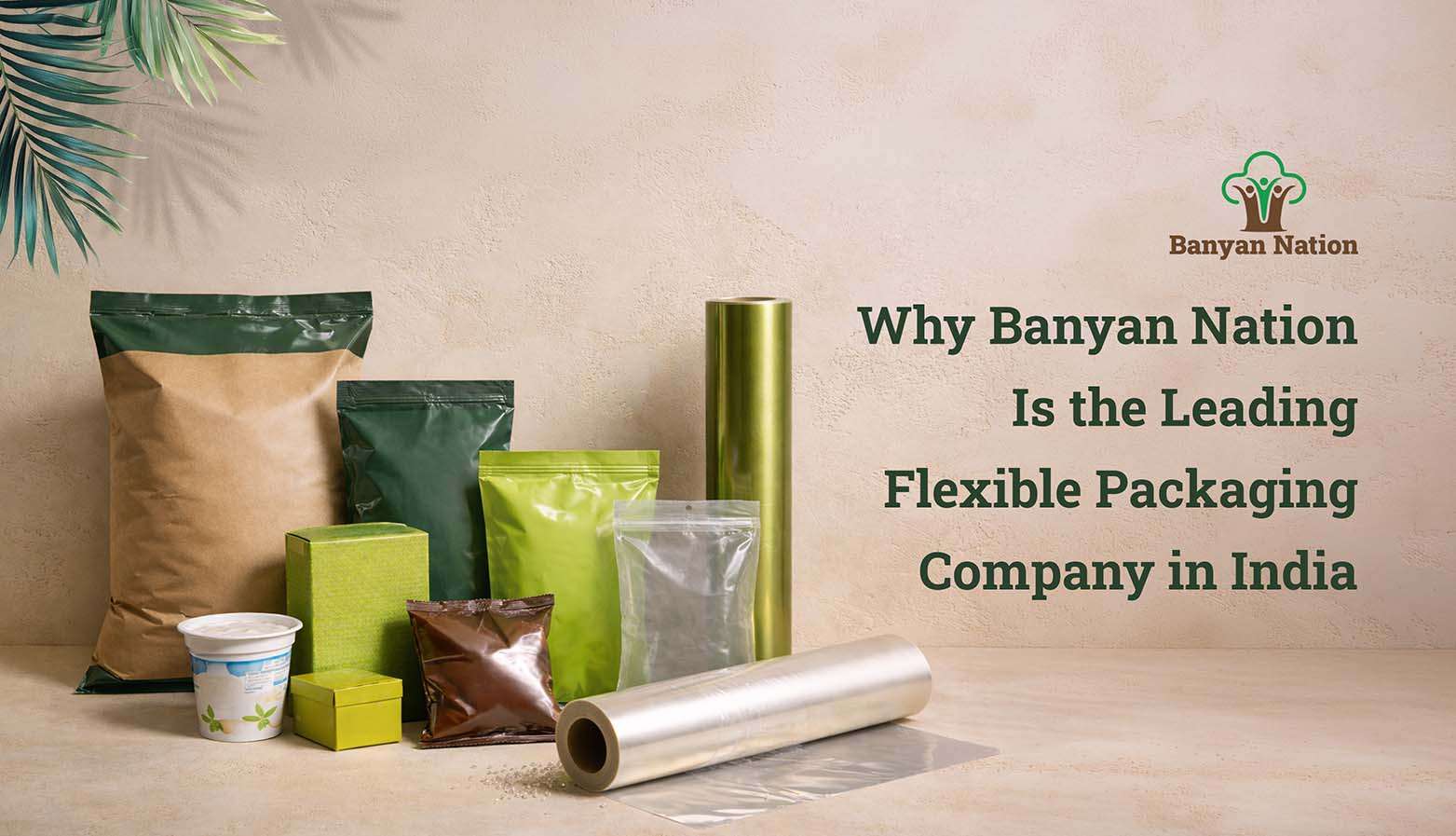
Innovative ideas and flexible packaging have put the companies of this industry on the leading edge of industrial change, as the Indian packaging environment is experiencing a seismic shift due to the increased presence of the middle class and insatiable need for convenience. Due to the growing tendency of consumers to turn to lightweight, portable and durable solutions, the task of flexible packaging companies has been transformed into a strategic alliance in the worldwide sustainability movement without being just a material supplier. Flexible packaging companies is the major consumer packaging in a nation of more than 70 percent and the environmental predicament is a challenge, specifically on multi-layered plastics which have long circumvented recycling channels. The major flexible packaging companies now have a twofold mission, they must provide the high-barrier barrier needed to preserve food and pharmaceutical products, and they must re-engineer these products to be used in a circular economy. Banyan Nation has become an innovator in this area and has incorporated high-quality post-consumer recycled (PCR) resins into the flexible formats which previously were not thought to be recyclable. With the help of the modern cleaning and sorting technologies, we are certain that the flexibles of tomorrow will not be found in the landfills but will stay in the value chain as value-added raw materials. When deciding on the various flexible packaging companies in India, the issue of cost is no longer the sole criterion when selecting a partner; the challenge has now changed to the capability of the flexible packaging company to work around the Extended Producer Responsibility (EPR) requirements and consumer demands of packaging that is green. With the future that is plastic neutrality, Banyan Nation is the standard of how technology can make the flexible packaging industry an environmental good.
Introduction
With the boom in retail and e-commerce in India, the hunt to get an ideal partner as a flexible packaging company has been the driving force behind leading FMCG companies. A contemporary flexible packaging company needs not only to sell bags and pouches but also to offer an entire solution to the reduction of materials and their recycling.
The current industry giants are paying attention to:
- Lightweighting: The consumption of materials to decrease the cost of shipping and carbon footprint.
- EPR Compliance: Assisting brands with the Indian government of strict plastic waste requirements.
- Shelf-Life Extension: High barrier films that inhibit the waste of food without complicating the process can be used.
Market Opportunity for Flexible Packaging in India
The Indian flexible packaging market will surpass the 20 billion mark in 2026 due to the impact of urbanization and introduction of organized retail in the country. This huge flexible packaging business prospect is within the focus of the world, but the local experience is essential to address the peculiarities of the Indian subcontinent logistics.
Increase in this industry is fuelled by:
- Urban Migration: The city life is hectic and requires ready-to-serve packs.
- E-commerce Surge: Durability and evidence of tampering. Requirement of mailers and pouches.
- Tier 2 & 3 Expansion: In order to penetrate more into the rural markets with branded goods, the packaging must be done at a cost effective manner.
The Rise of Flexible Packaging in India
The trend that is exhibited among the top flexible packaging companies in India is in the substitution of rigid containers with flexible pouches. The trend is on the rise due to the fact that flexible packaging companies in India have been able to provide solutions which require only up to 70 percent of plastic as compared to conventional bottles or cans, which provides an immediate logistics and sustainability victory.
Moreover, flexible packaging companies in India are moving towards more and more use of digital printing which enables shorter production runs and customized experience to consumers.
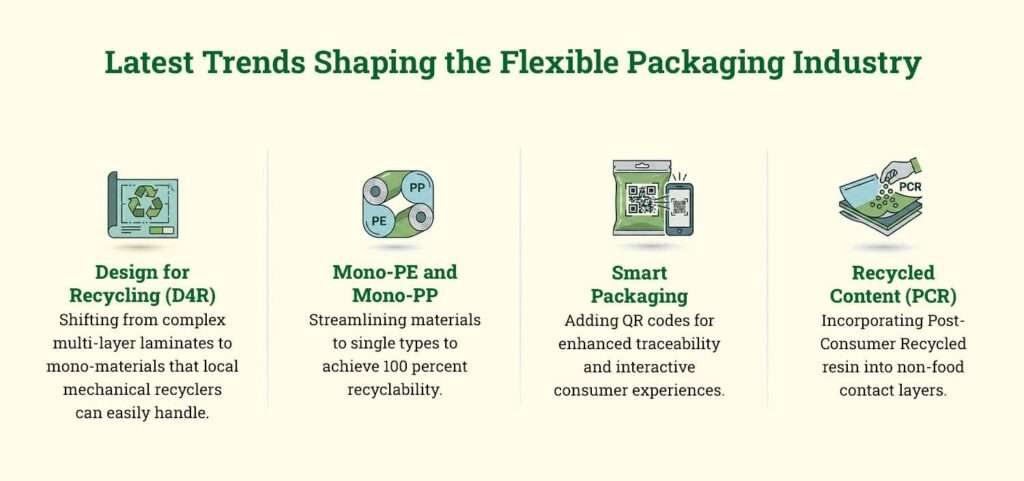
Latest Trends Shaping the Flexible Packaging Industry
The top flexible packaging companies in india have gone to an extent of investing heavily in “Design for Recycling” (D4R) so as to remain competitive. Such top flexible packaging companies in India are abandoning the elaborate multi-layer laminates in favor of mono-material ones that the local mechanical recyclers can far more readily handle.
The evolving trends in flexible packaging in 2026 are:
- Mono-PE and Mono-PP: Streamlining of materials with a view of 100 percent recycling.
- Smart Packaging: Adding QR codes to traceability and consumer interaction.
- Recycled Content: The addition of PCR (Post-Consumer Recycled) resin to non-food contact layers.
Future of Flexible Packaging
The future of flexible packaging is the ideal mix between the performance and friendliness towards the planet. We are shifting towards the era where the notion of waste is an outdated one, and every pouch is now regarded as a resource.
The future of flexible packaging will be characterized by:
- Closed-Loop Systems: Brands that re-use their own packaging to be reprocessed.
- High-tech Protection: Coming up with recyclable coatings that offer the same level of protection as aluminum foil.
- Biodegradable Alternatives: PHA and starch-based niche films such as organic produce.
How Banyan Nation Delivers Sustainable Flexible Packaging Solutions
Banyan Nation is reinterpreting its concept of being a sustainable flexible packaging leader. As most people talk of the flexible packaging industry trends, we are in the process of constructing the infrastructure that supports such trends. Our sustainable flexible packaging solutions involve the use of our proprietary Better Plastic resin which is washed to achieve almost-virgin quality.
Through the collaboration with us, brands will be able to:
- Recycling PCR Content: Add PE and PP with ease into their pliable lines.
- Achieve Circularity: Have their packaging that reflects a flexible packaging business model that appreciates material recovery.
- Boost Brand Reputation: Support the so-called green needs of contemporary Indian consumers who are more aware of the trends in the industry of flexible packaging.
Conclusion
Banyan Nation is not a catch-phrase in a market of firms dealing in flexible packaging but we are the initiator of a more productive and clean India. Through becoming a part of the future of flexible packaging and tackling the trends that currently exist concerning flexible packaging, we are able to assist the brands in closing the divide between industrial development and environmental responsibility. The decision one makes today with regards to which flexible packaging company to use will be what will make a brand stand tomorrow. We should create a rounder future.
FAQ's
Is flexible packaging sustainable?
Yes, when compared to rigid packaging, flexible options often have a lower carbon footprint due to their light weight and lower resource use during manufacturing. However, their sustainability is maximized only when they are designed as sustainable flexible packaging (mono-materials) that can be recycled.
Which materials are commonly used in flexible packaging?
The most common materials include Polyethylene (PE), Polypropylene (PP), Polyester (PET), and sometimes Aluminum foil. The industry is currently shifting toward mono-material PE or PP to improve recyclability.
Is flexible packaging recyclable in India?
Traditionally, multi-layered plastics (MLP) were difficult to recycle. However, with new trends in flexible packaging focusing on mono-materials and advanced recycling technologies from companies like Banyan Nation, flexible packaging is becoming highly recyclable.
How does flexible packaging align with circular economy principles?
It aligns by reducing initial resource consumption (Reduce) and, when designed correctly, allowing the materials to be recovered and reused in new packaging (Recycle), thus “closing the loop.”
Making recycled packaging the norm.
CITATIONS:
- Technavio. (2025). India Flexible Packaging Market Analysis – Size and Forecast 2025-2029.
Retrieved from:https://www.technavio.com/ - India Plastics Pact (CII). (2025). Design for Recyclability Guidelines for Flexible Packaging.
Retrieved from:https://www.indiaplasticspact.org/ - Smithers. (2026). The Future of Global Flexible Packaging to 2030.
 Zero Emissions Day 2026: What It Is, Why 21 September and How to Take Part
 World Cleanup Day 2026: Date, Theme and How You Can Take Part
 What is Polypropylene Plastic?
 What Is a Carbon Footprint? Meaning, Calculation & How to Reduce It
 Life Cycle Assessment (LCA): Steps, Phases, Standards & a Real Example