Asking what is abs plastic? ABS plastic is an impact-resistant, strong and rigid engineering thermoplastic which is polymerized from three monomers, acrylonitrile, butadiene and styrene. This adaptable polymer has a high mechanical strength, good structural stability, it is easy to process and has a good surface finish, between commodity plastics and high performance industrial engineering materials.
It’s the everyday abs plastic that is utilized in thousands of consumer products and industrial parts that are used every day. Whether you’re packing up your luggage, protecting electronic devices or applying your trim to your car, ABS offers an unparalleled combination of durability and value. It can be easily injection molded, extruded or thermoformed, largely because of its melting point that turns into a viscous liquid without significant thermal degradation. Product designers, engineers and manufacturers must understand the chemistry of abs acrylonitrile butadiene styrene plastic, its properties, processability and end-of-life recycling possibilities, as these will help them design more durable products in a way that will affect the sustainable selection of materials for modern supply chains. Now let’s look into abs plastic definition, what does abs plastic stand for, abs resins, abs materials more through this blog.
What Does ABS Plastic Stand For?
What is abs plastic? What does abs plastic stand for? This term, abs plastic definition refers to acrylonitrile butadiene styrene, which is a polymer that is commonly used in the manufacture of plastic. It is a terpolymer (three component polymer) which is a polymer made of chemically joined differing chemical monomers to form a common polymer structure.
- Acrylonitrile: Gives the polymer backbone chemical resistance and thermal stability and provides surface hardness.
- Butadiene: Good impact strength, toughness and ductility even at low temperatures.
- Styrene: Imparts rigidity, a glossy surface finish, structural dimensional stability, and ease of melt processing.
The three monomers can be synthesized in the desired ratio to obtain the required mechanical properties of the abs acrylonitrile butadiene styrene plastic for the specific engineering applications.
ABS Plastic Meaning and Definition
What is abs plastic?The abs plastic definition is made very clear: Abs plastic is an amorphous thermoplastic terpolymer made from petroleum feedstocks which becomes fluid when heated and rigid when cooled so that it may be molded.
The abs plastic meaning depends on the amorphous structure of the molecules, as opposed to a crystalline polymer which has a distinct and sharp melting point. Unlike randomly oriented polymer chains, there is no repeating crystal lattice so the material melts slowly over a wide range of temperatures. Abs plastic resin is produced through emulsion or mass polymerisation techniques from the monomers derived from petroleum, and has excellent dimensional stability, which is ideal for precision injection moulding for manufacturing that demands high precision requirements and low mould shrinkage.
Key Properties of ABS Plastic
The widespread industrial adoption of abs resin stems from its well-rounded mechanical, thermal, and electrical profile. The table below outlines the core physical properties of this engineering abs plastic resin or abs resin material:
|
Material Property |
Typical Value / Behavior |
Practical Industrial Benefit |
|
Density |
1.03–1.07 g/cm³ |
Lightweight structural strength without excessive bulk |
|
Tensile Strength |
35 – 50 MPa |
Excellent resistance to mechanical stress and elongation |
|
Impact Strength (Izod) |
100–300 J/m |
Exceptional toughness and resistance to sudden shocks |
|
Melting Range (Tg) |
105°C |
Softens gradually for easy thermal processing and extrusion |
|
Heat Deflection Temp |
80 – 100°C |
Maintains dimensional stability under thermal loads |
|
Chemical Resistance |
High against acids, alkalis, and oils |
Resists breakdown from household cleaners and lubricants |
Common Uses of ABS Plastic
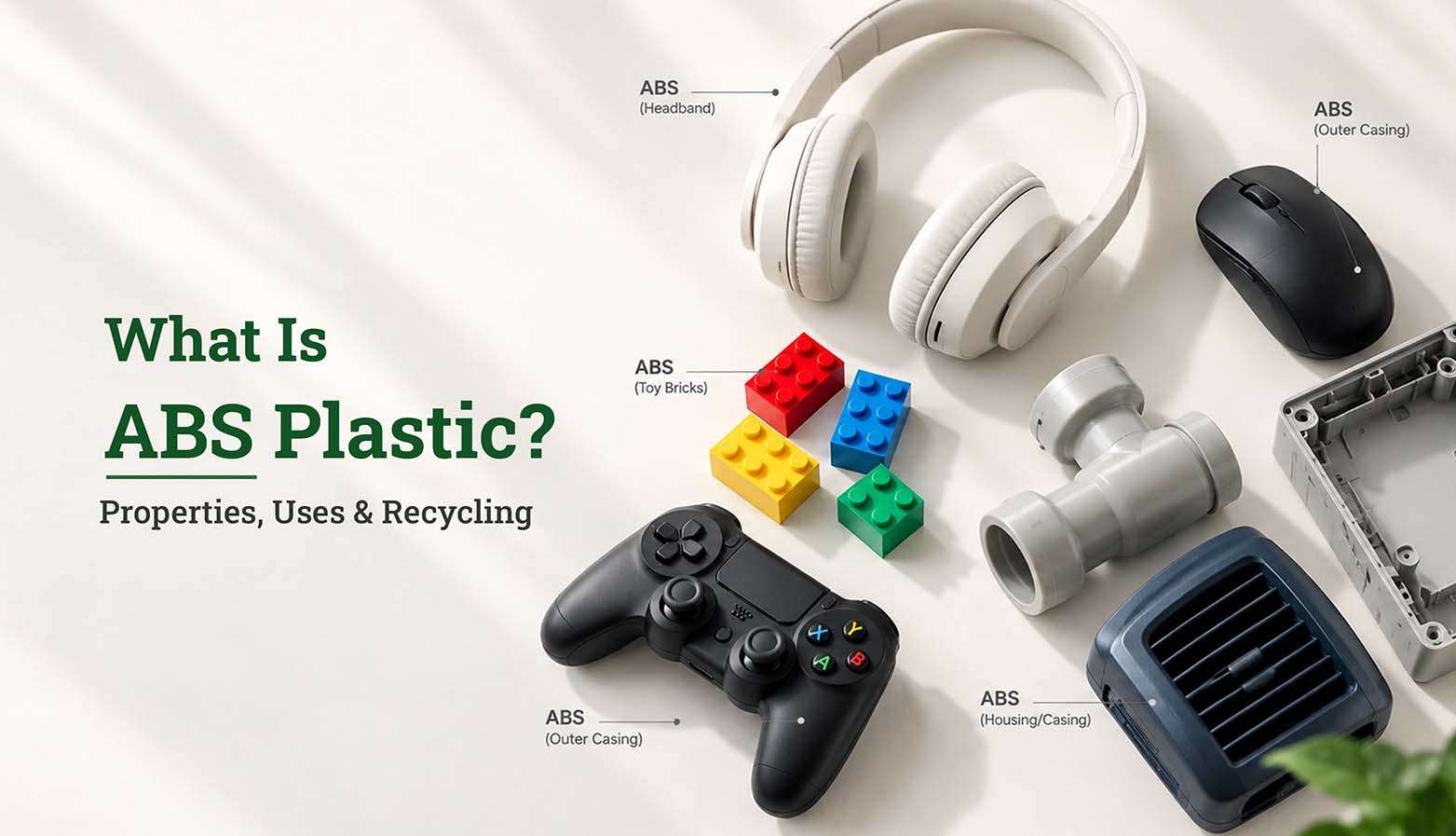
Abs plastic material is used in so many things and parts of day-to-day products and industrial parts because of its durability, beauty and easy machinability.
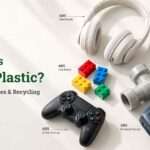
- LEGO Bricks & Children’s Toys: Designed for high dimensional accuracy, colour retention and snap fit durability.
- Automotive Components: molded into Dashboard Trims, Wheel Covers, Radiator Grills, and Seat Belt Housing.
- Consumer Electronics Housings: Guards laptop, computer monitors, game consoles, and TV casings against impact.
- Household Appliances: Used in vacuum cleaners, food processor bodies and refrigerator interior liners.
- Drain-Waste-Vent (DWV) Piping: Rigid and chemically resistant pipe are used in commercial plumbing systems.
- 3D Printing Filament: It is a main printing material for the FDM printing process and is considered to be strong and convenient for post-processing.
Advantages and Disadvantages of ABS Plastic
While abs plastic is a favored material for structural components, engineers must balance its notable advantages against key environmental and chemical limitations:
|
Advantages |
Disadvantages |
|
Exceptional impact resistance and structural toughness |
Poor resistance to ultraviolet (UV) sunlight (degrades and yellows) |
|
Easy to paint, glue, machine, and solvent-weld |
Highly flammable without specialized fire-retardant additives |
|
Excellent dimensional stability and low mold shrinkage |
Susceptible to stress cracking in aromatic hydrocarbons and acetone |
|
Outstanding surface gloss and electrical insulation |
Derived entirely from non-renewable petroleum feedstocks |
Is ABS Plastic Recyclable? How It Is Recycled
ABS plastic can be recycled to the full extent. As a thermoplastic it can be melted and reshaped many times without causing a significant chemical change. ABS belongs to the Other category of the standardized Resin Identification System (RIS #7). Since specialty polymers encompass a variety of polymers, ABS is not generally found in conventional municipal curbside recycling collection and must be recovered commercially.
The Step-by-Step ABS Recycling Process:
- Collection & Transportation: These waste streams are collected as post industrial or end of life electronic casings.
- Automated Sorting: More complex and accurate sorting, for example, of ABS from other high-density polymers (PS or PC) is processed by advanced Near-Infrared (NIR) sorters.
- Shredding & Size Reduction: Rigid casings are broken into even plastic flakes using heavy machinery.
- Washing & Decontamination: Flakes are subjected to friction washing to eliminate adhesives, dust and labels.
- Melting & Extrusion: Flakes are cleaned and passed to thermal extruders, which melt, degas and filter the flakes.
- Pelletisation: Extruded strands are cooled in water baths and divided into even recycled abs plastic resin granules to be remanufactured.
How Banyan Nation Supports Plastic Recycling in India
Banyan Nation is a leader in India’s circular economy, helping to avoid the landfills and oceans of industrial and post-consumer plastic waste. Banyan Nation is an innovative company that has developed proprietary washing, sorting and compounding technologies to convert waste thermoplastics into pure, industrial grade recycled resin granules. Banyan Nation connects informal waste networks with formal manufacturing by forming strategic alliances with global brands in FMCG, automotive and consumer goods sectors to provide traceable secondary raw materials, based on high quality standards. Join Banyan Nation Recycled Plastics Solutions to learn how companies can achieve circular sustainability and decarbonize their supply chains.
FAQ's
Is ABS plastic safe for food and toys?
ABS is widely considered safe for toys (such as LEGO bricks) because it is non-toxic, highly durable, and leach-resistant under ambient conditions. However, standard ABS is generally not certified for direct food contact or hot liquid storage unless specifically formulated with FDA-compliant food-grade additives.
Is ABS plastic stronger than PP or PVC?
Yes. ABS generally offers higher tensile strength, rigidity, and impact resistance than Polypropylene (PP) and standard unplasticized PVC. While PP offers superior chemical resistance and flexibility, ABS excels in structural applications where impact resistance and stiffness are paramount.
What is the melting point of ABS plastic?
As an amorphous polymer, ABS does not possess a strict thermodynamic melting point. Instead, it reaches its glass transition temperature (Tg) at approximately 105°C and becomes a fully processable, viscous melt between 200°C and 240°C.
Does ABS plastic contain BPA?
No, standard ABS plastic does not contain Bisphenol A (BPA). BPA is primarily used in the synthesis of polycarbonate (PC) and epoxy resins. However, blended alloys like PC/ABS may contain trace amounts due to the polycarbonate component.
Is ABS plastic biodegradable?
No, ABS plastic is not biodegradable. Because of its strong carbon-carbon hydrocarbon backbone, it can persist in natural environments for centuries if landfilled. However, it is highly suitable for mechanical recycling and thermal reprocessing.
Making recycled packaging the norm.
CITATIONS:
- Harper, C. A. (2002). Handbook of Plastics, Elastomers, and Composites (4th ed.). McGraw-Hill Professional.
- SpecialChem Materials Database. (2025). Acrylonitrile Butadiene Styrene (ABS) Material Properties & Application Guide.
- Association of Plastic Recyclers (APR). (2024). Mechanical Recycling Guidelines for Rigid Engineering Thermoplastics (Resin Code 7).
 What Is ABS Plastic? Properties, Uses & Recycling
 International E-Waste Day 2026: What It Means and How to Take Part
 What is Waste Disposal: Methods, Types, and Real-World Examples
 What Is Polyolefin? Types, Properties, Uses and Recyclability
 World Rivers Day 2026: Date, Theme, History and How to Take Part