Flexible pouches have increased popularity as in this evolving world of packaging, for brands looking to balance convenience, aesthetics, and efficiency. You see them everywhere, from the stand-up pouches containing your favorite household products, food packaging, and high-barrier packets used for liquid detergents. Flexible pouches packaging is designed to change shape based on the contents, utilizing non-rigid materials that provide high resistance with lesser weight. This adaptability has made it a favorite in modern retail. However, as our global focus shifts toward a circular economy, the industry is facing critical crossroads. While pouch flexible packaging offers undeniable benefits in terms of carbon footprint during transport, the complexity of its multi-layered materials often presents significant problems in recycling these pouches.
What Are Flexible Pouches?
So, what exactly is a flexible pouch? Let’s think of it as the ultimate shapeshifter of the packaging world. Instead of using big, rigid plastic bottles or heavy glass jars we usually have, these are shiny bags or envelopes created from high-tech plastic films, foils, or paper that are sealed tight to keep everything as fresh as possible. The whole point of flexible pouch packaging is to act as a protection for whatever is inside shielding your snacks, coffee, or lotions from moisture, oxygen, and light while staying incredibly light and compact.
The real beauty of these pouches lies in their “less is more” philosophy. Because they use way less raw material than those old-school rigid bottles, they’re often seen as the much more resource-efficient choice for brands. Since they can be flattened completely when they’re empty, they take up much less space in warehouses or during transportation. Along with having a lesser storage space, it actually helps shrink the overall carbon footprint of shipping, making the whole process a lot leaner and greener.
Types of Flexible Pouches
There isn’t any single design rule when it comes to this technology. Everything depends on the product’s shelf-life requirements and the convenient needs of the consumer; different types of flexible pouches are used:
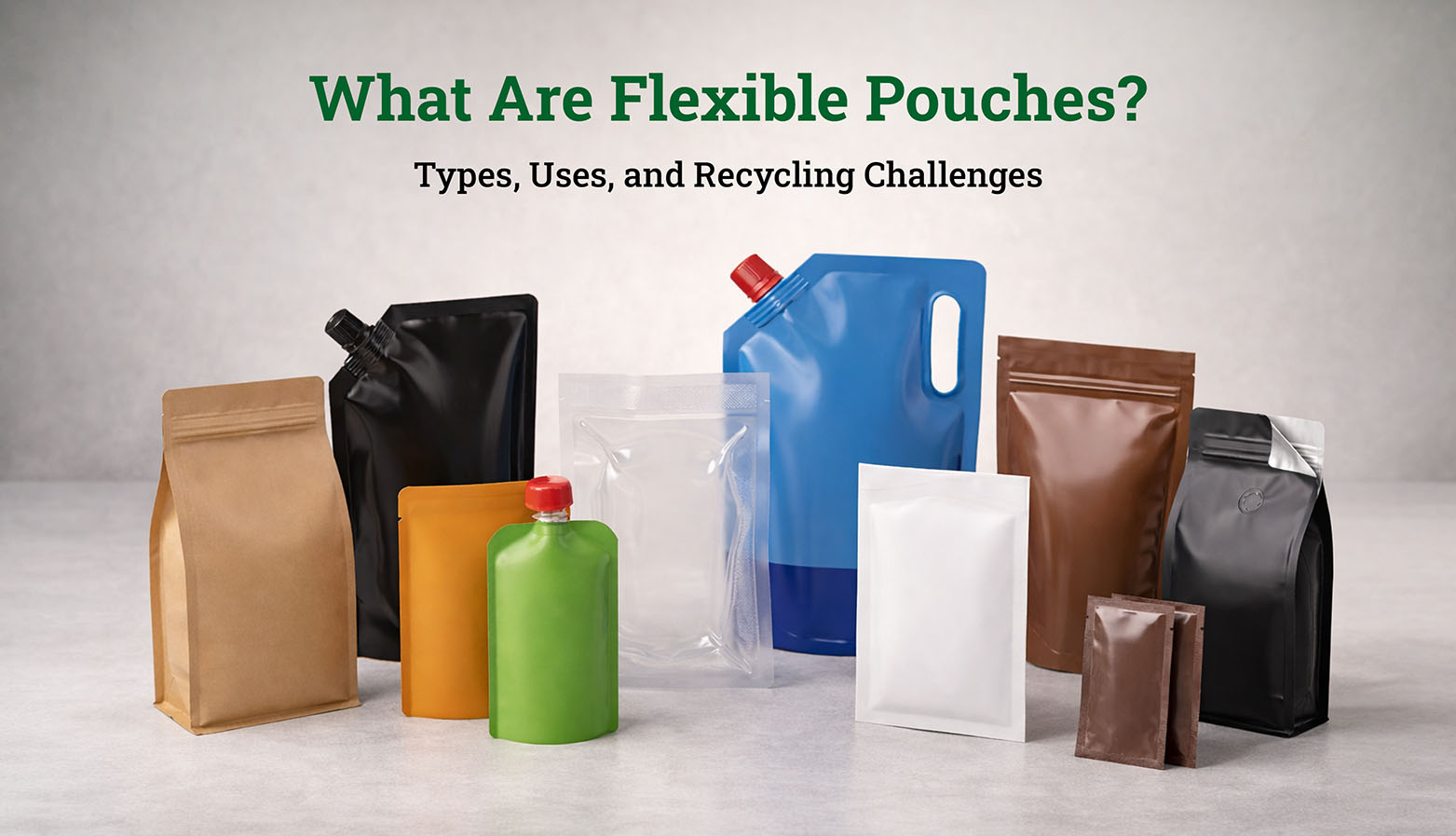
- Stand-Up Pouches (SUP): These are the most common type, featuring a bottom gusset that allows the bag to stand upright on retail shelves for better visibility with stability.
- Flat Pouches (Pillow Pouches): These are sealed on three or four sides which are typically used for single-serve items like chips or sample type cosmetics.
- Spouted Pouches: These include a fitment or spout that allows for easy pouring of liquids which are commonly used for baby food, sauces, and even motor oils.
- Zipper / Resealable Pouches: Designed for products meant to be consumed over time, these allow users to open and close the bag multiple times without losing freshness.
Materials Used in Flexible Pouch Packaging
Manufacturers often use a blend of flexible pouch materials to achieve durability and barrier properties according to requirements. These are usually multi layered with a sandwich structure:
- Outer Layer: Usually polyester (PET) for high-quality printing and heat resistance.
- Middle Layer: Important layer which often use aluminum foil/nylon act as a barrier against oxygen and moisture.
Inner Layer: LDPE (Low-Density Polyethylene) or Polypropylene (PP) are typically used, which acts as the sealant layer to keep the pouch closed due to its branched molecular structure that enables maximum flexibility and durability.
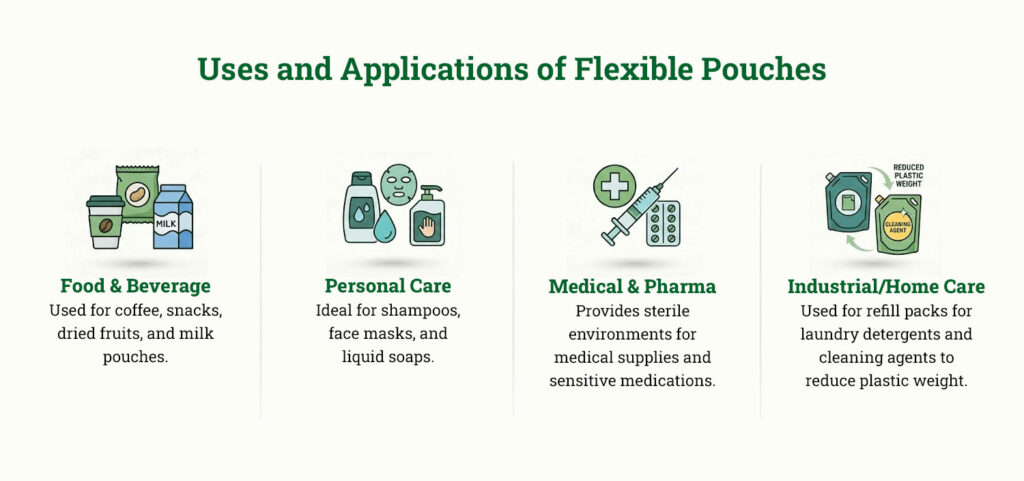
Uses and Applications of Flexible Pouches
Application of flexible pouches span almost every consumer sector imaginable due to their high durability and versatility.
- Food & Beverages: Coffee, snacks, dried fruits, and milk pouches prefer this packaging.
- Personal Care packaging: Used mainly for body wash, shampoos, and face masks.
- Medical & Pharma: Provides sterile environments for medical supplies and sensitive medications.
- Industrial/Home Care: Laundry detergents and cleaning agents are increasingly switching to pouch flexible packaging to reduce plastic weight in their refill packages.
Recycling Challenges of Flexible Pouches
Despite their many benefits, flexible pouches are highly likely to be recycled. Traditionally, flexible pouches are a nightmare because they are often multi-layered packaging (MLP). These consist of various polymers or layers of aluminum foil that are economically and mechanically impossible to separate using traditional methods, thus reducing the chances of recycling.
Adding to that, their low density and high volume make them inefficient to collect and transport. These lightweight materials frequently causemachinery entanglement in Material Recovery Facilities (MRFs), obstructing automated sorting equipment which eventually resulted in operational stoppages. This is why much of this stream traditionally finds its way into landfills, where it degenerates into enduring microplastics, which is one of the most important sources of plastic pollution.
Why Choose Banyan Nation for Recyclable Flexible Pouches?
At Banyan Nation, we believe that the future of packaging isn’t just about being “less bad”—it’s about being “circular”. We specialize in converting post-consumer plastic waste into high-quality, “Better-than-Virgin” recycled granules. Using our proprietary hot wash technology, we remove 98% of surface contaminants including inks, adhesives, and labels which help to produce super-clean washed flakes.
Brands can transition to mono-material designs that are more readily recyclable when partnering with us. We help brands meet mandatory recycled content quotas and EPR targets by providing high-performance rLDPE and other resins that maintain quality across multiple life cycles which addresses the challenges of soft plastic recycling.
Conclusion
Flexible pouches are a switchover people make in response to the demand for efficiency and convenience. But we should really focus on making these solutions more sustainable. If we focus on recyclable flexible pouches with the right materials, we can enjoy the benefits of modern packaging while supporting a cleaner, healthier world.
FAQ's
Are recyclable flexible pouches cost-effective for businesses?
Yes. Initial R&D for new packaging is always an investment while shifting to recycling often reduces long-term costs by lowering EPR fees and simplifying supply chains.
Can flexible pouches be made using recycled plastic materials?
Absolutely. Advanced recycling allows you to produce recycled resins of virgin-like quality. These high-quality polymers can be reintegrated into the layers of flexible pouch packaging.
What is the role of flexible pouches in sustainable packaging solutions?
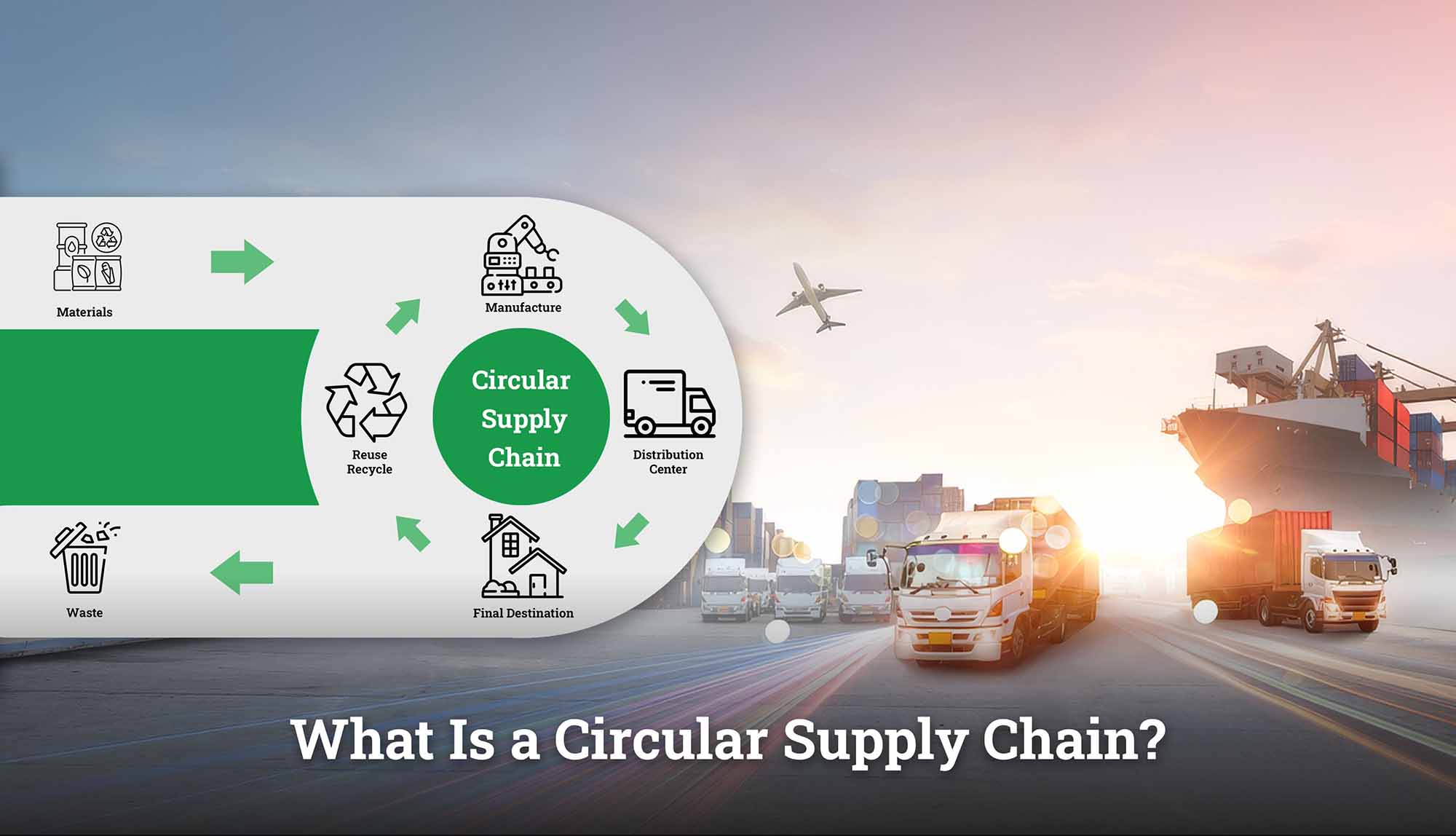
They represent a ‘reduce and recycle’ strategy. They use significantly less plastic than rigid containers and can be fully integrated into a circular supply chain.
How do flexible pouches support circular economy goals?
By moving away from complex multi-material structures toward mono-materiality, pouch flexible packaging can be recovered, cleaned, and pelletized into new high-value materials rather than being downcycled or landfilled.
 What Are Flexible Pouches? Types, Uses, and Recycling Challenges
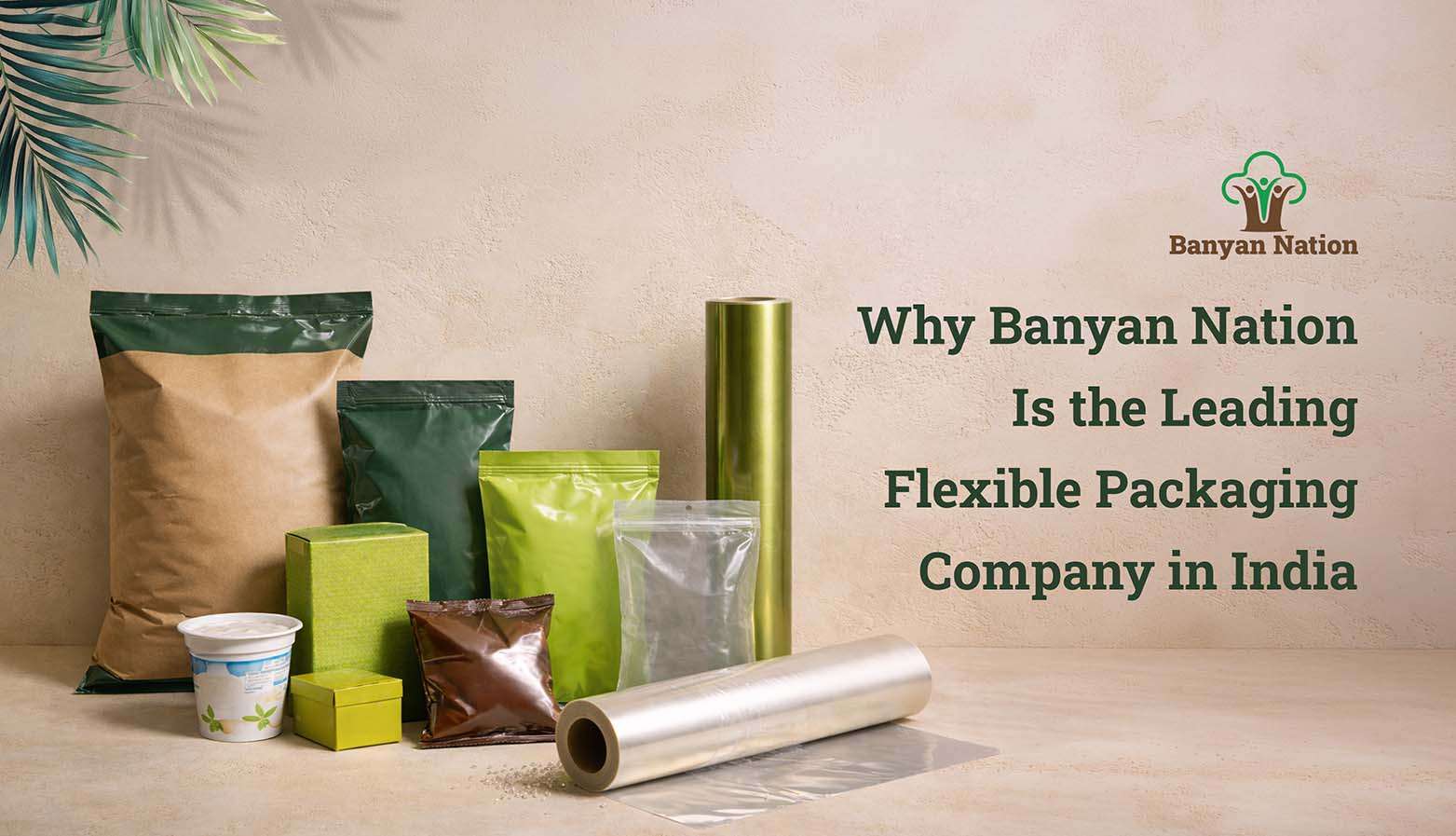
 Why Banyan Nation Is the Leading Flexible Packaging Company in India
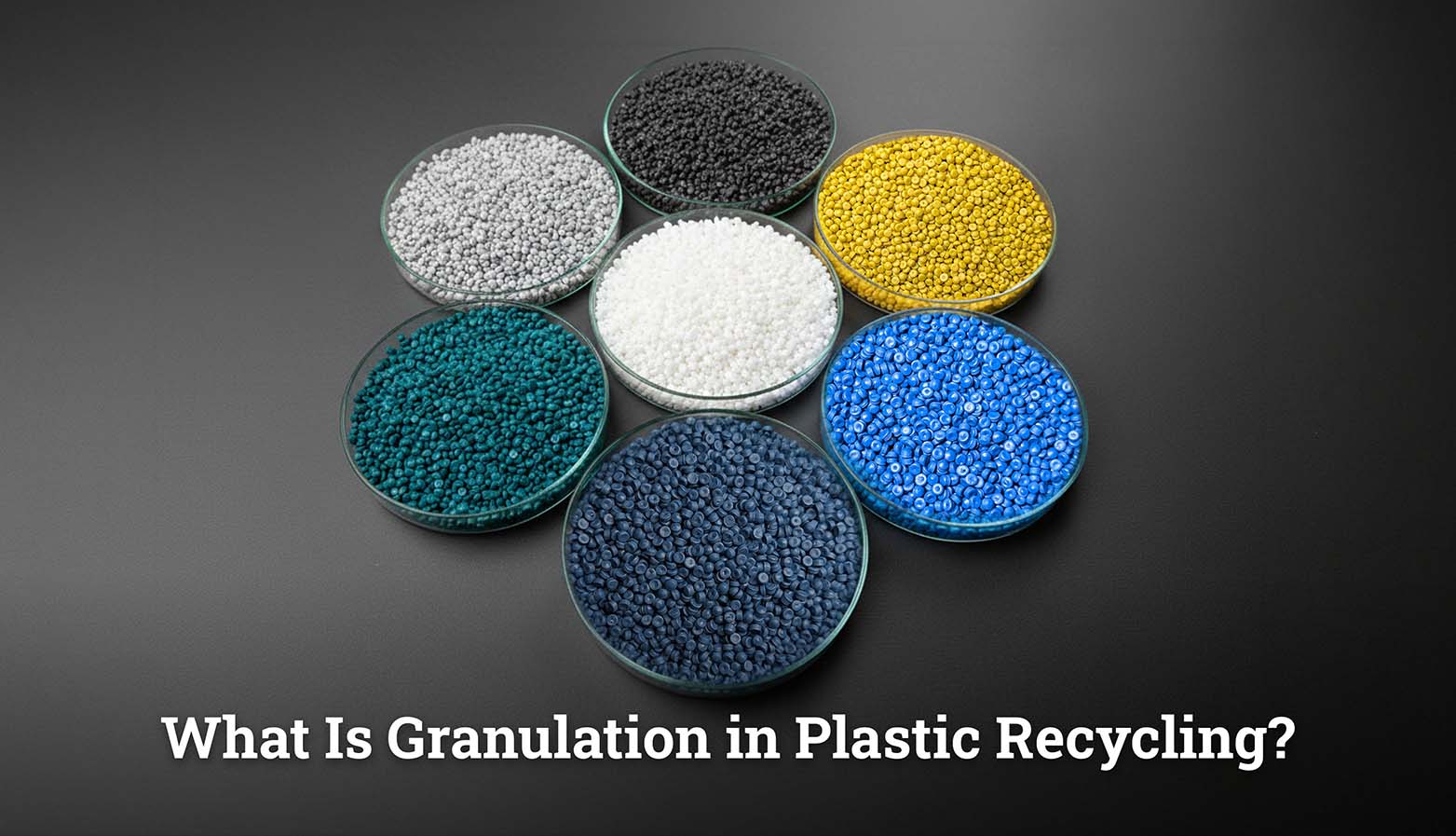
 What Is Granulation in Plastic Recycling?
 What Is a Circular Supply Chain?
 What is the Importance of Recycling in India?