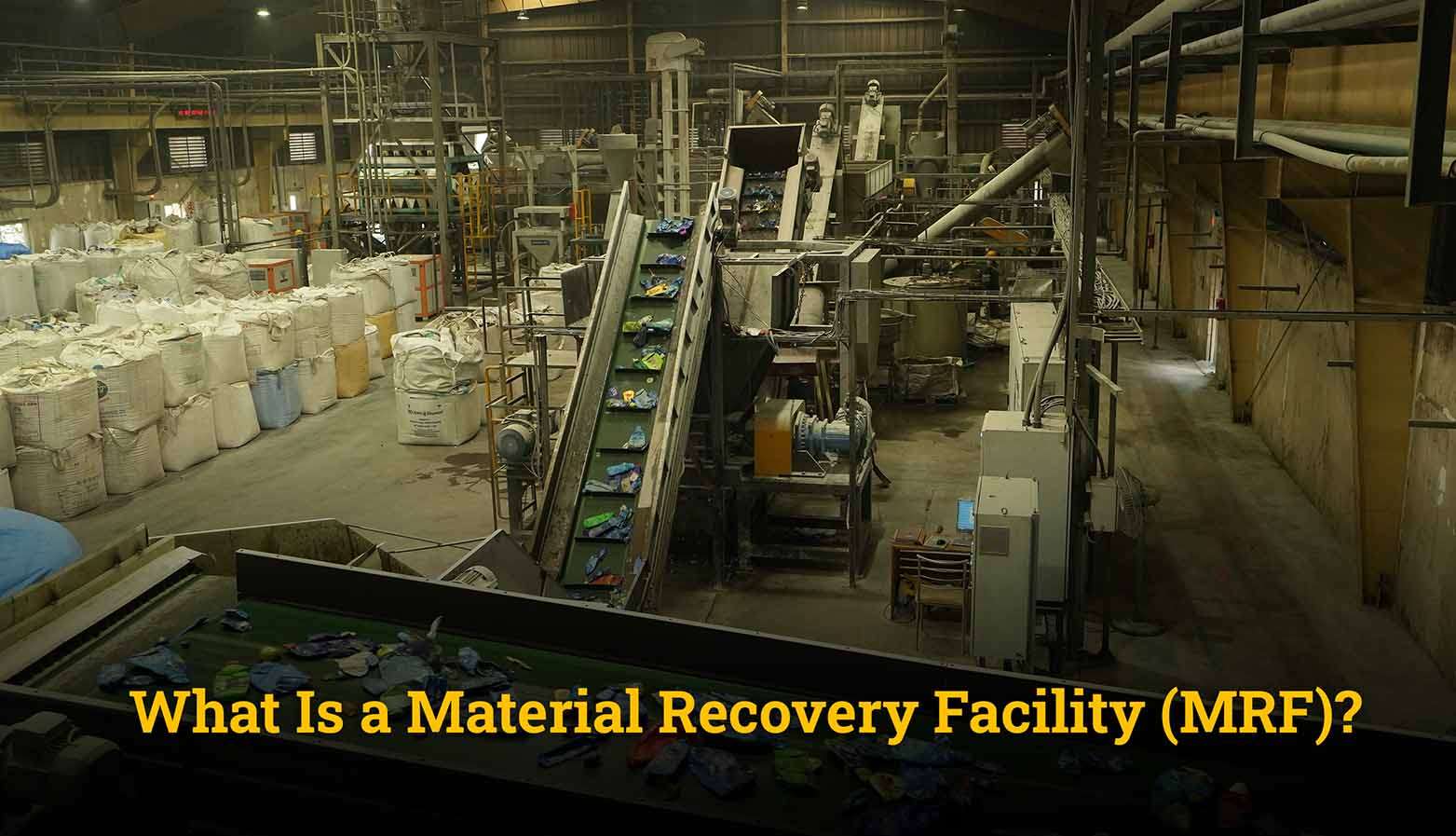
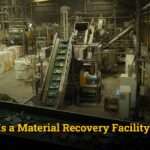
The material recovery facility is the brain in the intricate process involving a piece of waste that is in your bin all the way down to creating a new product. A material recovery facility is often known as the hub of the urban waste infrastructure and it is a specialized plant that receives, separates and prepares recyclable materials to be sold to end-user manufacturers. The main objective of a material recovery facility is to ensure that the number of recyclables is maximized and a high quality of raw materials that are not contaminated is produced. The material recovery facility has been the linkage mechanism between informal collection of waste and formal industrial recycling in most developing economies, such as India. A material recovery facility can prevent thousands of tons of paper, glass, metal, and plastic diversion into landfills daily with a mixture of manual sorting process and complex mechanical tools and technologies: magnets, screens, optical sensors, etc. This is the main point of the circular economy since it will guarantee that the limited resources will be reused and retained in the production cycle instead of being considered disposable garbage. The inner mechanisms of a material recovery plant are also a must-have item in the objective of any person concerned with sustainability because the output of a recycling plant determines directly the effectiveness of nations in meeting their recycling goals and the general well-being of the ecosystems of our planet.
Introduction
With the growth of cities, the necessity to have sophisticated recovery facilities has emerged as a prerequisite in contemporary urban planning. In the absence of these recovery facilities, our local waste systems would sink in the bulk of mixed waste into which they are not completely guided toward any reuse or repurposing.
Proper recovery facilities offer:
- Centralized Sorting: There is one point at which different streams of waste are sorted.
- Cutting back on volume: Compression of materials to make transportation more sustainable.
- Economic Value: Converting waste products into market commodities in the global market.
Understanding Material Recovery Facilities
In responding to the question of what is material recovery facility is, we will have to consider it as a technological filter of the city. The main purpose of material recovery is to put a disorganized collection of domestic or industrial waste into the machine and separate the individual polymers, fibers, and metals that remain valuable.
Speaking about the technical aspect of material recovery, we refer to the accuracy of the separation. This is because a high-performing material recovery facility mrf is measured by its residual rate, the percentage of the material it cannot recover and has to send to a landfill. The less the residual rate the better the mrf material recovery facility is doing its role.
What Does a Material Recovery Facility Sort?
A typical material recovery facility mrf will be used to recycle “commingled” or “single-stream” recyclables.It implies that the material recovery facility mrf should have the capacity to sort different materials within a lightning speed to sustain a profitable flow.
The materials that are generally sorted in a material recovery facility mrf are:
- Plastics: NIR (Near-Infrared) sensors are used to sort the plastics based on their resin type (PET, HDPE, PP).
- Paper and Cardboard: The separation is done by star screens which bounce the lighter fibers into the air.
- Ferrous Metals: Brought out through the use of intense overhead magnets.
- Non-Ferrous Metals: These are taken off with the eddy current separators that push aluminum cans away.
Glass: The glass is frequently crushed into a cullet and sorted by colour.
Types of Material Recovery Facility
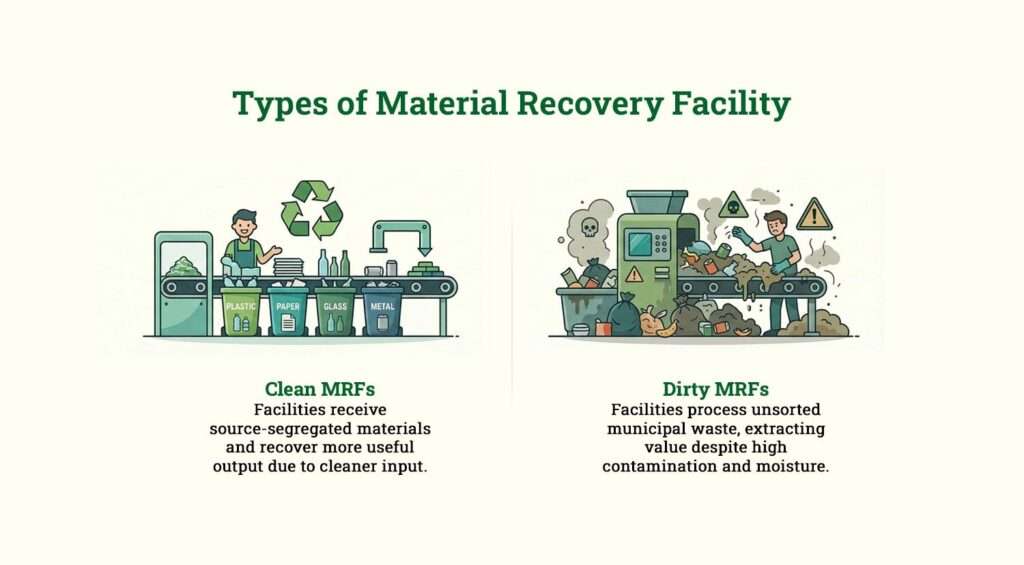
Incidentally, not every mrf is equal. There are two types of mrf depending on the purity of the incoming waste stream.
Clean MRFs
These types of mrf facilities receive materials which have been segregated already at the source (such as your home recycling bin).These mrf facilities recover more and have more useful output since the input is comparatively clean.
Dirty MRFs
A dirty material recovery plant handles pure solid waste which was not sorted at all. Although they are more difficult to operate because of high contamination and moisture, they are necessary to extract value out of mixed municipal waste that would be lost completely in the end.
The Material Recovery Facility Process Explained
The process of the MRF facility is an engineering marvel that is in harmony with human effort and the speed of machinery. To have an idea about what is material recovery facility in action, trace this classic trail:
- Tipping: Tucks are deposited on the tipping floor.
- Pre-Sorting: This is pre-sorting in which large objects or prohibitions (such as plastic film or garden hoses) are removed by hand workers who may damage the mrf sorting machines.
- Screening:Large rotating screens help to separate heavy and flat items such as paper.
- Magnetic & Eddy Current Separation: Steel is removed by magnets and aluminum is removed by electrical currents that are jumping into the separate bin.
- Optical Sorting: Infrared lasers distinguish the various types of plastics (part of mrf recycling process).
- Baling: The materials sorted are pressed into compact cubes (bales) that are transported to a MRF recycling plant.
Importance of Material Recovery Facility in Waste Management
The importance of MRF in waste management is difficult to overestimate in combating climate change. MRF in waste management helps us to eliminate energy consumption in production.
The importance of material recovery facility consists of:
- Carbon Reduction: Recycling of aluminum through an mrf recycling process consumes 95 percent less energy than the virgin production.
- Landfill Diversion: Prolonging the life of the city infrastructure by keeping the bulky recyclables out.
- EPR Support: Assistance to the brands with their legal responsibility through proving that their packaging is being reused in an environmentally friendly manner.
MRF in waste management helps the urban centers to become increasingly closer to a zero-waste objective as it treats trash as a resource.
Challenges Faced by MRF Facilities
Even perfect mrf facilities have a major challenge more so in terms of mrf sorting.
- Contamination: Paper or plastic can be ruined by food wastes and even liquid.
- Lithium Batteries: One of the greatest dangers of fire during the mrf recycling procedure.
- Evolving Packaging: Multi-layer plastics cannot be easily sorted using the standard mrf sorting equipment.
- Market Fluctuations: The goods made out of baled recyclables might cost less or more the following day, and this will influence the facility.
How Banyan Nation Strengthens Material Recovery in India
Banyan Nation is a crucial component of the mrf in the recycling ecosystem whereby it offers the high-end processing that comes after the initial sorting. Whereas a mrf recycling plant may result in a bale of mixed plastic, we process such material using our proprietary cleaning and decontamination lines into Better Plastic.
We collaborate with local recovery centers to:
- Guarantee Take: It is important to make sure that the plastic that is sorted at the material recovery facility has a desirable destination.
- Enhance Traceability: Assistance to the mrf recycling center to trace materials that were used to their source to improve data reporting.
- Technical Training: Enhancing material recovery excellence in India through the sharing of best practices in the separation of the polymer.
Conclusion
The recycled material facility is the mute driver of the sustainability movement. We can get our waste management systems prepared to face the challenges of the future by knowing what is mrf in recycling and helping to develop more sophisticated recovery facilities. Since the first material recovery facility processes to the last stage in producing the recycled resin, it is a win to the environment in all its steps.
FAQ's
What is the purpose of MRF?
The purpose of a material recovery facility is to sort commingled waste into pure streams of individual materials (like paper, plastic, and metal) so they can be sold and reused in manufacturing.
How is a material recovery facility different from a recycling plant?
A material recovery facility is primarily a sorting and baling center. A recycling plant (like Banyan Nation) takes those bales and performs further processing, such as washing, melting, and pelletizing, to create a finished raw material.
What is the future of material recovery facilities in India?
The future lies in “Smart MRFs” that use AI and robotics to improve mrf sorting speed and accuracy, as well as greater integration between the informal waste-picking community and formal recovery facilities.
How do material recovery facilities support EPR compliance?
MRFs provide the “Proof of Recovery” that brands need to show they have collected and diverted a specific volume of plastic from the environment, which is a legal requirement under India’s EPR rules.
Making recycled packaging the norm.
CITATIONS:
- Environmental Protection Agency (EPA). How Material Recovery Facilities Work.
- Swachh Bharat Mission (Urban). Operational Guidelines for MRFs in India.
- Waste360. Trends in MRF Technology and Sorting Efficiency.
 What Is a Material Recovery Facility (MRF)?
 Plastic Contamination: Causes, Effects, and the Role of Recycling
 What Are Flexible Pouches? Types, Uses, and Recycling Challenges
 Why Banyan Nation Is the Leading Flexible Packaging Company in India
 What Is Granulation in Plastic Recycling?