The idea that corporate responsibility simply stops at the balance sheet is outdated in the ever-changing environment of the global industry and environmental policy. The most successful and strongest companies today are those ones incorporate social and environmental requirements into their overarching strategy, a phenomenon known as Corporate Social Responsibility, or CSR. The CSR mandate in India, that obliges certain large firms to allocate 2 percent of their net income towards these activities, has directed the nationwide resources into a range of areas, none of which is as pressing as waste management. The rising solid waste, especially plastic, is not only a dangerous environmental factor but also a serious development challenge that cannot be overcome without the efforts of the government. Firms have started to realize that it is not only a good thing to invest in strong waste transformation projects, but it is a crucial investment in the long-term health of the environment in which they operate, their supply chains, and their brand equity. An effective CSR plan targets funds at scale-able, systematic remedies such as setting up material recovery plants (MRFs), professionalising the informal recycling industry and making technological breakthroughs in processing. With active use of CSR budgets, the companies are going beyond compliance to becoming critical drivers of the transformation of India to a more circular economy and weaning off a linear model of take-make-dispose to achieve a successful circular economy, with the companies defining their relation with waste as a liability no longer.
Introduction
The world economy nowadays is organized on a linear system which produces piles of garbage. This level of model is not sustainable and it poses direct threat to biodiversity, human health and urban infrastructure. Corporate social responsibility is transformative in India where the production of municipal solid waste is colossal. Through directing finances and technical skills into waste conversion, companies can deal with systematic issues of poor collection and segregation. The strongest corporate social responsibility efforts in this industry involve the creation of strong, open and transparent supply chains of recycled products, and by doing so, transforming an environmental issue into an economic one. This incorporation of the corporate social responsibility makes the solutions sustainable, reusable, and positive to the local communities.
What is Corporate Social Responsibility (CSR)?
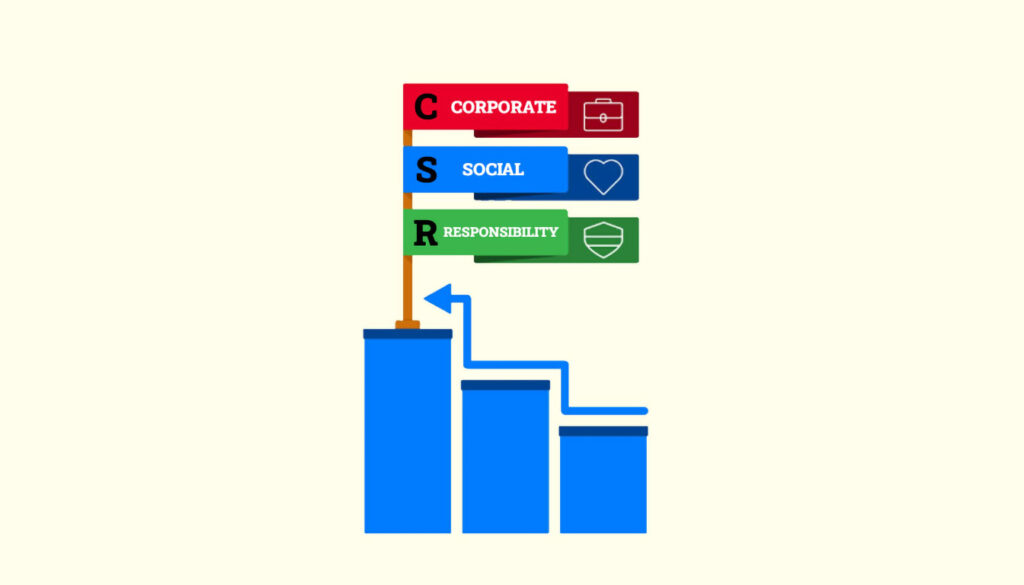
The concept of CSR is an abbreviation of Corporate Social Responsibility, which is a self-regulating business model that assists a company to be socially responsible to itself, stakeholders and to the rest of the community. It is a tactical endeavor to act in a manner that would add value to the society and environment instead of adding up to it. This responsibility is spread over four key pillars that are the environmental, ethical, philanthropic, and economic. Good corporate social responsibility practices show that the company is willing to go beyond the minimum legal requirements. An example is a company that willingly invests in state-of-the-art recycling technology in order to minimize wastes, although cheaper disposal techniques are possible. Knowledge of the acronym CSR is the basis of propelling significant, quantifiable change.
Examples of CSR in Waste Management
The corporate social responsibility examples in the waste industry demonstrate various ways of generating value out of waste.These corporate social responsibility examples usually make use of the strengths of a firm specific to it so as to realize wide social and environmental objectives. Producer Responsibility –
Extended Producer Responsibility (EPR) Fulfillment
The companies finance the process of collection and handling of their packages waste much more than the necessary requirements, and they usually collaborate with special waste management agencies.
Infrastructure Development
Invest in the creation of decentralized waste management units, e.g., Material Recovery Facilities (MRFs), to enhance source segregation and treatment or community-scale composting units.
Livelihood Creation and Formalization
Introducing initiatives to train and equip informal waste collectors, to formalize the workforce, and offer sustainable livelihood, is directly relevant to what CSR refers to in the social context.
Technology Integration
Funding integration of technology such as traceability platforms used by Banyan Nation to track waste flow to maintain real-time reporting and provide transparency in a form of ESG compliant reporting.
These are some corporate social responsibility examples on how businesses can turn out to be environmental stewards instead of only being waste system players.
The Need of CSR in Waste Transformation
The necessity of csr stands for or in the area of waste transformation is motivated by the sheer size of the waste crisis, and the high expense involved in construction of the infrastructure required to implement a circular economy. Also, the significance of corporate social responsibility is addressed to the disintegrated state of the waste management ecosystem of most cities. There should be a partnership between the government and businesses to create a system that unites the informal sector and the formal infrastructure. CSR stands for giving the catalytic capital to finance high-risk, high-reward innovation such as chemical recycling or waste-to-energy development projects to which municipal budgets might not otherwise provide. Having identified the need to have corporate social responsibility, businesses are granted a social license to operate and get resilient in the event of further environmental regulations.
Role of CSR in Waste Management
The purpose of the CSR in waste management is multi-pronged because the entity is a financier and an innovator. It concentrates resources in areas where the government infrastructure is wanting and pushes projects which have a quantifiable social outcome, like the elevation of the life quality of waste employees. The major portion of the investment provided by corporate social responsibility companies such as the giants of the FMCG or technology companies enables establishing the stable, verifiable supply chains of recycled materials, which are, in turn, recycled in their production process. It is the same dual focus of environment clean-up and social equity, which makes the leadership of the corporate social responsibility companies in this space that forms a positive feedback loop around the brand.
Benefits & Importance of CSR in Waste Management
Clearly, quantifiable benefits of CSR can be seen when it is applied to the waste industry which emphasize the significance of corporate social responsibility to all the stakeholders:
Environmental Impact
It decreases the landfill space directly, the natural resources are conserved through the encouragement of recycled material, and it also reduces carbon emissions due to the production of virgin material.
Added Brand Value
Active involvement in waste management by proactive investment in the field of CSR fosters consumer confidence and loyalty especially among the rising mass of consumers who are environmentally conscious.
Risk Mitigation
The mitigation of risks through investing in resource efficiency with the help of the csr waste management will protect the company against the actions of the government in the future and future interruptions in the supply chain associated with the lack of raw materials.
Socio-Economic Development
Formalizing and empowering the informal waste sector is one of the most important benefits of csr which results in livelihoods and social inclusion.
Innovative Practices in Waste Transformation
The most advanced need of csr in waste management is the adoption of new models of csr practices that are not restricted to the traditional disposal modes. These entail the use of technology to promote transparency and efficiency. As an instance, installing AI-based segregation units at MRFs to maximize the purity of materials or investing in projects that turn hard-to-recycle plastics into useful fuels. These forms of CSR practices shift the emphasis on cleaning up wastes to a profitable resource and this helps to move faster towards circular economic models. Application of the technological platforms would mean that all the rupees being used in the corporate social responsibility in waste management will be auditable and give verifiable outcomes.
How Does Banyan Nation Approach Responsible Waste Management to Enhance Corporate Social Responsibility?
Banyan Nation is a perfect collaborator to firms who want to enhance their corporate social responsibility in waste management. Model Our business model is designed to provide credible environmental and social returns, which directly benefit our partners in terms of the CSR profile:
Traceability and Transparency
We have an end-to-end digital chain of custody of all waste processed. This means that in cases a brand promises to use Post-Consumer Recycled (PCR) content, Banyan Nation can confirm its origin and process, which excludes the probability of greenwashing that tends to sabotage the csr waste management initiatives.
High-Value Recycling
We are applying the patented technology to transform hard-to-recycle plastics into near-virgin quality resin. This adds an economic incentive to the use of CSR in waste management projects, and the material must be put into long-life high-value products.
Socio-Economic Inclusion
Our collection network incorporates thousands of informal employees and offers them training, good prices, and financial inclusion. This is an influential social influence, and our strategy is an example of responsible action with regard to waste management in the sphere of CSP.
Conclusion
The need of CSR in waste management has ceased to be an option; it is a necessity in the establishment of a strong and resilient economy. Corporations generate shared value by investing capital in new, technologically advanced, and socially inclusive waste transformation opportunities. The model presented by Banyan Nation proves that the most responsible way is the most strategic one and makes CSR in waste management one of the drivers of profit and purpose.
FAQ's
What does CSR Stands for?
CSR stands for Corporate Social Responsibility. CSR Waste management refers to a company’s commitment to manage the social, environmental, and economic effects of its operations responsibly and ethically.
How can CSR reduce waste?
CSR in waste management reduces waste by funding initiatives that promote source segregation, invest in advanced recycling infrastructure, create closed-loop systems, and educate consumers and communities about waste reduction and responsible disposal.
What is the main role of CSR?
CSR’s role in waste management is to ensure that a company contributes positively to sustainable development, balancing the pursuit of profit with ethical practices, environmental stewardship, and social well-being.
What are the key principles of CSR?
The key principles of corporate social responsibility in waste management typically include accountability, transparency, ethical behavior, respect for stakeholder interests, respect for the rule of law, respect for international norms of behavior, and respect for human rights.
Making recycled packaging the norm.
Connect with our sales team to find out which recycled resin is right for you.
CITATIONS:
- CPCB (Central Pollution Control Board). (2022). Extended Producer Responsibility guidelines mandate sustainable plastic packaging to reduce plastic foot print. Press Information Bureau, Government of India.
- Companies Act, 2013, Section 135. (2013). The Corporate Social Responsibility Mandate in India. Ministry of Corporate Affairs, Government of India.
- The CSR Journal. (2025). Top CSR and sustainable initiatives managing Solid Waste in India. Retrieved from: [Reputable CSR reporting source discussing Indian initiatives.]
 What Are Flexible Pouches? Types, Uses, and Recycling Challenges
 Why Banyan Nation Is the Leading Flexible Packaging Company in India
 What Is Granulation in Plastic Recycling?
 What Is a Circular Supply Chain?
 What is the Importance of Recycling in India?