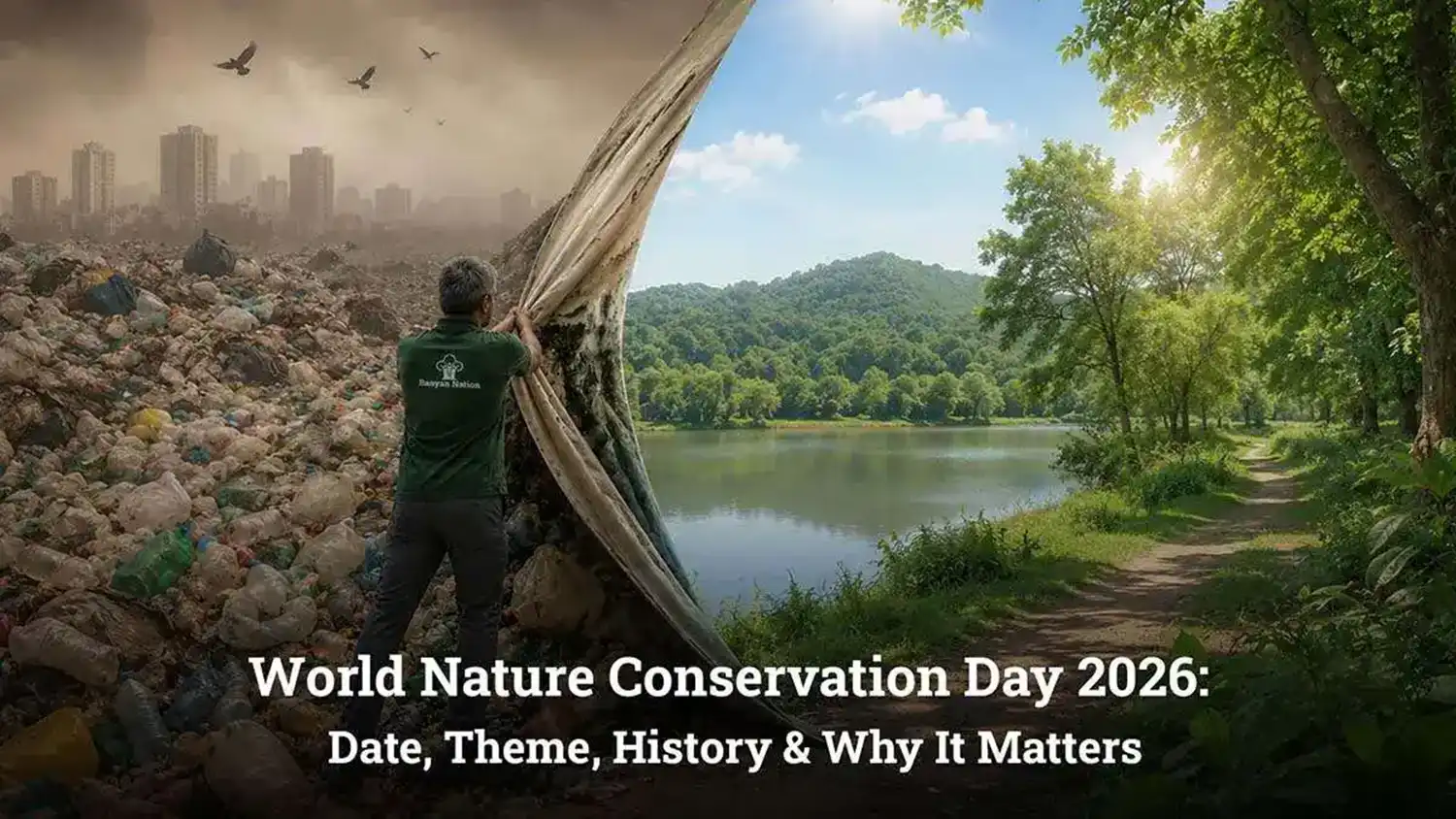
World Nature Conservation Day is marked on 28 July every year around the world, and in 2026 this day falls on a Tuesday. This pivotal annual day unites humanity to see how we use the precious natural resources, air, soil and water.
It’s more critical than ever. The International Union for Conservation of Nature (IUCN) Red List of Threatened species says more than 44,000 species of animals and plants are threatened today. Our nature-based systems are being severely strained due to the continuous deforestation, loss of habitat, rising global temperatures, and many other factors. World nature conservation day is an opportunity for governments, businesses and people to recalibrate their priorities to ecological restoration and resource management.
Get the facts about this election in official campaign literature or for your home or workplace, here’s what you need to know:
- The precise history and origins of the day as well as its international importance
- Elucidation of global theme and core environmental priorities for 2026
- There are some differences between the observance of nature, environment, and wildlife.There are differences between nature observance, environment observance, and wildlife observance.
- The difference between conservation and preservation principles.Discussion of difference between the conservation and preservation principles.
- Specific actions for celebration and how circular industrial practices are safeguarding ecosystems.
What Is World Nature Conservation Day?
It is acknowledged as an important international nature conservation day, and encourages all international citizens to reflect on their ecological footprint each day.
The World Nature Conservation Day is an annual international day celebrated on 28 July, to highlight the importance of nature’s use and its management. The main purpose of a day dedicated to nature conservation is to sensitise all citizens about the fragility of our flora, fauna, water and soil resources and encourage them to live a sustainable lifestyle so they can preserve these resources for future generations.
Quick Facts: World Nature Conservation Day
Quick Facts: World Nature Conservation Day
- Time: Tuesday, 28th July annually
- Observance: it is an annual event that is observed internationally.
- Primary focus: To protect soil, water, air, energy, minerals, and nature habitats.
- Key Stakeholders: Civil society organisations, local communities, education and environmental businesses
- Aims: To establish a sustainable system of resource use that avoids environmental damage and species loss.
It is an important day of nature conservation marked at the international level, which calls upon each citizen of the world to assess the ecological footprint of his daily life.
History and Origin of World Conservation Day
Contrary to many world days which are only declared by an international United Nations resolution, the concept for world conservation day developed over a number of years. It can be traced back to the International Union for Conservation of Nature (IUCN) was founded in 1948 and the IUCN Red List in 1964, which alerted the world to the problem of biodiversity. 28 July became, over time, a date that was used by grassroots environmental movements and worldwide coalitions in order to make a call for environmental protection.
The world conservation day event in the modern era is associated with various international milestones, such as the UN Decade on Ecosystem Restoration (2021-2030), the Kuning-Montreal Global Biodiversity Framework, and others.
Interestingly, 2026 is also the halfway point to the year 2030, the milestones for the UN’s new Sustainable Development Goals (SDGs) report and the half-way point to the year 2030 when countries will be reaching their goal of protecting at least 30% of Earth’s land and ocean ecosystems (the “30×30” initiative) and halving the global footprint of production and consumption. World conservation day brings us to the realization that these international deadlines need urgent and continuous action to meet.
World Nature Conservation Day 2026 Theme and Focus Areas
It’s just one thing I want to say – 2026 has no central theme that is set by the UN. It is observed by a global network of organisations, regions, institutions and NGOs which each have their own annual focus slogans reflecting their local ecological priorities.
Although campaigns may vary in name, all of the conservation days campaigns from 2026 are based on five core focus areas that are interconnected:
- Biodiversity Preservation: Conservation of threatened species and the prevention of the loss of habitats at an alarming rate.
- Ecosystem Restoration:Restoration of degraded forests, wetlands, coral reefs and topsoil systems.
- Climate Action & Resilience: Carbon dioxide removal and resilience to extreme weather through NbS.
- Pollution Elimination: non-point source pollution, chemical run-off and plastic waste in water.
- 30 x 30 Target: Accelerating land and ocean conservation: 30% of the world’s protected area by 2030.
Action for stewardship is this year’s theme for this important day celebrating the environment.
Conservation Days Compared: Nature vs Environment vs Wildlife
Several events are held during the year to raise environmental awareness; it is common to combine them. While they have the same objectives, they each have an agenda for the day and focus area.
Observance | Date | Led / Supported By | Core Focus |
World Nature Conservation Day | 28 July | Global NGO Networks, Local Communities | Protecting natural resources (soil, water, air) and living ecosystems |
World Environment Day | 5 June | United Nations Environment Programme (UNEP) | Broad environmental policy, climate action, and industrial pollution control |
World Wildlife Day | 3 March | CITES Secretariat & UN Organizations | Wild flora and fauna species protection and combating illegal wildlife trade |
Many people do not know much about a world environment conservation day due to its overlapping commitments. In order to make them different, World Environment Day (June) is particularly about global policy frameworks and climate change, World Wildlife Day (March) specifically protects fauna and flora and World Nature Conservation Day (July) puts the emphasis on everyday balanced conservation of the basis of the living ecosystems.
How to Celebrate World Nature Conservation Day 2026
The World Environment Conservation Day is being celebrated on 28th July 2026. For World Nature Conservation Day 2026, you can follow the following guidelines. It doesn’t have to be an elaborate, city-wide effort to conserve resources, it can be a simple everyday effort that can make a huge difference. Below are 10 action points you can take on this Conservation day:
For Individuals & Households
- Audit Household Single Use Plastics: Stop using single use plastic and use more durable products that can be reused; buy products in post-consumer recyclable packaging;
- Carry out a Water Audit : repair leaking taps, fit water-efficient aerators and switch off the tap when not in use when performing normal activities to save water.
- Plant Local Trees, Shrubs or flowering plants: Plant local trees, shrubs or flowering plants in your garden or balcony which will support local pollinators, birds and soil.
- Remove the old electrical goods ; Do not let electrical goods go into landfill. Ensure responsible management of E-Waste at a certified recycling facility.
For Schools, Offices & Organizations
- Host an Ecosystem Cleanup: Organize an eco-clean-up project at a local park, river, or beach community.
- Support Digital Documentation: Minimize the amount of paper used in office processes to reduce commercial harvesting of timber.
- Organize an Educational Workshop: Invite an environmental practitioner to teach students or staff about biodiversity and reduction of waste.
- Develop Green Procurement Policies: Only procure office supplies, packaging and raw materials from vendors that are in line with sustainable principles and circular economy.
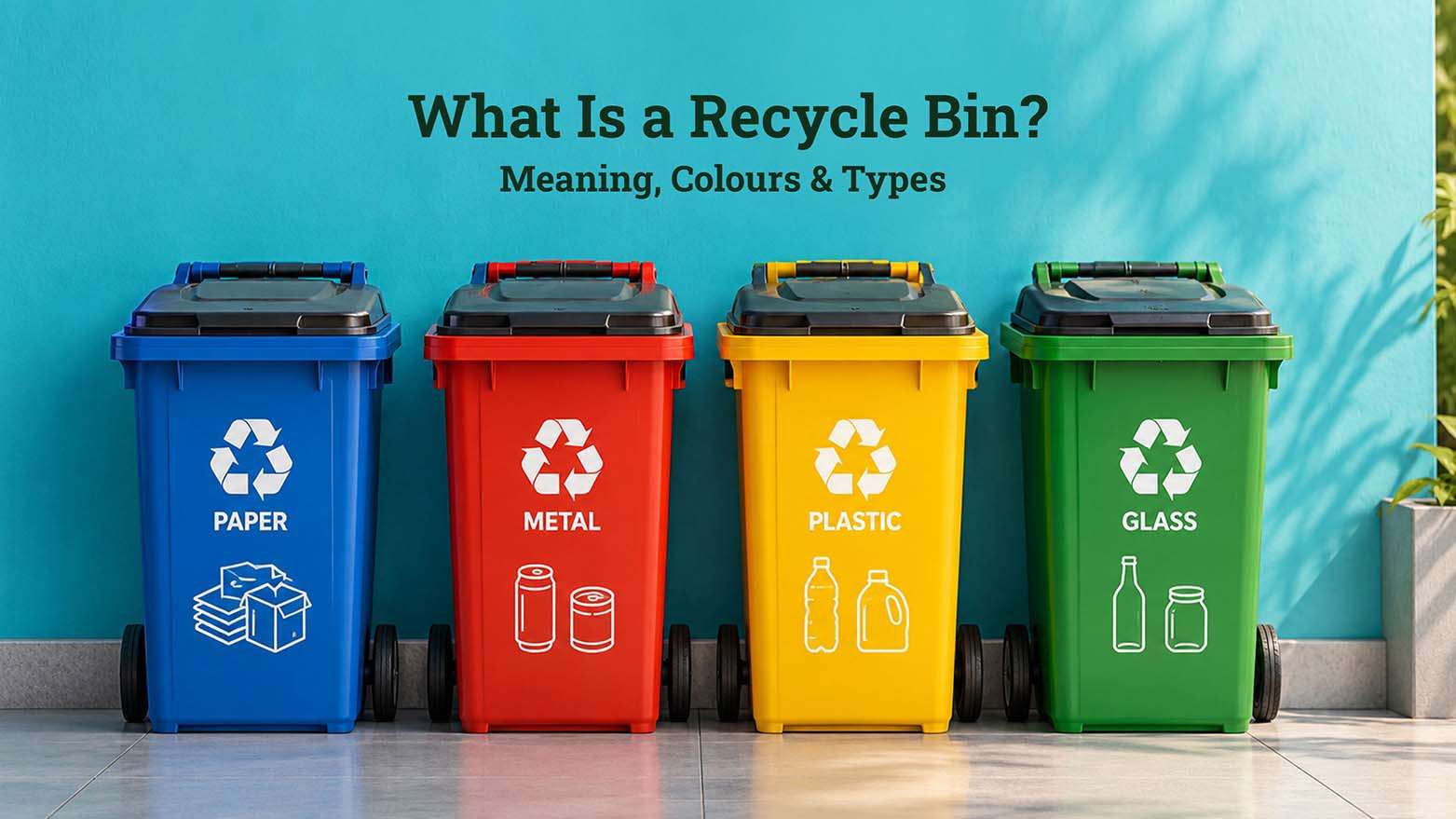
- Adopt Source Segregation: Introduce well-marked multi-stream waste bins for separation of clean waste and collection for recycling.
Conservation vs Preservation: What’s the Difference?
There is not a clear-cut difference between the terms conservation and preservation.
Conservation and preservation both are used interchangeably and are both ways of engaging with the natural world.
Conservation is defined as sustainable use and responsible management of nature’s resources. It recognizes that people need wood, water, land and energy, but maintains that these can only be utilized within ecological limits, allowing them to be replaced naturally.
Naturalists, then, are concerned that landscapes are not altered by human activities and not disturbed. It tries to find a way to completely eradicate commercial/exploitative uses and to keep the ecosystem pristine and untouched. To sum up, conservation is prudent use of resources and preservation is non-interference with the resources.
Nature Conservation in Action: Banyan Nation’s Circular Plastic Model
Protecting nature is not just about protecting forest reserves, it’s also about how industries use natural resources, preventing them from being taken out of the ground. The production of virgin plastic consumes fossil fuels and emits large amounts of greenhouse gases.
Banyan Nation is a trailblazer in circular plastic solutions, and is an example of technology that turns waste streams into valuable circular raw materials. Banyan Nation’s proprietary washing and decontamination technology removes more than 90% of packaging material contaminants, resulting in a high quality, human contact safe, recycled PE (rPE) and PP (rPP) resin that matches and can exceed virgin plastics.
This closed loop system directly helps the global brands move away from fossil-based materials and comply with strict Extended Producer Responsibility legislation, which in turn reduces energy consumption, carbon emissions and land and ocean pollution.
FAQ's
When is World Nature Conservation Day 2026 celebrated?
World Nature Conservation Day 2026 is celebrated on Tuesday, 28 July. It is observed on 28 July every year worldwide.
What is the theme of World Nature Conservation Day 2026?
There is no single official global theme set by the UN for 2026 for international conservation day. Instead, governments, organizations, and civil groups focus on key priorities such as halting biodiversity loss, accelerating ecosystem restoration, and driving plastic circularity.
Who started World Nature Conservation Day and why?
The day grew organically through grassroots efforts, conservation leaders, and global environmental networks like the IUCN. It was established to highlight the critical need to preserve natural resources such as air, water, soil, and wildlife—to ensure a sustainable future for humanity.
What is the difference between World Nature Conservation Day and World Environment Day?
World Nature Conservation Day (28 July) focuses specifically on resource stewardship and habitat conservation. World Environment Day (5 June), organized by UNEP, addresses broader climate policies, industrial emissions, and environmental protection at a systemic level. Both contribute to a comprehensive world environment conservation day framework.
Making recycled packaging the norm.
CITATIONS:
- IUCN Red List Assessments & Global Biodiversity Monitoring
- IUCN Red List of Threatened Species (Annual Updates, 2022–2025). Tracking extinction risks across global taxa. IUCN Red List Portal
- Ritchie, H. (2022, updated 2026). How many species are there? Our World in Data. Our World in Data Article
- Cochran, J. E. M. et al. (2026). Only One Percent of Important Shark and Ray Areas in the Western Indian Ocean Are Fully Protected From Fishing Pressure. Ecology and Evolution, 16(1). DOI / Research Gate Link
- Extinction Risk Methodology & Funding Gaps
- Hughes, A. C. (2025). Toward a more effective funding model for conservation. PubMed Central (PMC12771516). PMC Link
- Mancini, G. et al. (2026). The risk of underestimating generation length for extinction risk assessments. Cambridge Prisms: Extinction. Cambridge Core Article
- Wieringa, J. G. (2022). Comparing predictions of IUCN Red List categories from machine learning and other methods for bats. Journal of Mammalogy, 103(3), 528–539. Oxford Academic Link
 What Is a Recycle Bin? Meaning, Colours & Types
 What Is the Waste Disposal Hierarchy? 5 Steps Explained
 What Is ABS Plastic? Properties, Uses & Recycling
 International E-Waste Day 2026: What It Means and How to Take Part
 What is Waste Disposal: Methods, Types, and Real-World Examples