A recycling bin is a container that helps to collect waste materials such as plastic, paper, metal, glass and e-waste, supporting effective disposing and preparing them for reprocessing.
Recycling bin in terms of environment management primarily serve as a tool for source segregation. Recycle bins are placed at homes, offices, and public spaces to ensure that valuable resources are kept out of landfills and diverted back into circular manufacturing loops.
Thousands of tons of materials which are reusable are lost permanently due to improper disposal. Recycling bins while used correctly plays an important role in majorly reducing landfilling or leaking to water bodies. Proper segregation prevents clean recyclables from mixing with wet organic waste which would otherwise make paper and plastics unrecyclable. Integrating these waste management systems helps significantly lower greenhouse gas emissions, conserve natural resources, and accelerate the transition toward a sustainable, zero-waste circular economy.
Recycling Bin Definition: What Makes a Bin a Recycle Bin?
Recycling bins can be defined by how they are differentiated compared to normal waste bins. Recycling bins are specially designed to collected recycled dry material preventing contamination by mixing non-recyclable material
Unlike a normal garbage bin or household garbage basket, several key features distinguish a dedicated recycling bin:
- Standardized Color-Coding: Specific colors (such as blue for dry recyclables) signal to users exactly what type of waste belongs inside.
- Universal Labeling & Universal Symbols: Recognized symbols, such as the Möbius loop (three chasing arrows), clearly identify the container’s purpose.
- Specialized Openings: Purpose-built lid slots, wide apertures, or multi-compartment dividers make it easy to deposit sorted paper, metal, or dustbin plastic items directly into dedicated streams.
Recycle Bin Meaning in the Environment: Why It Matters
Recycling Bin carry a deeper purpose beyond normal waste collection bins. It is considered the primary step to high-value addition of materials from getting mixed with municipal drainage or landfilling.
According to reports by the Central Pollution Control Board (CPCB), India generates over 3.4 million metric tons of plastic waste annually. A larger percentage of this is left uncollected or managed because of lack of segregation system at the source.
Cross contamination with food waste and moisture can be avoided when clean dry recyclable waste is deposited in the recycling bin. This first step helps in reducing the cost of further sorting, protects the product quality and provides high-quality feedstock for industrial recycling
Recycle Bin vs Trash Bin vs Waste Bin: What’s the Difference?
While many people use these terms interchangeably, each trash container serves a distinct role in municipal waste management systems.
Bin Type | Primary Purpose | Typical Contents |
Recycle Bin | Collecting clean, dry materials for reprocessing | Rigid plastics, cardboard, paper, aluminum cans, clean glass |
Trash Bin / Garbage Trash Can | Disposing of non-recyclable, mixed household waste | Soiled packaging, sanitary products, mixed composite items |
Waste Bin | General collection before sorting or disposal | Unsegregated refuse, general litter, dry office trash |
E-Waste Bin | Safely gathering discarded electronics | Batteries, circuit boards, small cables, old appliances |
Recycle Bin Colours and What Goes in Each
Understanding standard recycling bin colours ensures that waste is sorted effectively across municipal and commercial infrastructure. In India, standard color-coding guidelines streamline waste collection:
Bin Colour | Primary Waste Category | Materials Accepted |
Blue | Dry Recyclables | Clean dustbin plastic packaging, paper, metals, glass |
Green | Wet / Organic Waste | Food scraps, kitchen waste, garden trimmings |
Yellow / Red | Hazardous & E-Waste | Batteries, medical waste, toxic chemicals, electrical items |
For a comprehensive guide on implementing these systems in commercial settings, read Colour Code Dustbin Types and Usage for Better Recycling
Types of Recycling Bins: Curbside, Large Dustbins and E-Waste Bins
Recycling infrastructure varies depending on the volume of waste and the specific setting in which they are used in:
Curbside Bins
Curbside bins are small portable bins usually kept in residential neighborhoods and households. This allows residents to segregate their waste at sources which are collected regularly by municipal corporation
Large Dustbins & Plastic Dustbins
Heavy duty large dust bins are mostly used at commercial complexes, industrial parks, and public spaces. These are durable and portable high-density dustbin plastic designed to withstand outdoor weather resistant conditions with high volume capacity. This helps in proper collection of recyclable waste in large quantities.
E-Waste Bins
E waste bins are designed specifically to collect electronic waste which is mostly placed in public kiosks, electronics stores, and corporate offices. These bins help the leakage of toxic heavy metals to landfills by safely collecting discarded electronics separately.
What Can and Can’t Go in a Recycle Bin
Segregating recyclable and non-recyclable from reaching your bins as mixed waste helps to preserve value for the materials.
What CAN Go in a Recycle Bin:
- Clean paper, cardboard boxes, and newspapers
- Aluminum and steel cans
- Clear and colored glass bottles
What CANNOT Go in a Recycle Bin:
- Wet food scraps and organic kitchen waste
- Soiled paper, grease-stained pizza boxes, and used napkins
- Single-use thin plastic film or contaminated bags
- Hazardous chemical containers and medical waste
Pro-Tip: Always wash and dry the plastic containers before putting them in the bin. Food waste and liquid can lead to cross contamination which can completely make a batch of recyclable materials non-processable, leading them to landfill
How Banyan Nation Turns What’s in Your Recycle Bin into New Plastic
The recyclable materials that leave your local recycling bins begin their journey towards second life. These segregated plastics go through intensive sorting, cleaning, and advanced decontamination at the recycling facility.
Through innovative technology and proprietary washing processes, Banyan Nation converts post-consumer plastic waste into high-quality, virgin-like recycled resin. By turning discarded household plastic into premium recycled granules, brand owners can seamlessly integrate recycled content back into mainstream product packaging, closing the loop on plastic usage.
FAQ's
What is the difference between a recycled bin and a dustbin?
A regular dustbin or generic trash bin holds mixed, non-recyclable refuse meant for direct landfill disposal. A recycling bin is specifically dedicated to collecting clean, dry materials intended for reprocessing and manufacturing new items.
What colour is the recycle bin in India?
In India’s standard waste segregation framework, blue represents the designated recycle bin colour for dry recyclables like plastic, paper, and metal. Green is reserved for wet organic waste, while red or yellow is assigned to hazardous materials.
Why are recycle bins blue?
Blue is internationally recognized as the standard color code for dry recyclables. This uniform visual signaling helps users across residential, commercial, and public spaces instantly identify where to dispose of paper, metal, and plastic materials correctly.
Can plastic bags go in the recycle bin?
Thin single-use plastic bags should generally not go into standard common recycling bins, as they tangle sorting machinery at recycling facilities. Instead, they should be taken to specialized retail collection drop-offs or handled through dedicated soft-plastic recovery programs.
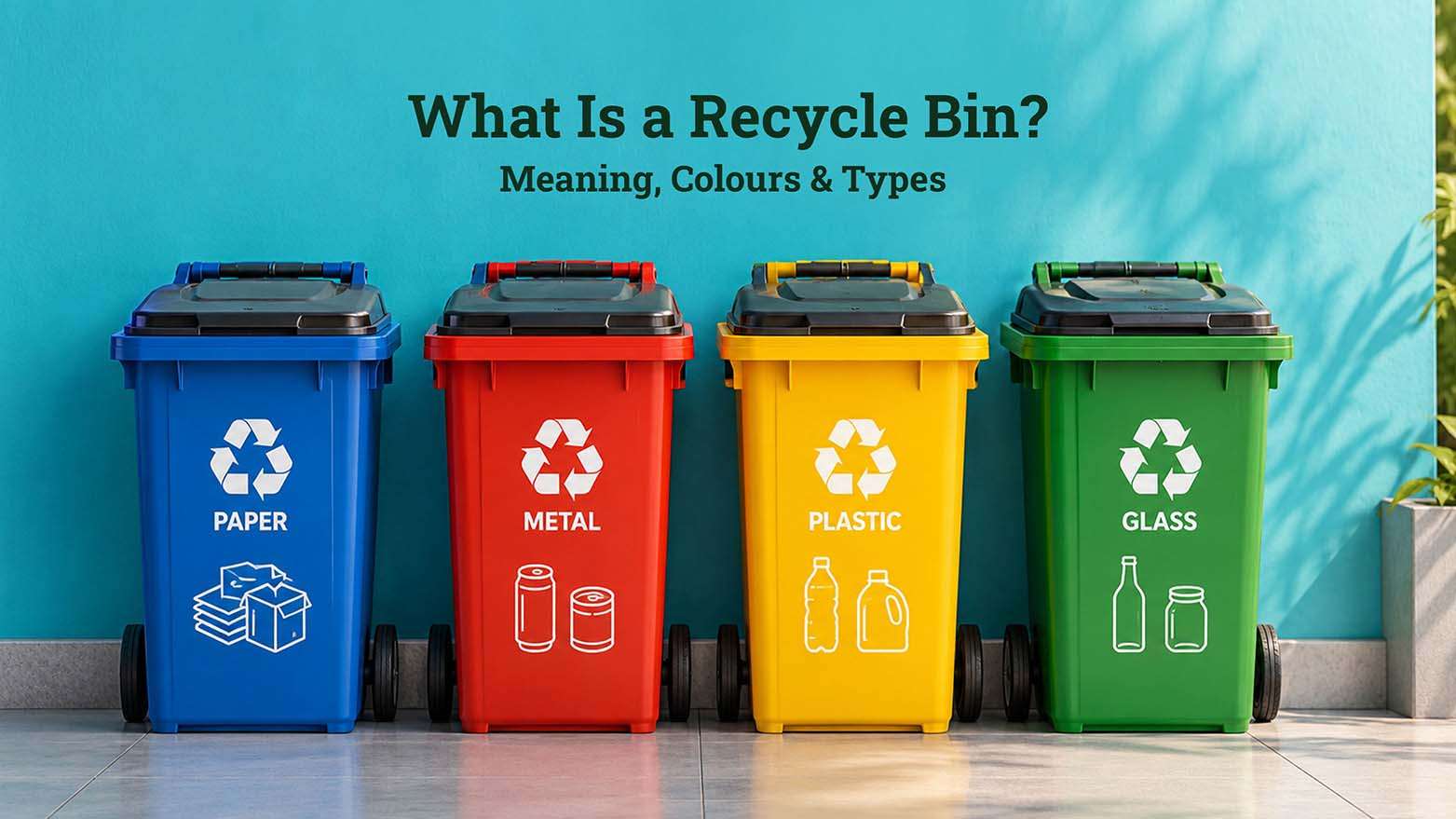
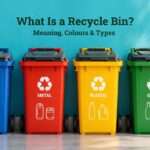 What Is a Recycle Bin? Meaning, Colours & Types
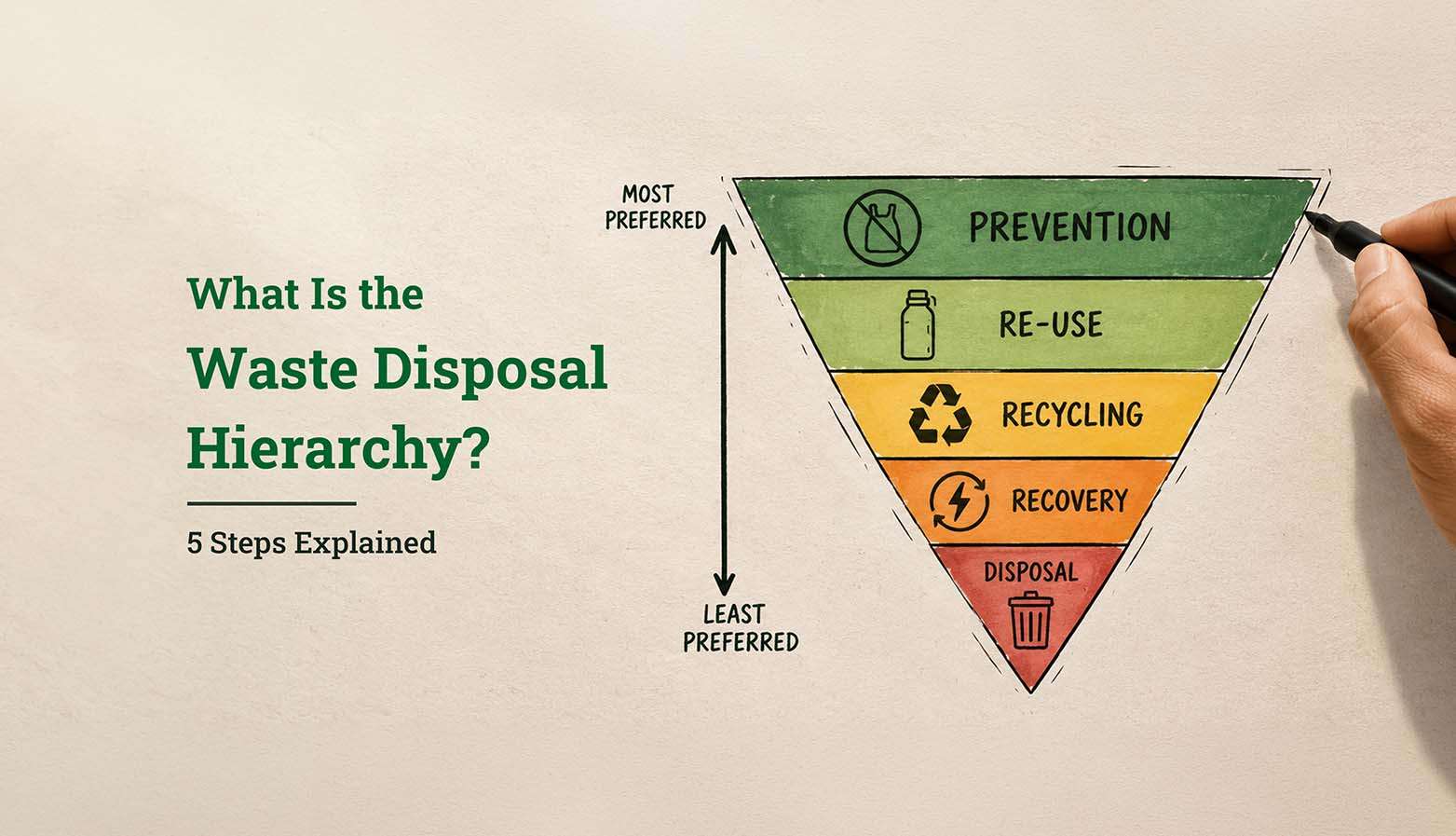
 What Is the Waste Disposal Hierarchy? 5 Steps Explained
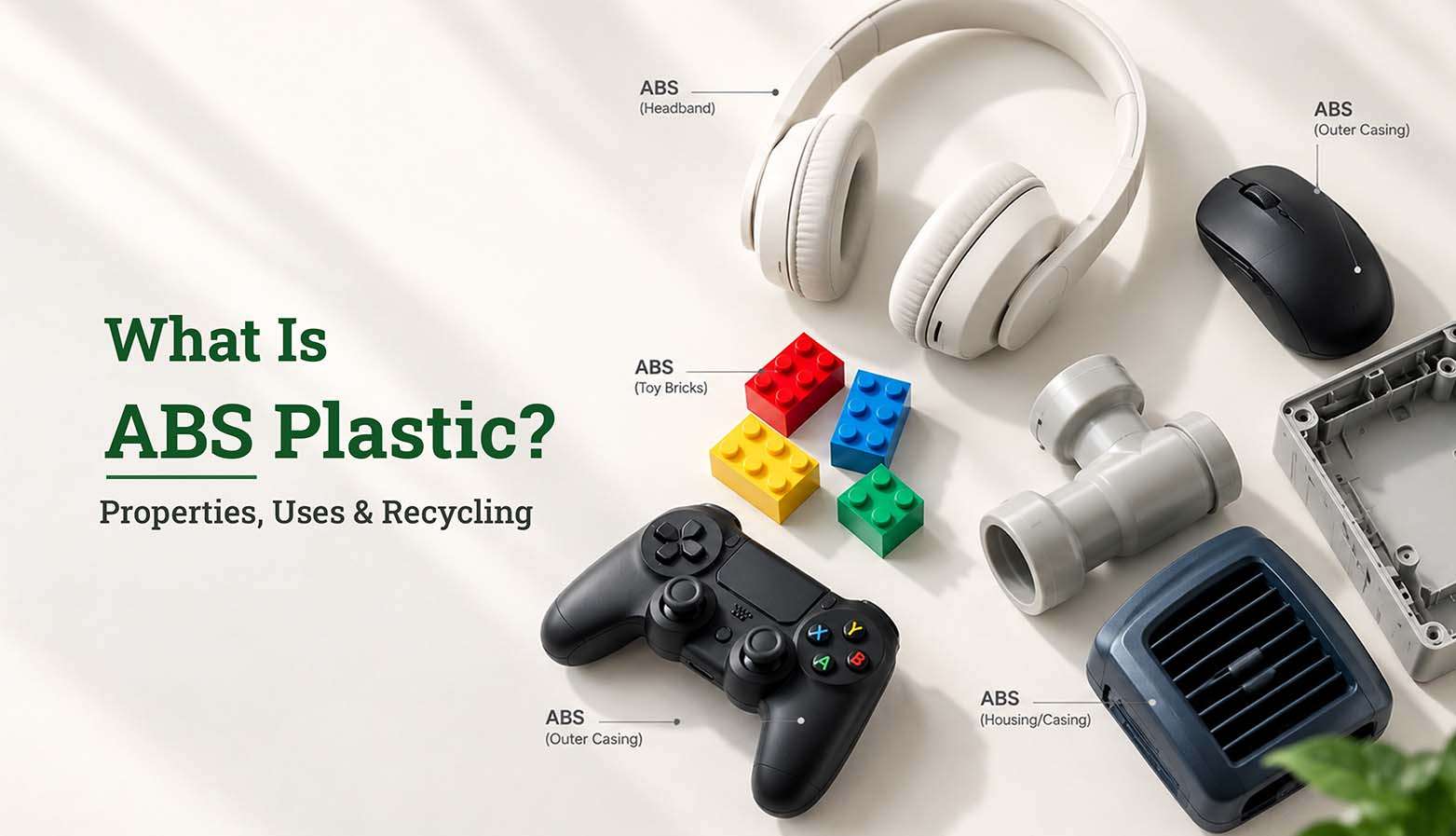
 What Is ABS Plastic? Properties, Uses & Recycling
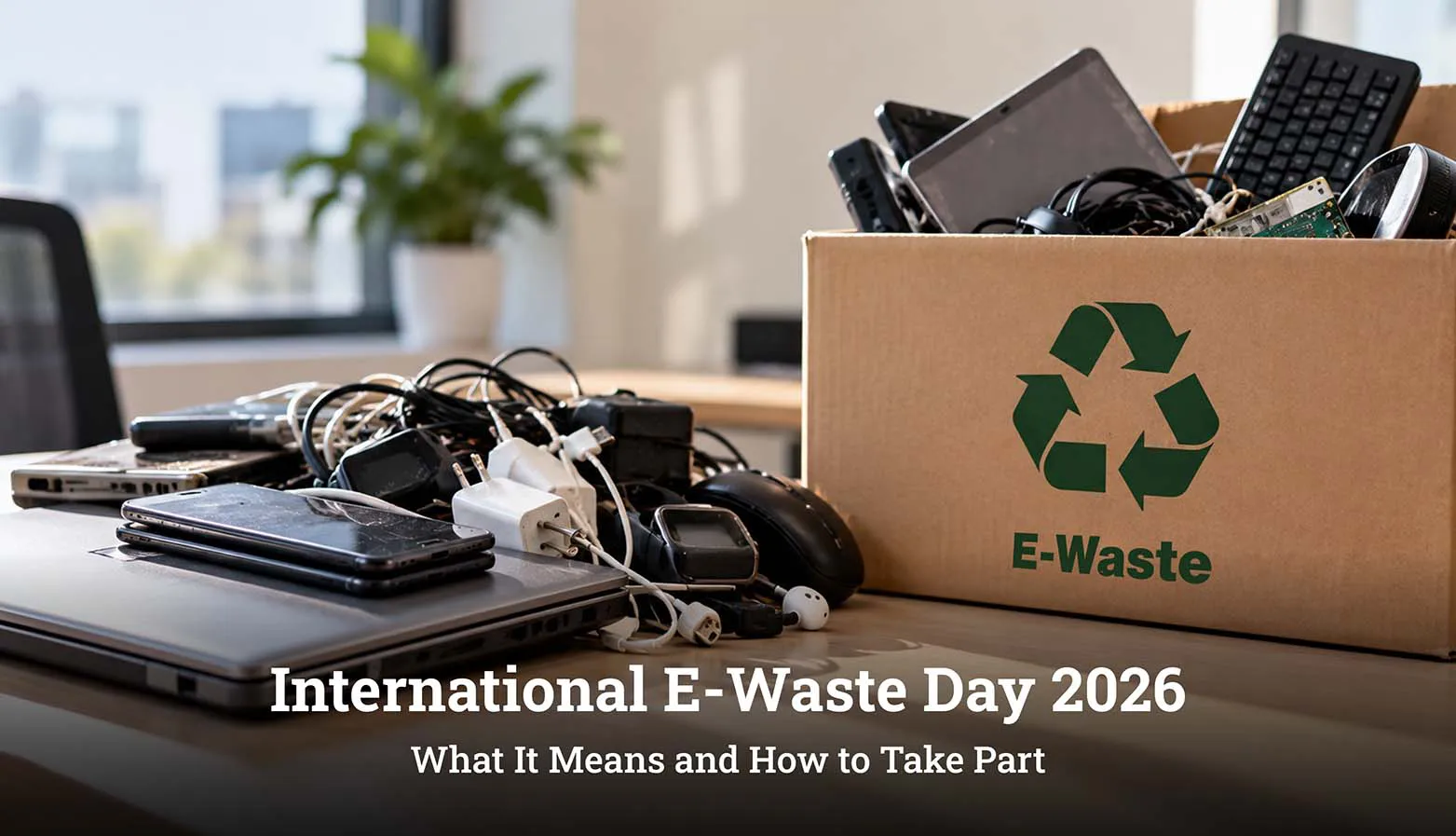
 International E-Waste Day 2026: What It Means and How to Take Part
 What is Waste Disposal: Methods, Types, and Real-World Examples