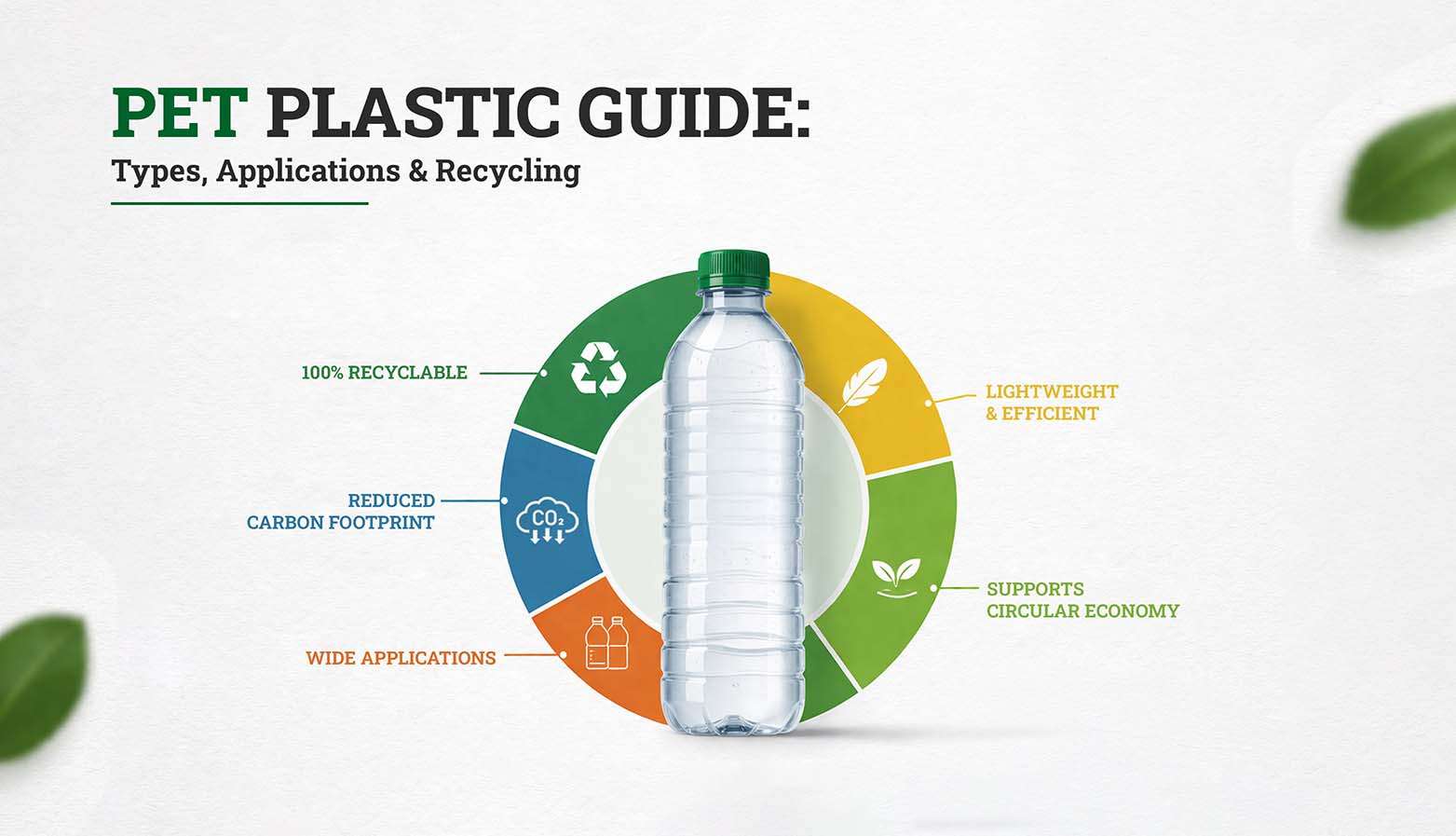
Polyethylene terephthalate is one of the most common polymers and is one of the most versatile that exists in the modern world of material science. Polyethylene terephthalate is a polyester family thermoplastic polymer resin commonly referred to as the transparent plastic used in bottling water and carbonated soft drinks. Its popularity around the world is greatly attributed to its amazing power to weight ratio, its being shatterproof and its capability to serve as an effective moisture and gas protective barrier. In addition to the beverage containers, polyethylene terephthalate is also the main material used in the textile manufacturing industry with the only difference that it is referred to as polyester. Since it is very recyclable, it has become a target of the circular economy, providing a way to achieve a sustainable packaging that would have a minimal environmental footprint. Speaking about polyethylene terephthalate, we are dealing with the product, which can be recycled 100 percent and converted into a food-grade packaging or high-performance fibers. Such a capability to bring the loop to a close is what makes it desirable to global brands that seek to minimize their carbon footprint. With the twists and turns of 2026, businesses and consumers, interested in having a more sustainable and resource efficient future, need to know the properties and lifecycle of polyethylene terephthalate.
Introduction
Selecting the appropriate material to use in packaging is a balancing act between performance and being environmentally friendly. Although there are numerous synthetic materials, pet plastic has been a favorite because of its safety and clarity.
Pet plastic is becoming popular due to a number of reasons, which include:
- Durability: It is virtually shatterproof and this makes it safe during transport and handling.
- Safety: It is a world-approved non-toxic, safe material that can be used in food and drinks contact.
- Efficiency: It consumes less energy to produce and transport compared to glass or metal versions.
What is PET Plastic?
We need to examine its chemical identity first to get to know this material. The full form of pet plastic is Polyethylene Terephthalate. It is made through the polymerization of ethylene glycol and terephthalic acid, which makes it a clear, lightweight, and a strong plastic.
When individuals request the full form of pet plastic, they are usually surprised to know that it is a polyester. This chemical structure also enables it to be melted and re-formed several times and this is why it is the most recycled plastic in the world today.
Examples of PET Plastic
You probably come across a typical specimen of pet plastic a few hours a day. Due to its visibility and strength, it is the benchmark of high-viz consumer goods.
Daily example of pet plastic products includes:
- Beverage Bottles: Containers of water, soda, and sports drinks.
- Food Jars: Peanut butter jars, salad dressing bottles, and cooking oil containers.
- Textiles: Fleece jackets, polyester, and carpets.
- Trays: Microwavable food containers and punnet containers.
PET Plastic Uses
The number of example of pet plastic is immense, as it runs through the kitchen to the industrial warehouse. Manufacturers prefer it since it does not react with food or beverages and the integrity of the product remains intact in it.
Plastic is commonly used in pet applications such as:
- Rigid Packaging: Bottles and jars that require high clarity.
- Flexible Films: Space wraps and thin wrapping food.
- Industrial Strapping: Bands made of high strength to bond heavy loads to pallets.
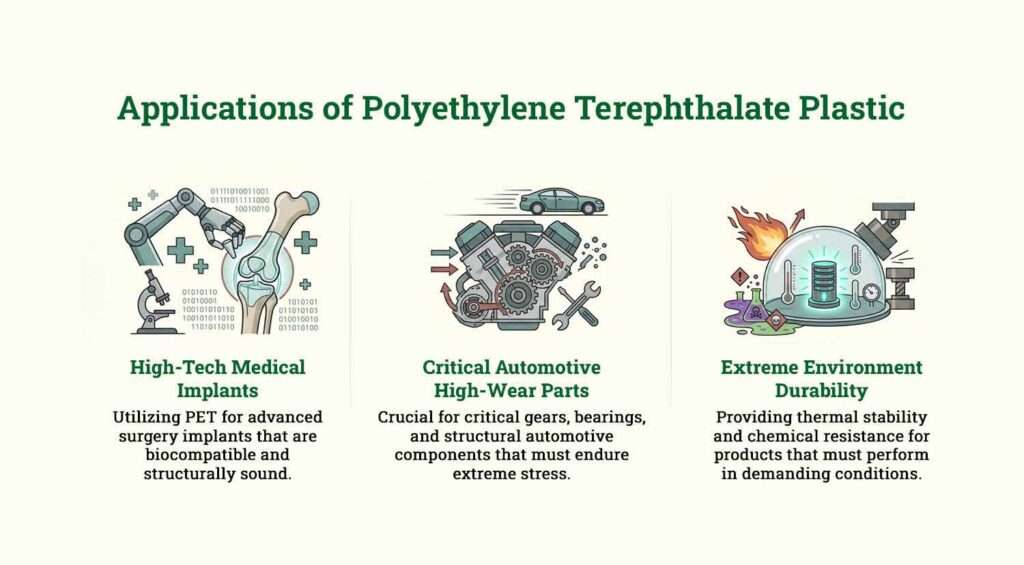
Applications of Polyethylene Terephthalate Plastic
Considering the expanded use of polyethylene terephthalate, we observe that it is used in high-technology areas. This terephthalate polyethylene is not only to be used in bottles, but also in the medical industry, it is utilized in surgery implants and in the automobiles industry, it is utilized in high-wear parts.
Thermal stability and chemical resistance of the material are selected in any polyethylene terephthalate plastic application. This renders polyethylene terephthalate plastic essential in products that have to withstand different temperatures and pressure.
Types of Polyethylene Terephthalate Plastic
All fall under the same family although there are various polyethylene terephthalate types, which are customized to meet certain manufacturing purposes. Knowledge of these types of polyethylene terephthalates is beneficial to the recyclers as it assists them in sorting the material.
- A-PET (Amorphous PET): A thermoformed tray is used since it is very clear.
- C-PET (Crystalline PET): Oven-safe and used as trays to put food.
- R-PET (Recycled PET): It is manufactured using the recycled streams of polyethylene terephthalate in order to make new packaging.
Advantages of Polyethylene Terephthalate Plastic
Polyethylene terephthalate has several benefits that enable it to outperform other resins. Its greatest strength in a pet plastic recycling scenario is its great recovery value.
Advantages of polyethylene terephthalate are:
- Recyclability: It is the most recycled and recycled plastic around the world.
- Lightweight: It minimizes the cost of shipping as well as the carbon emission.
- Barrier Properties: It preserves drinks that are carbonated and food longer.
These benefits are multiplied by good recycling of pet plastics, since the material can have a second life and even more.
Polyethylene Terephthalate Recycling Process
The recycling of polyethylene terephthalate is an example of industrial circularity. Recycling of polyethylene terephthalate requires the material to undergo a couple of intensive processes.
The polyethylene terephthalate recycle process steps are:
- Collection & Sorting: Bottles are sorted in terms of color and material.
- Grinding: The plastic is cut into small flakes.
- Washing: Labels, glues, and contaminants are washed.
- Extrusion: The flakes are melted and formed into new pellets.
In opting to recycle polyethylene terephthalate, we will save the virgin crude oil demand and save a lot of space in the landfill.
Role of Banyan Nation in PET Plastic Recycling
Banyan Nation has the advantage of transforming the pet plastic applications with the highest quality content through recycled content being of the highest quality. We collaborate with brands to shift their pet plastic uses to high-quality R-PET. Our high-tech decontamination system makes sure that the polyethylene terephthalate recycle stream is clean enough to meet the toughest of packaging demands, endorsing a genuinely circular economy in India.
Conclusion
From its chemical origins as polyethylene terephthalate to its omnipresence in our lives, this substance is one of the pillars of our modern convenience. But application of polyethylene terephthalate is unleashed in full power with pet plastic recycling. We can make sure that polyethylene terephthalate does not leave the economy and does not enter the environment by comprehending the benefits of polyethylene terephthalate and promoting the process of polyethylene terephthalate recycling.
FAQ's
What is the full form of PET plastic?
The full form of pet plastic is Polyethylene Terephthalate.
Is PET Plastic Sustainable?
Yes, it is the most recycled plastic in the world. When managed through a circular system, it has a lower carbon footprint than glass or aluminum.
Can PET plastic be reused?
While it is primarily designed for recycling, many PET containers are durable enough for multiple reuses at home before being placed in the recycling bin.
Why is PET widely used in packaging?
It is used because it is lightweight, strong, shatterproof, and provides an excellent barrier against oxygen and moisture.
Making recycled packaging the norm.
CITATIONS:
- PETRA. (PET Resin Association). Properties and Benefits of Polyethylene Terephthalate.
- NAPCOR. (2025). Report on Post-Consumer PET Container Recycling Activity.
- Journal of Applied Polymer Science. The Lifecycle of Polyethylene Terephthalate.
 What is Waste Disposal: Methods, Types, and Real-World Examples
 What Is Polyolefin? Types, Properties, Uses and Recyclability
 World Rivers Day 2026: Date, Theme, History and How to Take Part
 Zero Emissions Day 2026: What It Is, Why 21 September and How to Take Part
 World Cleanup Day 2026: Date, Theme and How You Can Take Part