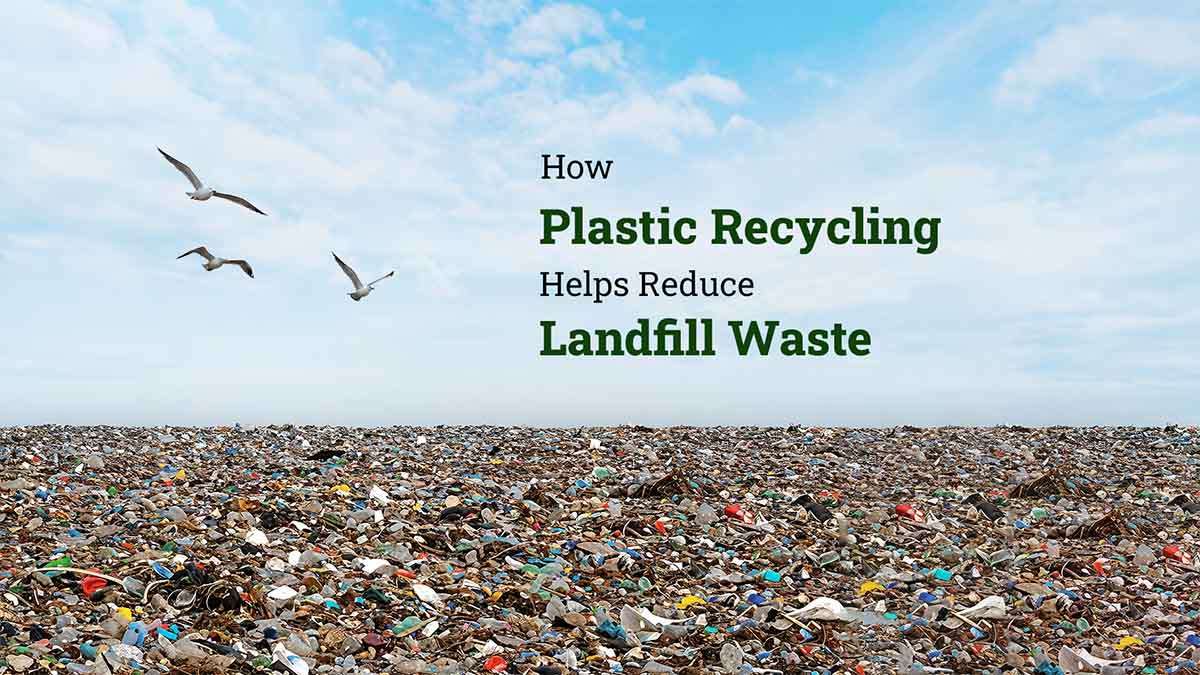
With waste piling up all over the world, waste management systems in municipalities are increasingly under the spotlight. The modern landfill is a stark reminder of our linear economic habits. A traditional landfill is far more than a hole in the ground; it is a highly engineered facility that is designed to maintain the isolation of discarded waste from the surrounding environment while using resources and materials. As the city population grows, and industrial consumption continues to increase to new highs, almost every municipal landfill in the world is now reaching its end-of-pipe. The ultimate problem in this crisis is the group of materials that is valued for its durability and then blamed for its lack thereof: post-consumer plastics. Plastic remains in landfills for centuries, and disposal has a severe impact on ecosystems because it is endangering them in the long term and losing valuable goods. In response to this emergency, contemporary environmental policies focus on mechanical plastic recycling as one of the key intervention measures. Collecting and separating waste polymers and recycling them into high-quality raw materials can be a systematic way to take millions of tons of waste away from disposal sites. In 2026, it is no longer just a matter of the environment, but a necessary measure to ensure land conservation, reduce greenhouse gas emissions, and establish a sustainable industrial economy.
Introduction
To stop a worldwide epidemic of waste dumping, the whole attitude to the end-of-pipe must change. Study into what is landfill and recycling systems operate together shows that, if we continue to bury our resource mistakes, then we are not truly sustainable.
Modern industries can:Modern industries can:
- Save Thousands of acres of valuable land from being permanently lost as a waste dump.
- Reduce High Carbon Footprints: Reducing the huge amounts of greenhouse gas emissions during raw material extraction and waste decomposition.
- Secure Supply Chains: Changing local municipal waste flows into reliable and quality manufacturing raw materials.
What is Landfill in Waste Management?
The creation of successful municipal strategies requires an understanding of landfill waste and its relationship to other public utilities. In professional jargon, landfill waste means a facility that has been designed to receive solid waste and that is engineered and managed to ensure that waste is spread in thin layers, compacted to the smallest possible practical volume and covered with soil or synthetic liners at the end of every day it is used.
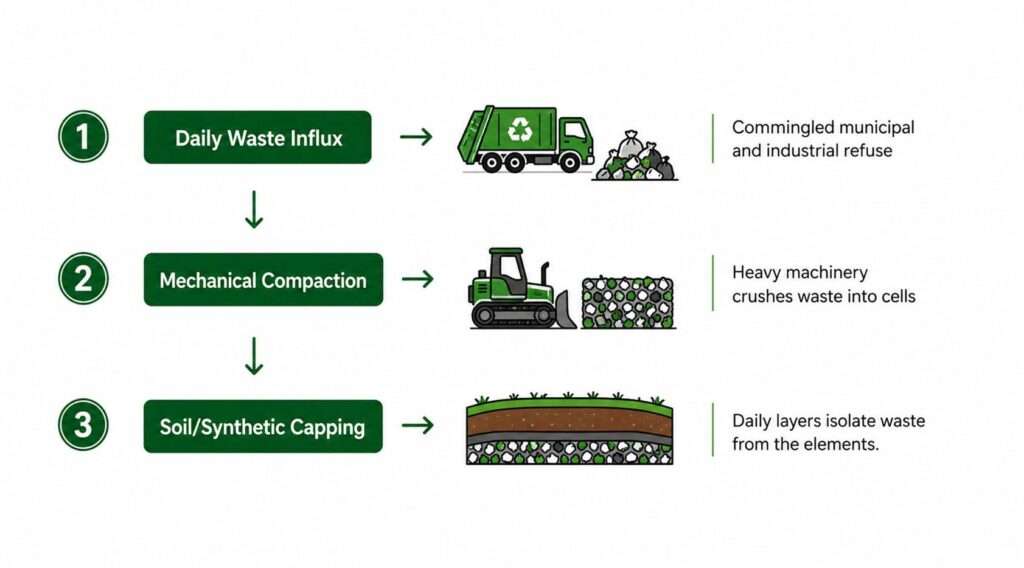
Firstly, it is important to differentiate between these engineered landfills and illegal open dumping grounds when defining what is landfill in waste management. The landfill was designed under current Plastic waste management standards to include advanced leachate collection pipes and methane gas extraction wells to monitor and help mitigate the structural risks associated with decomposition.
Types of Landfill and Their Environmental Impact
The control of landfill waste sites is based on the type of waste that can legally be disposed of there. To minimize the risk of hazardous chemical cross contamination, it is important to know these different types of landfill.
The main types of landfill that are used around the world are:
- Municipal Solid Waste (MSW) Landfills: Landfills that are specifically built for household waste, commercial waste, and non-hazardous industrial waste.
- Industrial Waste Landfills: Facilities designed to accept non-hazardous industrial waste products, such as ash and concrete waste.
- Hazardous Waste Landfills: Landfills with special containment and heavily lined to prevent toxic, corrosive or chemically reactive waste material from reaching the biosphere.
The Role of Plastic Recycling in Reducing Landfill Waste
Waste being continuously added to landfills is a huge loss of valuable resources that could be kept in the industrial production stream. However, if synthetic polymers represent a large fraction of packaging waste, reducing landfill waste depends on the capability of scaling up the application of new mechanical recycling methods.
One ton of plastic processed through a high-tech landfill recycle program also alleviates physical strain on municipal infrastructure. By adopting a hard “landfill recycle” mentality, high-density polyolefins and PET resins can be effectively collected, hot washed, and repelletized as brand new resins and not as a persistent pollutant.
Landfill Management and Sustainable Waste Practices
An engineered disposal site has to be managed in a way that will ensure that the public is not endangered, and the protocols for landfill management are long and stringent. If left unsupervised, waste management at landfills can result in catastrophic failure of the structure, such as the contamination of the groundwater with toxic substances, and the occurrence of huge fires inside the landfills, caused by accumulated methane gas.
In an effort to maximize safety, modern facilities are using sustainable strategies like:
- Automated Methane Flaring: Collecting gases, which can be decomposing organic gases, and changing them into local electricity or heat energy.
- Perimeter of test wells for Continuous Groundwater Monitoring: Using test wells to make sure that protective liners are not broken.
- Pre-Sorting Interventions: working with regional recycling networks to stop high-value recyclables going to burial cells.
Recycling vs Landfill – Which is Better?
The comparison of recycling vs landfill performance highlights a clear distinction between resource preservation and terminal waste disposal. The matrix below outlines how these two waste management pathways differ across key environmental and operational metrics.
Operational Metric | Recycling Pathway | Landfill Pathway |
Material Destination | Returned to manufacturing loops | Permanently buried underground |
Energy Impact | Saves up to 80% compared to virgin production | Generates zero energy savings |
Long-Term Liability | Zero; materials are fully consumed | High; requires decades of monitoring |
Economic Value | Generates green jobs and commodities | Continuous maintenance cost liability |
This clear contrast in the recycling vs landfill debate emphasizes why global environmental policies are shifting decisively toward complete landfill diversion.
Landfill Waste Examples and Recycling Solutions
By looking at some common waste items that find their way into landfills, the enormous amount of items that are put in place every day becomes apparent. By learning about these specific landfill waste examples, we can be able to come up with mechanical recycling solutions that would help us to keep these materials in use.
- Rigid Personal Care Bottles: These are the empty shampoo and detergent bottles that can be cleanly recycled to new containers for personal care items in the home.
- Single-Use Beverage Bottles: Classic landfill examples – PET plastic can be re-engineered to produce high grade textiles or food-contact containers.
- Industrial Storage Crates: Scraps of high PP quality can be readily ground down to high quality flakes for use in automotive parts.
How Banyan Nation Supports Plastic Recycling and Waste Reduction
Banyan Nation is a trailblazer in reshaping landfill and recycling practices in India. We acknowledged that the main problem of what we are calling “what is landfill waste” is the variability of the recycled supply chain. We use proprietary cleaning and advanced science decontamination processes to recycle post-consumer plastic waste into Better Plastic™, a range of near-virgin quality PCR resins.
Our traceable data collection enables us to stop millions of packaging pieces entering municipal waste management landfill sites before they ever even reach the end of the pipe, making it a reliable solution to help global brands to meet their EPR targets and to eliminate landfill waste.
Conclusion
The traditional landfill is no longer the best answer to our waste disposal problem. If we know what waste is not landfilled and are dedicated to getting more sophisticated plastic recycling technologies in place, the plastic waste loop can be systematically closed. Avoiding the end-of-pipe solution and high-purity recycling helps safeguard our natural environment, ensure our manufacturing supply chains and create a sustainable future where no valuable resource is ever buried.
FAQ's
How does landfill waste affect the environment?
It severely impacts the environment by producing leachate (a toxic liquid that can contaminate groundwater) and releasing large volumes of methane, a potent greenhouse gas that drives global climate change.
What are the major causes of increasing landfill waste?
The primary causes include rapid global urbanization, a widespread consumer culture centered on single-use packaging, and a systemic lack of municipal source segregation infrastructure.
What industries generate the highest amount of landfill waste?
The construction and demolition sector, the fast-moving consumer goods (FMCG) packaging industry, and the commercial food service sector generate the highest volumes of waste worldwide.
What are the challenges of landfill management?
The greatest challenges include managing hazardous chemical leaching, preventing localized industrial fires, controlling odors, and dealing with the political and geographic difficulties of finding space for new sites.
Making recycled packaging the norm.
CITATIONS:
- United Nations Environment Programme (UNEP). Global Waste Management Outlook: Moving Toward Zero-Waste Municipalities.
- Ministry of Environment, Forest and Climate Change. (2026). National Directives for Landfill Diversion and Circular Plastic Tracking.
- Banyan Nation Sustainability Report. (2026). Interception Strategies: Diverting Post-Consumer Polyolefins from Indian Dumpsites.
- Environmental Protection Agency (EPA). Criteria for Municipal Solid Waste Landfills and Advanced Leachate Control Standards.
 What is Waste Disposal: Methods, Types, and Real-World Examples
 What Is Polyolefin? Types, Properties, Uses and Recyclability
 World Rivers Day 2026: Date, Theme, History and How to Take Part
 Zero Emissions Day 2026: What It Is, Why 21 September and How to Take Part
 World Cleanup Day 2026: Date, Theme and How You Can Take Part