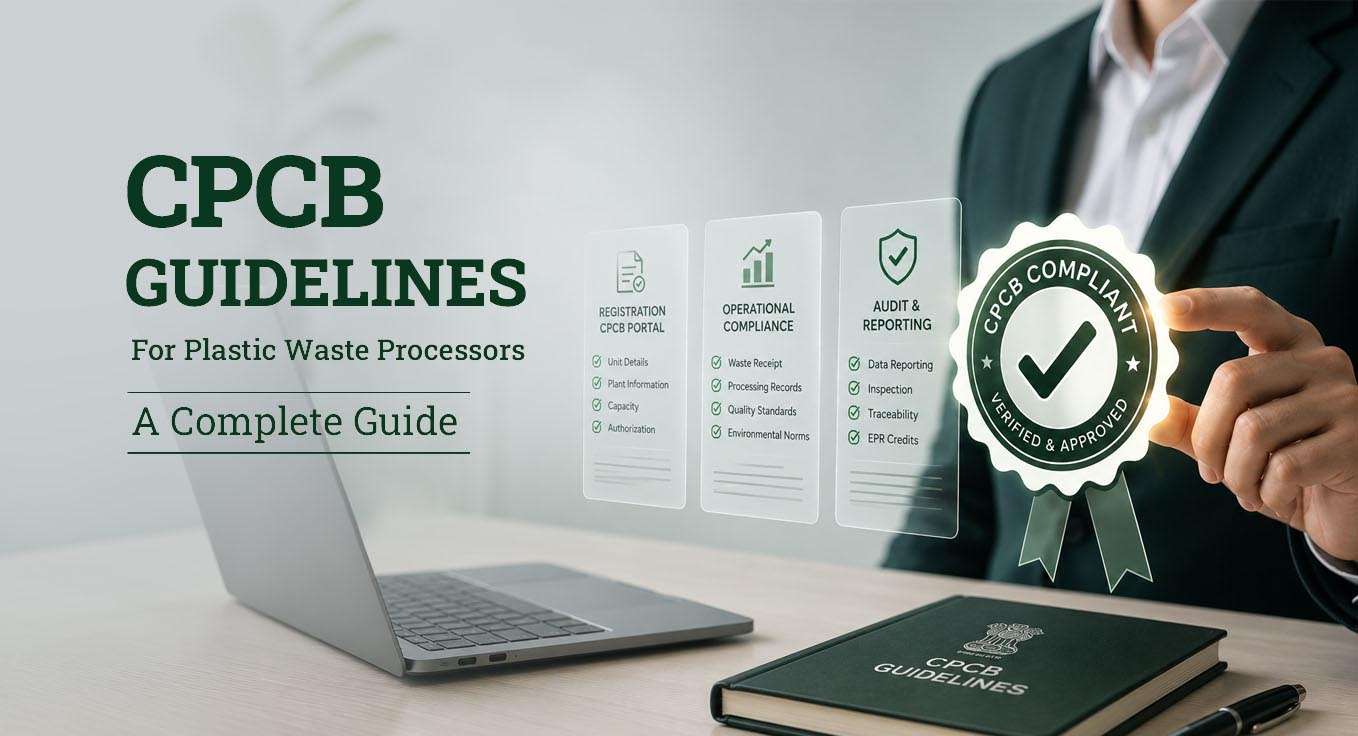
To navigate the regulatory environment of environmental compliance in India, it is important to have a clear understanding of the guidelines issued by the Central Pollution Control Board (CPCB). These CPCB guidelines form a regulatory foundation for plastic waste management and ensure that the process of transition to a circular economy is approached with scientific accuracy and legal responsibility.
As entities dealing with the collection, storage or processing of plastic, it is not a mere suggestion but a mandatory operational requirement to adhere to the CPCB guidelines. These guidelines are meant to simplify the Extended Producer Responsibility (EPR) system to ensure that all kilograms of plastic waste are represented with the help of a traceability system and chain of custody.
Since India is intensifying its fight against plastic pollution, the CPCB guidelines have undergone changes in order to incorporate stringent standards regarding data reporting, environmental safety, and technological efficiency. The processors should follow the CPCB guidelines to ensure that they are contributing towards a national infrastructure that focuses on the recovery of high-value materials and divert such material waste away from the landfills. To the stakeholders in the industrial sector, these CPCB guidelines should be a clear indication that they need to invest in long-term recycling technologies, as they can be sure that the regulatory environment will support high-quality, sustainable results. The CPCB guidelines are the main pillar of Indian environmental policy. As we move towards 2026, the CPCB guidelines will continue to serve as the foundation of India’s environmental policy, bridging the gap between the growth of industries and ecological conservation.
Introduction to Plastic Waste Management in India
The central pollution control board guidelines for plastic waste management are the foundation of the environmental governance of India, as they offer a complete framework for managing the increasing plastic waste across industries and households.
The framework also plays a critical role in regulating the collection, recycling, processing, and traceability of plastic waste in India. Through its guidelines and centralized EPR portal, the CPCB ensures that plastic waste processors comply with environmental standards and maintain transparent documentation throughout the recycling chain.
The following are the key central pollution control board guidelines that help PWPs to maintain compliance:
- Maximise Resource Recovery: Recycle the output using scientifically supported approaches to maximise the quality of the recycled output.
- Regulatory Compliance: Helps avoid penalties, operational disruptions, and cancellation of authorizations.
- Improved Traceability: Ensures transparent documentation and tracking of plastic waste movement through the EPR portal.
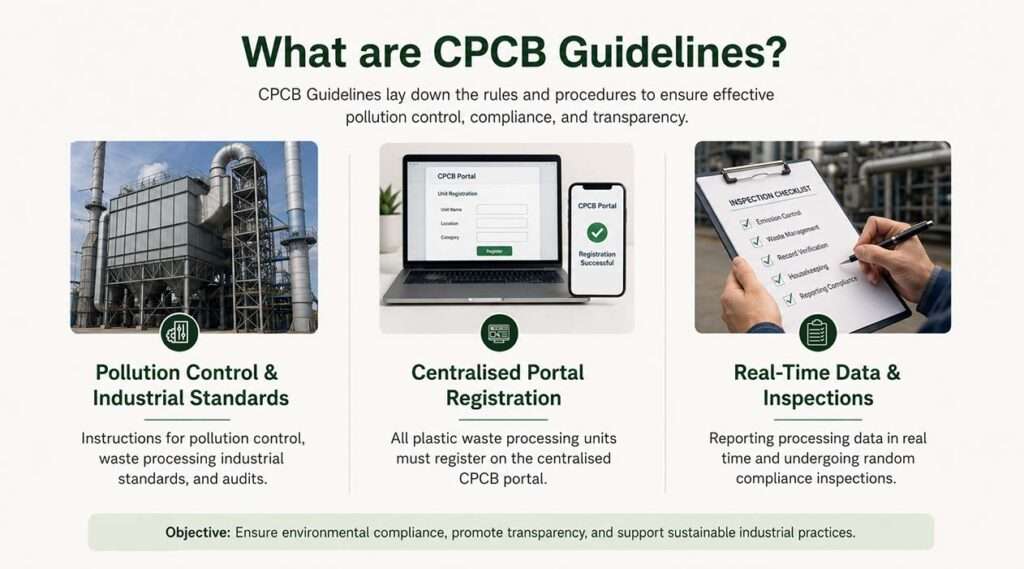
Understanding CPCB Guidelines and EPR for Plastic Waste Management
In order to respond to the basic question of what CPCB guidelines are, one must consider them as the operational rulebook for environmental protection. These guidelines bring the general outlines of the Plastic Waste Management (PWM) Rules into practice, in the sense that it is the general outline of the rules that is converted into practical and technical steps to be followed by businesses.
The CPCB norms stipulate how a facility should be designed, how waste should be characterised, and how the data is supposed to be uploaded on the centralised EPR portal. Non-compliance with CPCB norms may result in the suspension or cancellation of a facility’s ‘Consent to Operate’ (CTO), making these guidelines critical for every environmental officer.
Key CPCB Guidelines for Plastic Waste Management
The CPCB guidelines for plastic waste management focus on the complete lifecycle of plastic—from disposal to responsible recycling and reuse—while preventing plastic leakage into the environment.
The main pillars of the CPCB guidelines for plastic waste management are:
Mandatory Registration
All Plastic Waste Processors (PWPs) must register on the centralized CPCB EPR portal and maintain valid authorisations and Consent to Operate (CTO) from the respective Pollution Control Board.
Traceability & Documentation
Maintain proper records of plastic waste procurement, processing, recycling, and sales to ensure transparency and avoid double counting of EPR certificates.
Environmentally Sound Processing
Plastic waste must only be processed through approved recycling, co-processing, reuse, or end-of-life disposal methods as per CPCB standards.
Waste Characterisation & Segregation
Plastic waste should be categorized into rigid, flexible, multi-layered, and compostable plastics for efficient recycling and reporting.
EPR Certificate Generation
Recyclers and processors can generate EPR certificates only for eligible quantities processed under CPCB-approved methodologies.
Data Reporting & Compliance
Regular uploading of operational data, transaction details, and supporting documents on the CPCB EPR portal is mandatory for verification and audits.
Quality & Operational Standards
Processing facilities must comply with pollution control measures, environmental safeguards, and operational standards under PWM Rules and CPCB guidelines.
Latest CPCB Guidelines and EPR Updates
The regulatory landscape is shifting, and the CPCB’s new guidelines that have been released in the past few months are a reflection of a zero-tolerance policy towards data fraud.
Some of the important changes in the CPCB’s new guidelines of 2026 are:
Enhanced Traceability Requirements
Every transaction related to plastic waste collection, processing, and EPR certificate generation must be traceable through documented records to prevent duplication and fraudulent claims.
Cross-Verification of Data
CPCB and Pollution Control Boards may reconcile procurement quantities, recycling output, GST data, and sales records to validate the authenticity of waste processing activities.
Physical Verification & Audits
Recycling facilities and processing units are subject to stricter inspections and physical verification to confirm operational capacity, waste handling practices, and actual recycling activities.
CPCB Guidelines for Industries Handling Plastic Waste
The CPCB guidelines to manage plastic waste is to be applied to all of the Producers, Importers and Brand Owners (PIBOs). Such CPCB guidelines about plastic waste management force industries to be in a position to take financial and physical responsibility towards the end-of-life of their packaging. In this system, Plastic Waste Processors (PWPs) play a critical role in helping PIBOs achieve compliance by ensuring responsible collection, recycling, and processing of plastic waste.
To industries, these CPCB guidelines for managing plastic waste include:
- EPR Credit Trading: PIBOs can purchase EPR credits generated by registered PWPs to fulfil their legal EPR obligations.
- Recycled Content Targets: A road map to include a compulsory percentage of Recycled content into new products.
How CPCB and EPR are Strengthening Plastic Recycling in India
CPCB is both a regulator and a facilitator. The board provides clear CPCB guidelines to industries, which ensures that ethical recyclers are not undermined by fly-by-night operators. Their contribution to the standardisation of recycling certifications has been a game-changer to the circular economy, making India one of the most proactive countries in the Global South in terms of plastic waste policy.
Why Choose Banyan Nation for CPCB-Compliant Plastic Waste Management Solutions
Banyan Nation is a pioneer of plastic recycling and CPCB registered PWP that complies with the standards. We are a hundred per cent transparent, meaning that all kilograms of plastic we process are accounted for under the CPCB PWM guidelines. We have installed world-class technology in our facilities, and our reporting systems are well-integrated with compliance requirements. By collaborating with us, brands can confidently fulfil their UReP targets with high-quality recyclates that meet stringent quality and compliance standards. In addition, brands can have a hundred per cent assurance that their EPR credits are traceable and that their wastes are in the process of being disposed of in accordance with the highest CPCB standards.
Conclusion
The CPCB guidelines are the crucial point of contact between the environmental aspiration and the industrial reality. Through adhering to the CPCB guidelines on plastic waste management, we can ensure that the growth of India is sustainable, transparent and circular. Compliance is all that can be done, whether you are a brand owner trying to make your way through the CPCB guidelines for industries or a processor trying to shape your CPCB norms. Let’s work together to make India a global leader in plastic waste management.
FAQ's
Are CPCB guidelines mandatory for all recycling units?
Yes, compliance with CPCB guidelines is a legal requirement for all plastic waste processors in India. Failure to comply can result in the cancellation of registration and heavy environmental compensation fines.
What are the penalties for non-compliance with CPCB guidelines?
Penalties range from heavy financial fines (Environmental Compensation) to the permanent closure of the industrial unit. PIBO’s may also face “market de-listing” for failing to meet EPR targets.
What is the role of audits in CPCB compliance?
Audits verify that the “Processing Capacity” of a recycler matches their actual output. This prevents “paper-only” recycling and ensures that EPR certificates represent actual plastic diverted from the environment.
How does CPCB monitor plastic waste management practices?
Monitoring is done through a centralised digital portal, mandatory annual returns, and random physical inspections by CPCB and SPCB officers.
Do CPCB guidelines differ by state in India?
While the CPCB guidelines provide the national framework, State Pollution Control Boards (SPCBs) can implement more stringent rules if local environmental conditions require them.
Making recycled packaging the norm.
CITATIONS:
- CPCB. (2026). National Portal for Extended Producer Responsibility.
- Ministry of Environment, Forest and Climate Change. Plastic Waste Management (Amendment) Rules, 2024.
- PIB India. Updates on National Environmental Regulations.
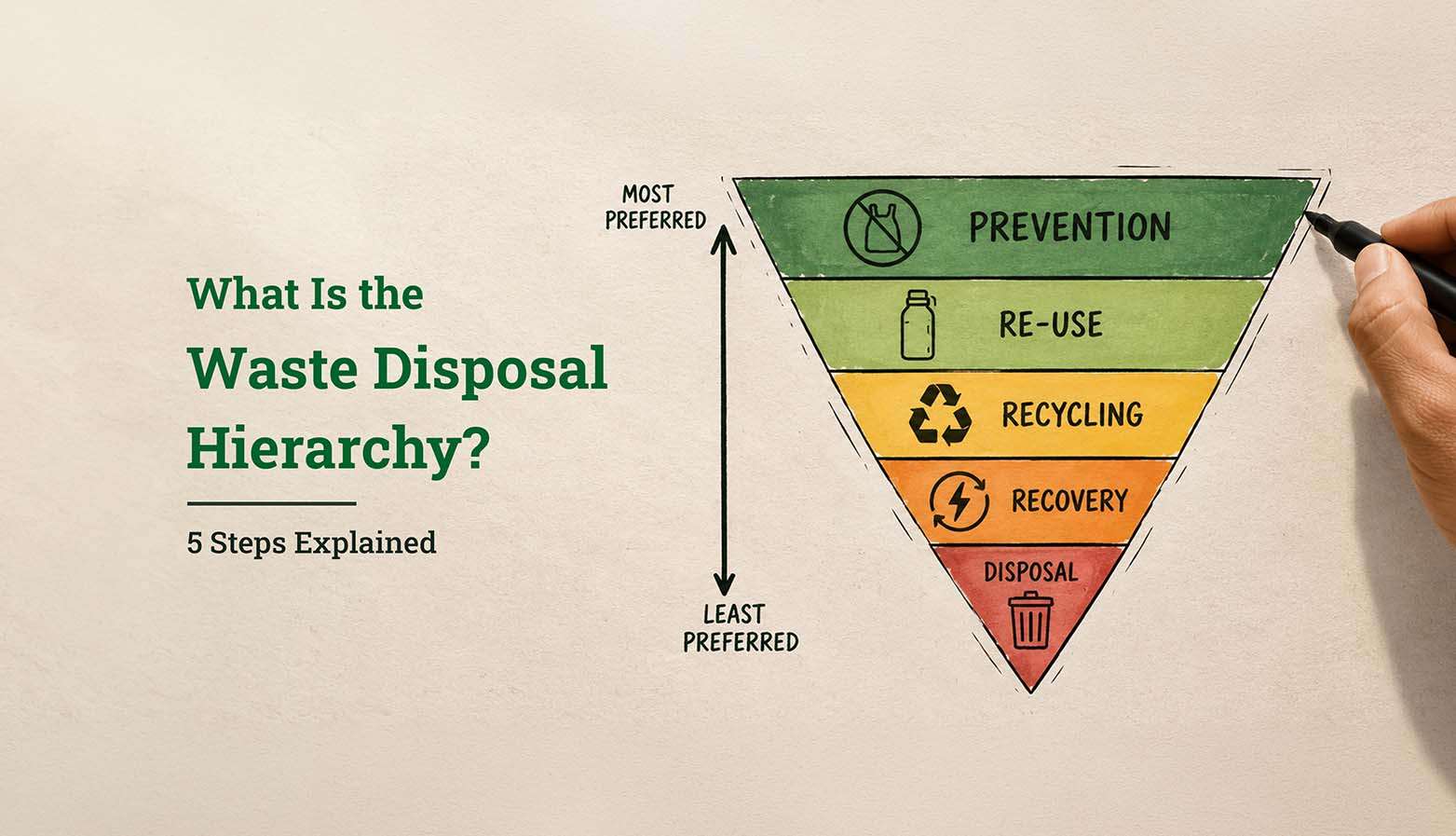
 What Is the Waste Disposal Hierarchy? 5 Steps Explained
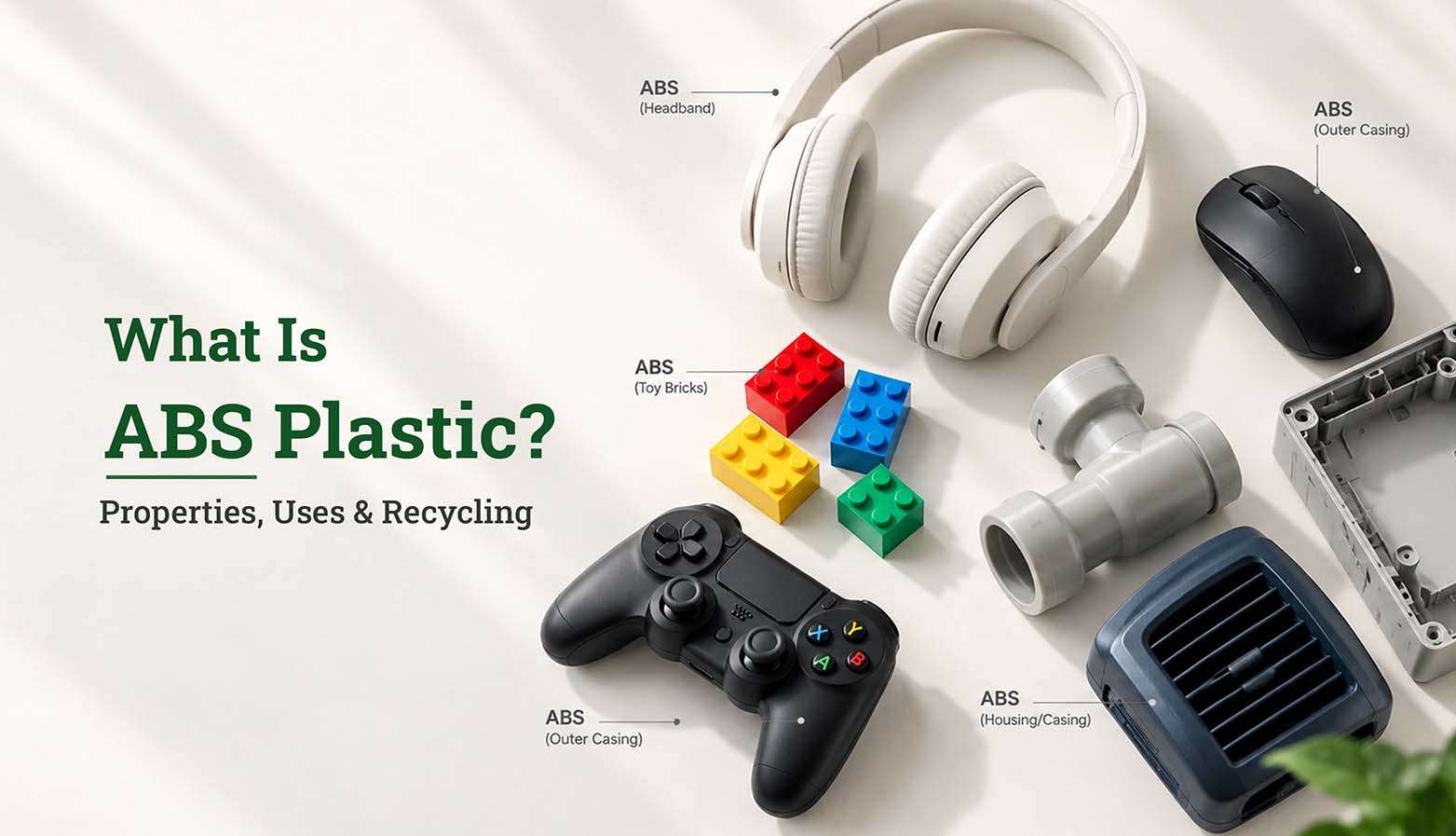
 What Is ABS Plastic? Properties, Uses & Recycling
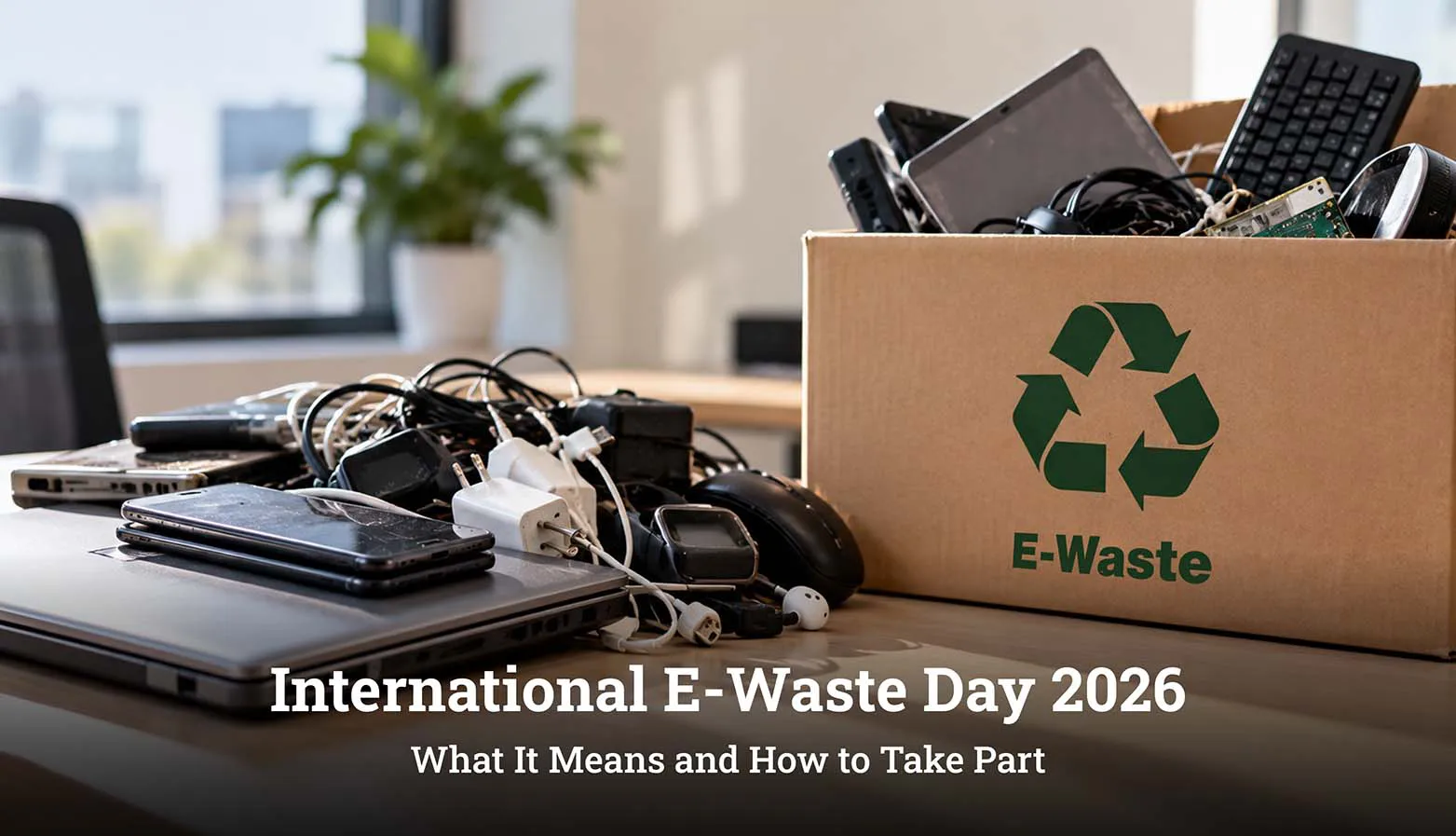
 International E-Waste Day 2026: What It Means and How to Take Part
 What is Waste Disposal: Methods, Types, and Real-World Examples
 What Is Polyolefin? Types, Properties, Uses and Recyclability