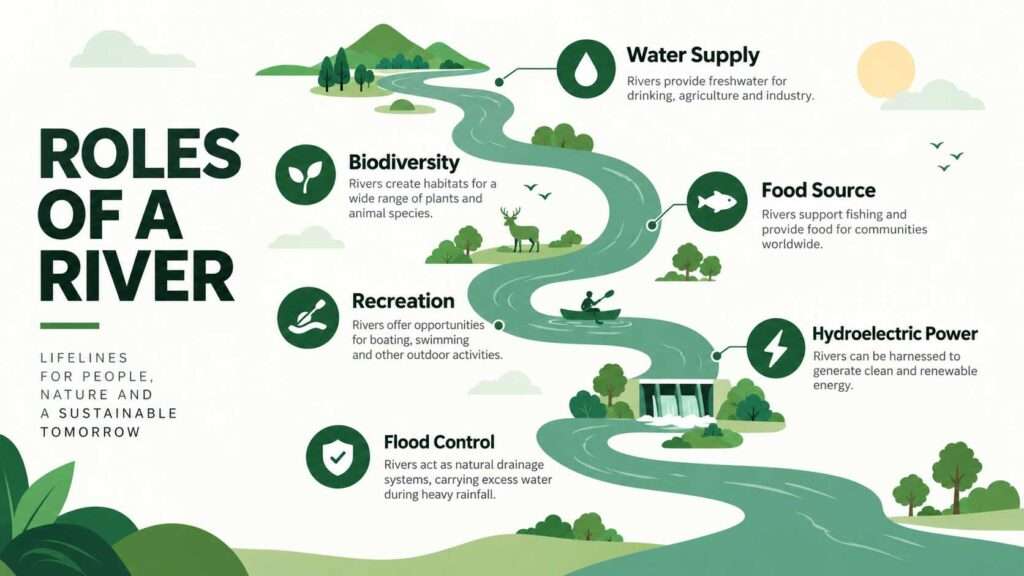
International Rivers Day 2026 is observed on 27th September in 100+ countries, and Sunday the 4th of September on 27th September. A worldwide celebration, uniting millions of volunteers, environmentalists, and local communities to raise awareness that waterways are so incredibly valuable and encourage everyone to take some action to conserve them. Today is an important day for International rivers, as it reminds us of the many ecological, social and economic benefits these free-flowing waterways offer worldwide. Rivers, whether big or small, feed wildlife, serve as a source for drinking water and power agricultural systems throughout the continents.
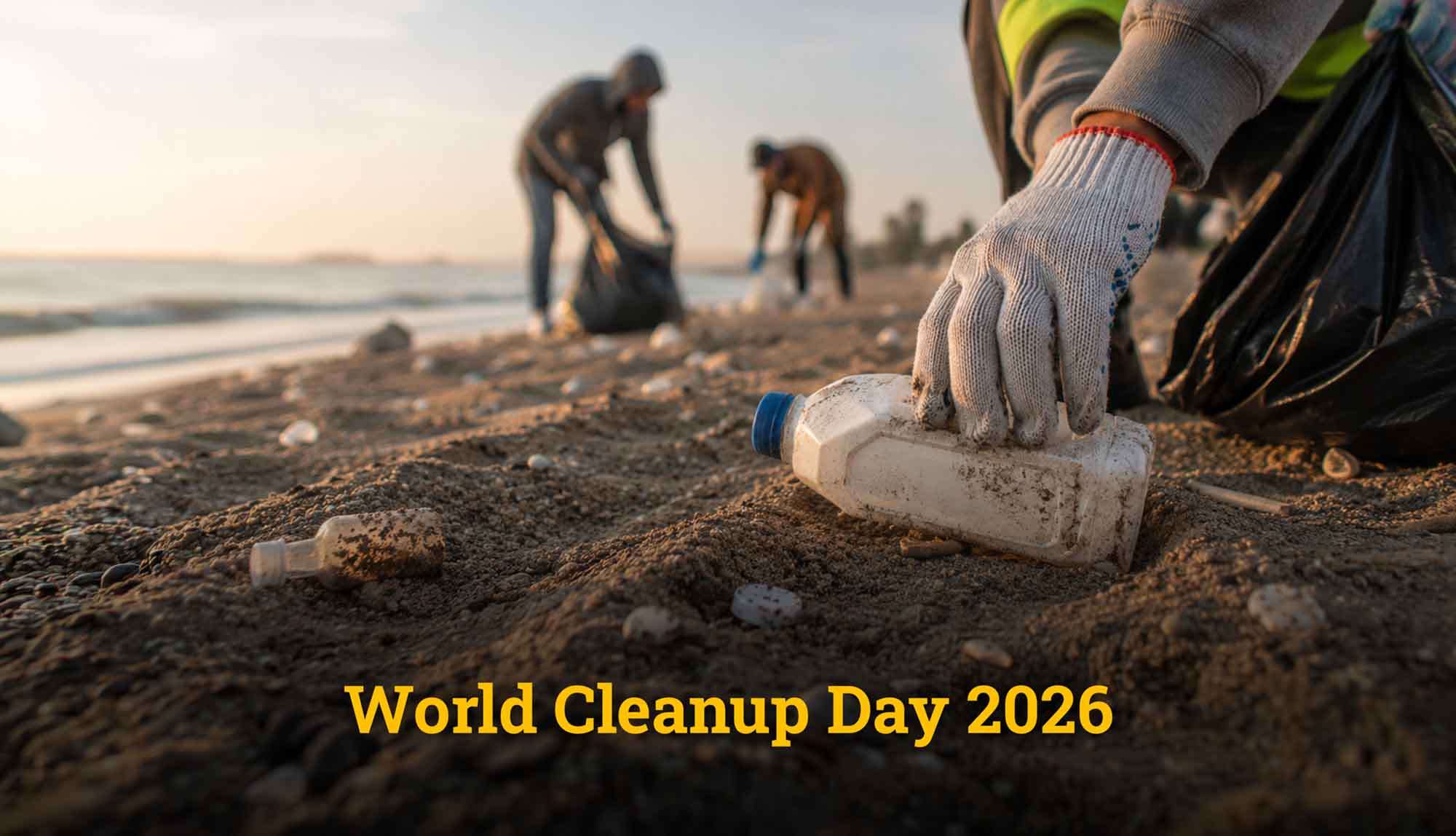
Although rivers play a crucial role in the planet, there are dangerous threats imposed on them by urban runoff, untreated industrial effluents, and sand mining and unmanaged plastic waste dumping. Rivers are a crucial component of planet earth but are encountering unprecedented challenges due to urban run-off, unmanaged plastic waste dumping, untreated industrial effluents and sand mining. The individuals, schools and corporate bodies will have the chance to join in different activities, such as river clean-ups, education and community restoration, during International Rivers Day 2026 . Citizens are directly involved in the project and it is a step towards helping citizens to become stewards of the river. Communities can contribute to the International rivers day 2026 on 27 September 2026, to help take proactive measures to sustain these vital freshwater environments for generations to come, such as monitoring water quality, planting native vegetation around riparian areas, and preventing land-based plastic waste from entering the water supply.
When Is World Rivers Day 2026? Date and the Fourth-Sunday Rule
World Rivers Day 2026 does Not have a set calendar date. It is now, however, celebrated on the fourth Sunday of September. In 2026, International Rivers Day 2026 falls on Sunday, 27 September 2026.
For any year, the date can be calculated by picking out the calendar for September, finding the first Sunday and then moving up to the fourth Sunday. September has 30 days in it, so the fourth Sunday will always be in between September 22 and September 28. This will streamline the planning of full day river cleanups and public workshops by school, community and corporate volunteers this weekend.
Year | Date | Day of Observance |
2024 | 22 September | 4th Sunday of September |
2025 | 28 September | 4th Sunday of September |
2026 | 27 September | 4th Sunday of September |
2027 | 26 September | 4th Sunday of September |
What Is World Rivers Day? Meaning and Why Rivers Need a Day
World River Day 2026, an international celebration of water, celebrating the role of rivers in life and ecosystem. It’s a call for action around the world to stop industry contaminating, degrading and over-exploiting waterways.
Rivers represent less than 0.0002% of the water on earth and less than 1% of all water, with a tremendous ecological impact. This small part is however consumed primarily by human beings for drinking, irrigation, sanitation, industrial production etc. In addition, there are more than 100,000 species of freshwater fish found in rivers and they constitute one of the most diverse natural habitats in the world.
World river day 2026 is an urging for effective measures to protect rivers and policies to protect them for the future. Limited supply, poor quality and quantity of world’s rivers is compromising the water security and biodiversity on land.
World Rivers Day vs International Day of Action for Rivers
While both observances center on freshwater ecosystems, they differ significantly in origin, tone, and primary focus. Many people confuse the two or wonder: Is World River Day the same as International Rivers Day?
Key Feature | World Rivers Day | International Day of Action for Rivers |
Date Observed | 4th Sunday of September (e.g., 27 Sept 2026) | 14 March annually |
Primary Focus | Celebratory, community cleanup, public education, and local conservation | Advocacy, policy protest, opposition to destructive mega-dams, and water rights |
Origin & History | Founded in 2005 via UN Water for Life decade (building on 1980 BC Rivers Day) | Founded in 1997 in Curitiba, Brazil by dam-affected communities |
Target Audience | General public, schools, local communities, corporate volunteers | Policy makers, human rights activists, river defenders, and environmental lawyers |
Core Tone | Civic engagement, celebration, and stewardship (international rivers day) | Direct political action, rights of rivers, and systemic policy reform |
History of World Rivers Day: BC Rivers Day 1980 to Global 2005
BC Rivers Day began in 1980 with the founding of the national conservation movement in British Columbia by Mark Angelo, one of Canada’s most respected conservationists. Angelo orchestrated a local cleanup in the Thompson River, recruiting thousands to clean up their local waterways.
The Canadian project went so well that it was picked up by the international media. After the United Nations launched the “Water for Life” Decade in 2005, Angelo suggested forming a world’s rivers day. The initiative was then officially embraced by the UN, marking the first World Rivers Day in dozens of countries. What began as a grassroots Canadian river drive has since grown into an annual event that is revered in over 100 countries around the globe.
World Rivers Day 2026 Theme: What We Know So Far
The world rivers day theme is usually unveiled by the international organizing committee near the end of September. Often the theme of the organizers is chosen, emphasising a topic of global concern – for example, over the last few years the theme for India has been “Waterways of Life” and “Waterways in Our Communities”.
The common theme of world rivers day, no matter what the exact wording is, is about conserving freshwater ecosystems, rehabilitating impaired watersheds and stopping plastic pollution at its source. Event planners and local environmental groups are welcome to use national themes and make it a local theme in their respective river basins based on local river challenges.
How to Celebrate World Rivers Day 2026: 8 Ideas
Looking for ways how schools and companies can celebrate World rivers day? With that in mind, here are a few ideas for you to consider celebrating rivers day 2026:
1. Make a Local Riverbank Cleanup event.
Surveys to clean up waste and uncollected trash along local rivers before the rains wash it away.
2. Organize a Plogging Event on Waterways
Make fitness and the environment go hand-in-hand with a plogging (jogging and picking up trash) event on riverside tracks and promenades.
3. Plant Native Vegetation along Riparian Buffer Zones
Plant native trees, shrubs, and deep-rooted grasses, which will help to prevent soil erosion, absorb agricultural runoff, and restore riparian habitat along riverbanks.
4. Carry out Interactive School & University Seminars.
Students can be educated regarding river hydrology through interactive workshops, water quality testing labs and guest speaker sessions in educational institutions.
5. Create a local river walking trail map for the community
Schedule a guided nature hike with local naturalists to educate local citizens about local aquatic life, migratory birds and local river history.
6. Organize an Environmental Art & Poster Contest
Reach out to youth and local artists and organize painting, photography or digital art competitions that highlight river conservation and clean water.
7. Host a Corporate Webinar focused on Water Stewardship in Industry
Companies can organise in-house seminars or panels on Scope 3 water footprints, wastewater treatment compliance and plastic circularity.
8. See how much you can get involved in an “Adopt-a-Stretch” River Program!
Take up a pledge to monitor and maintain a stretch of a local river for the year together as a school, neighborhood association, or corporate team.
The Biggest Threats to Rivers – Pollution, Plastic and Overuse
Rapid urbanization, industrialization and unsustainable agricultural practices are causing severe ecological stress in earth’s river systems. These are the drivers that will be fundamental in ensuring long-term health of river waters on river awareness day.
Threats to rivers around the world include:
- Untreated Sewage & Industrial Effluents: More than 80% of all the world’s wastewater is discharged into water bodies untreated with toxic chemicals, heavy metals and pathogens.
- Unmanaged PWL: Each year millions of tonnes of single-use plastic packaging are thrown near water bodies, which degrade into microplastics.
- Sand Mining & Hydrological Alterations: Incorrect sand dredging from river beds resulting in destruction of aquatic habitat, destabilisation of river banks and change of natural flow patterns.
- Over-Extraction & Agricultural Runoff: Water operations for agriculture dry up rivers and fertilizer run-off leads to large hypoxic “dead zones”.
These issues are exemplified by iconic sacred rivers like Ganga and Yamuna in India. Billions of liters of raw sewage from the city are dumped into the Yamuna every day, creating toxic foam and ecological imbalance. In the same way, although huge efforts have been made by the government such as Namami Gange, the Ganga is still plagued by excessive industrial effluents and agricultural runoffs.
How Plastic Reaches Rivers – and How to Stop It at Source
Rivers are the main transport channels for plastic waste from land to oceans around the world. Studies have shown that about 80% of ocean plastic pollution comes from the land via storm water, urban creeks, and large waterways.
Winds and rain carry plastic waste from city roads and poorly managed open garbage dumps to enter the local drainage system. The plastic pieces degrade under the influence of sunlight and mechanical waves, forming persistent micro-plastics which pollute aquatics food chains as these channels drain into streams and large rivers.
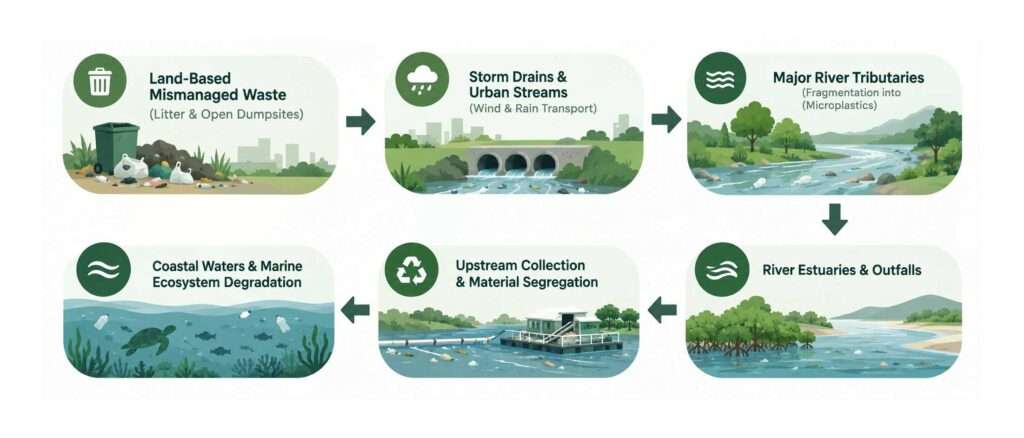
The only solution for river awareness day is to prevent plastic from entering the stream. Waste that is constantly being dumped into the ocean cannot be caught with end-of-pipe ocean cleanup tools. The collection of waste from upstream, separation at the doorstep, and the development of good material recycling facilities in towns and cities are critical for the permanent exclusion of plastic from the river.
How Banyan Nation Keeps Plastic Out of India’s Rivers
To avoid river pollution, a linear disposal system needs to be substituted with a closed loop circular system. Banyan Nation is making a significant contribution to safeguarding the fragile aquatic environments of India from the pollution of discarded plastic waste.
Banyan Nation works with various waste collectors and local governments in urban areas to recover high-volume polyolefin waste (HDPE and PP) before it flows into drains, streams and rivers such as the Yamuna and Ganga. This recovered plastic undergoes proprietary washing and decontamination processes to become Better Plastic™ – high purity, near-virgin quality Post-Consumer Recycled (PCR) resin. In addition, Banyan Nation’s Extended Producer Responsibility (EPR) services and plastic credit program allow global brands to achieve sustainability goals, demand plastic reduction and truly stop plastic pollution at the source.
FAQ's
When is World Rivers Day 2026?
World Rivers Day 2026 takes place on Sunday, 27 September 2026. It is observed every year on the fourth Sunday of September across more than 100 countries.
Who started World Rivers Day?
World Rivers Day was founded by Canadian conservationist Mark Angelo in 2005. It built upon the success of BC Rivers Day, which Angelo established in British Columbia back in 1980.
Is World Rivers Day the same as International Rivers Day?
While often used interchangeably in casual conversation, World Rivers Day (4th Sunday of September) is a celebratory and educational event, whereas the International Day of Action for Rivers (14 March) focuses on political advocacy, protesting mega-dams, and human rights.
What is the theme of World Rivers Day 2026?
The official theme for 2026 is announced closer to September by the international organizing committee. National bodies often select regional sub-themes, such as India’s focus on “Waterways of Life.”
How can schools and companies celebrate World Rivers Day?
Schools and companies can celebrate by organizing local riverbank cleanups, hosting plogging sessions, holding educational webinars on water stewardship, planting native trees, and switching to packaging made with recycled plastics.
Making recycled packaging the norm.
CITATIONS:
- Angelo, M. (2005). World Rivers Day Charter and Global Waterway Conservation History.
- United Nations Environment Programme (UNEP). (2025). Global River Basins and Plastic Pollution Transport Mechanics.
- World Resources Institute (WRI). (2025). Freshwater Ecosystem Risk and Urban Watershed Management.
 World Rivers Day 2026: Date, Theme, History and How to Take Part
 Zero Emissions Day 2026: What It Is, Why 21 September and How to Take Part
 World Cleanup Day 2026: Date, Theme and How You Can Take Part
 What is Polypropylene Plastic?
 What Is a Carbon Footprint? Meaning, Calculation & How to Reduce It