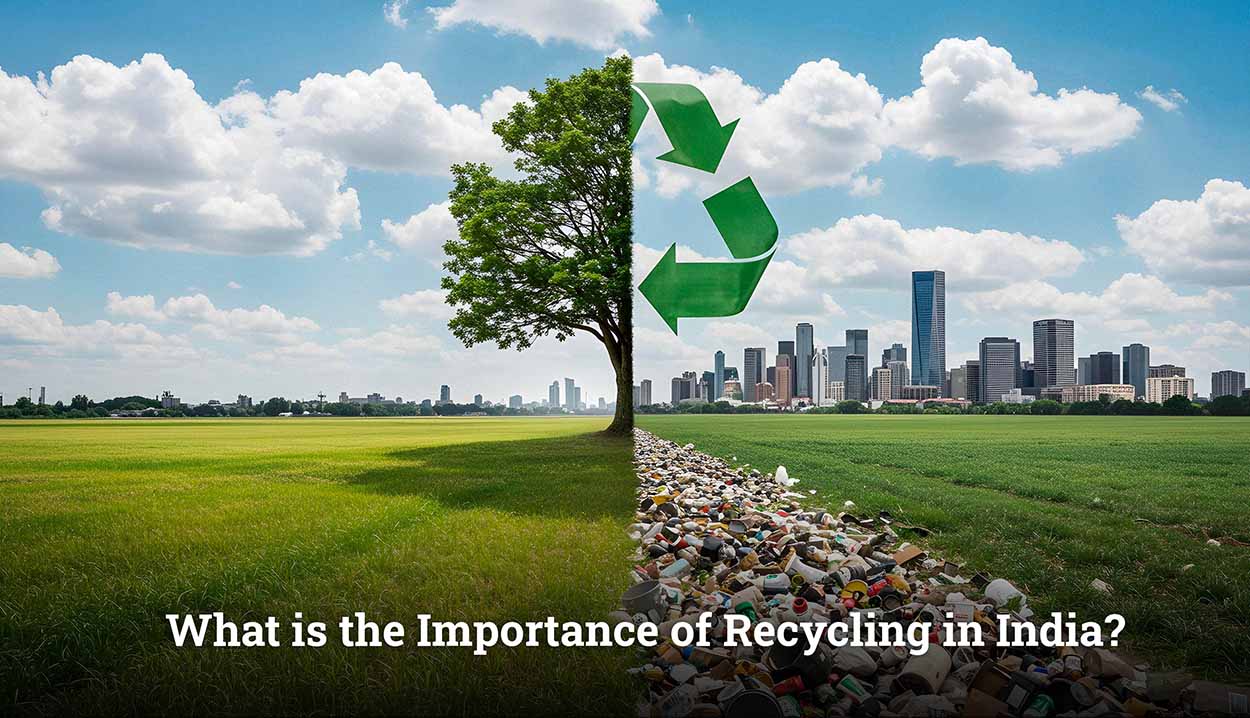
To discuss the future of the urban landscape in India, we should first consider one of the basic questions: what is recycling and why it is important and how does recycling relate to the rapidly growing economy? Recycling is not merely putting cans and bottles in the garbage bin, but a complex, organized reclaiming of material worth of waste products which would otherwise overload our landfills and pollute our waters.India being a densely populated country is facing a special challenge in which the traditional ways of disposing waste such as open dumping can no longer be done in our country considering the health and the environment. Hence, it becomes a critical issue to define what is recycling to the policymakers, the industry heads, and ordinary citizens. It is the act of changing waste products to new substances and products, which is the sole method of perpetuating our fast industrialization without exhausting our natural resources. It is by actually understanding what is recycling that we can shift towards a culture of take-make-waste to that of resource-efficiency and long-term sustainability. In India, where the informal sector has been recycling decades ago, it is essential to make a transition to formal and technology-driven processes. Such development is what guarantees an improvement to the quality of recycled materials, particularly plastics, so that they can be recycled into primary packaging again, and the loop is finally complete, making the country less reliant on virgin fossil-based resins.
Introduction
India is at a crossroads. Tons of waste material are produced every day with millions of tons of waste and the issue of recycling has never been more evident. Although the informal sector helps the country to collect recycling lines at a high rate, the technical importance of recycling lies in the extent to which we can clean and reuse the same as high-quality raw materials.
With the help of the emphasis on the importance of recycling, we will be able to obtain:
- Cleaner Cities: Lessening the taxation on overcrowded municipal landfills.
- Better Ecosystems: No more plastic and chemical runoffs into our holy rivers.
Sustainable Growth: Decoupling Economic development with environmental degradation.
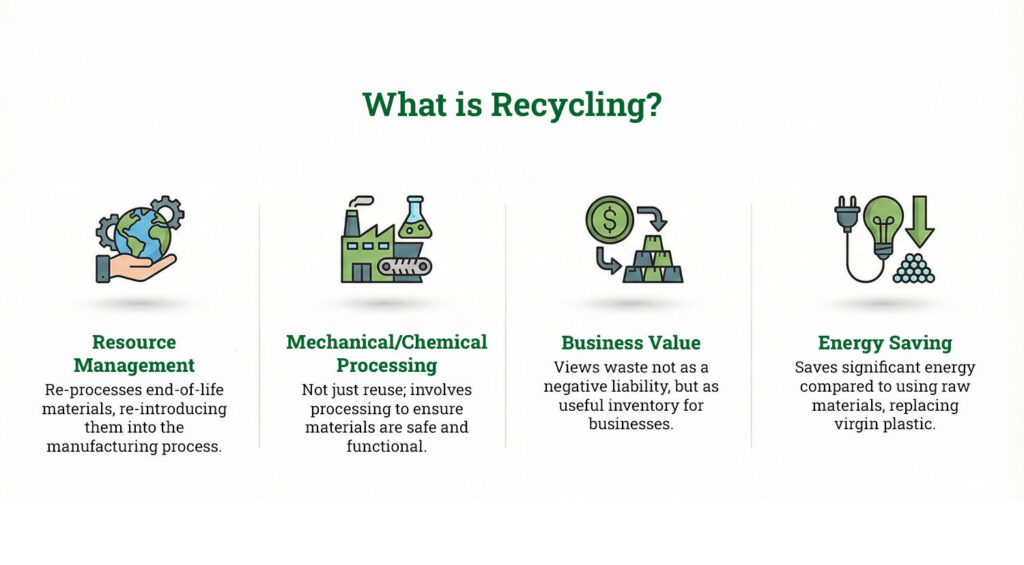
What is Recycling?
The importance of recycling and its significance can be reduced to management of resources. It constitutes the manufacturing process of re-process of taking end-of-life materials and re-introducing them into manufacturing process. This is not a mere reuse but mechanical or chemical processing of the material to make sure that the material that is being reused is safe and functional. Knowing what is recycling and why is important is a way of making businesses view waste not as a negative liability, but as a useful inventory. Recycling has a positive effect at the molecular level, where an item such as HDPE and PP can be recycled, purified, and pelletized to substitute virgin plastic. Properly recycled, the advantages of recycling are the large amount of energy saved during production as opposed to using raw materials to manufacture them.
Importance of Recycling
In order to understand why this is important, we must view the big picture. In what ways is recycling relevant in a world with limited resources? The solution is in the fact that we drink and trash large quantities of plastic every single day.
To explain why is recycling important to the modern world, the following list is presented:
Preservation of Resources
It decreases mining, quarrying and logging that is energy consuming and destroys the resources.
Energy Savings
Recycling in general requires significantly less energy compared to virgin raw material processing.
Pollution Mitigation
It decreases the use of traditional waste disposal and thus decreases green house gas emission.
Landfill Longevity
Diversion of waste will prolong the life of our current landfills and avoid the development of new ones as well.
The perception of why is recycling important is the core of any Corporate Social Responsibility (CSR) and Extended Producer Responsibility (EPR) strategy.
What are the Benefits of Recycling
The benefits of the strong recycling structure will be double, both in natural surroundings and economics. Recycling Benefits to the Environment. Cost Effective Advantages of Recycling.
Environmental Benefits of Recycling
Carbon footprint has contributed greatly to the environmental benefits of recycling. When a ton of plastic is recycled we save about 1.5 tons of CO2. Also, recycling has environmental advantages such as protecting biodiversity; because of recycling, we reduce the need to extend the industrial areas to natural environmental areas.
Economical Benefits of Recycling
Recycling has minimal cost-saving advantages with regard to a business point of view. Recycled resin may be a cheaper option than virgin plastic to use, particularly with the fluctuating oil prices. Besides, the economic benefits of recycling is felt in job creation, especially in a nation such as India where the waste management industry is a wealth generation industry, with millions of people employed. Making this sector formal dispenses the cost-effective value of recycling more evenly throughout the value chain.
Why Is Recycling Necessary in a Country Like India?
You may ask, why recycling is necessary in the context of the Indians? In contrast to most of the Western countries, the waste in India is mixed and heavily contaminated, and thus, the business cannot be carried on. This is the reason why recycling is necessary in our nation:
Urbanization
With an increasing population relocating to the urban areas, the amount of garbage is exceeding the capacity of collection.
Regulatory Pressure
The prominence of recycling has become a legal requirement of the brands with the Plastic Waste Management Rules.
Water Scarcity
The manufacture of Virgin plastic consumes a lot of water; we understand that recycling requires water, but upon realizing that a small percentage of the water is used in recycling, we see the need to recycle.
Recycling is also a national security issue in India since it lessens the need to import oil and polymers.
Impact of Recycling on India’s Circular Economy
The impact of recycling is the engine that drives the circular economy. We reduce the number of leaks in our system by having materials in our system as long as possible so that we do not lose value to the environment. Recycling has an effect on the circular economy which is determined by the number of times a material has been recycled before it becomes unsound. We make sure that the effect of recycling is made the most at Banyan Nation through our high quality Better Plastic™ that can be reused a number of times in the same packaging process.
Banyan Nation’s Role in Advancing Recycling in India
Banyan Nation has put the importance of recycling in India at a new level, bringing data and technology to an industry that was usually informal. We have developed a vertically integrated supply chain where our proprietary cleaning process has been used to purify post-consumer waste. This will enable us to provide a viable alternative to virgin plastic that is both of high quality and offered consistently, showing that the advantages of recycling are not only technically feasible, but also economically viable on a large scale.
Conclusion
Recycling is a critical aspect that cannot be overemphasized as we are plunging into a future which is characterized by climate action. Between knowing how to technically define recycling and the ultimate reward of realizing appraisals on the environment through recycling, the stakeholders all have a role to play. India can be the global leader in the circular economy, assuming that we start seeing our waste as the asset that it is. When we decide on the importance of recycling, we are not merely cleaning up, but creating a strong, healthy future for the next generation.
FAQ's
What role do recycling companies play in India?
Recycling companies like Banyan Nation act as the bridge between the informal waste sector and global brands. They provide the technology and quality control needed to turn “trash” into industrial-grade raw materials.
Why is waste segregation important for effective recycling?
Waste segregation is the secret to high-quality recycling. When materials are mixed, contamination levels rise, making it much harder and more expensive to recover pure polymers.
How can businesses implement effective recycling practices?
Businesses can start by designing for recycling and partnering with certified recyclers to ensure their post-consumer waste is actually being repurposed and not just downcycled.
Making recycled packaging the norm.
CITATIONS:
- Central Pollution Control Board (CPCB). (2024). Annual Report on Plastic Waste Management. Retrieved from: https://cpcb.nic.in/
- Ministry of Environment, Forest and Climate Change. (2022). PWM Rules and EPR Framework. Retrieved from: https://moef.gov.in/
- Ellen MacArthur Foundation. (2025). India’s Circular Economy: A Vision for the Future. Retrieved from: https://www.ellenmacarthurfoundation.org/
 What Is a Zero Waste Lifestyle and How to Start: A Step-by-Step Guide for Beginners
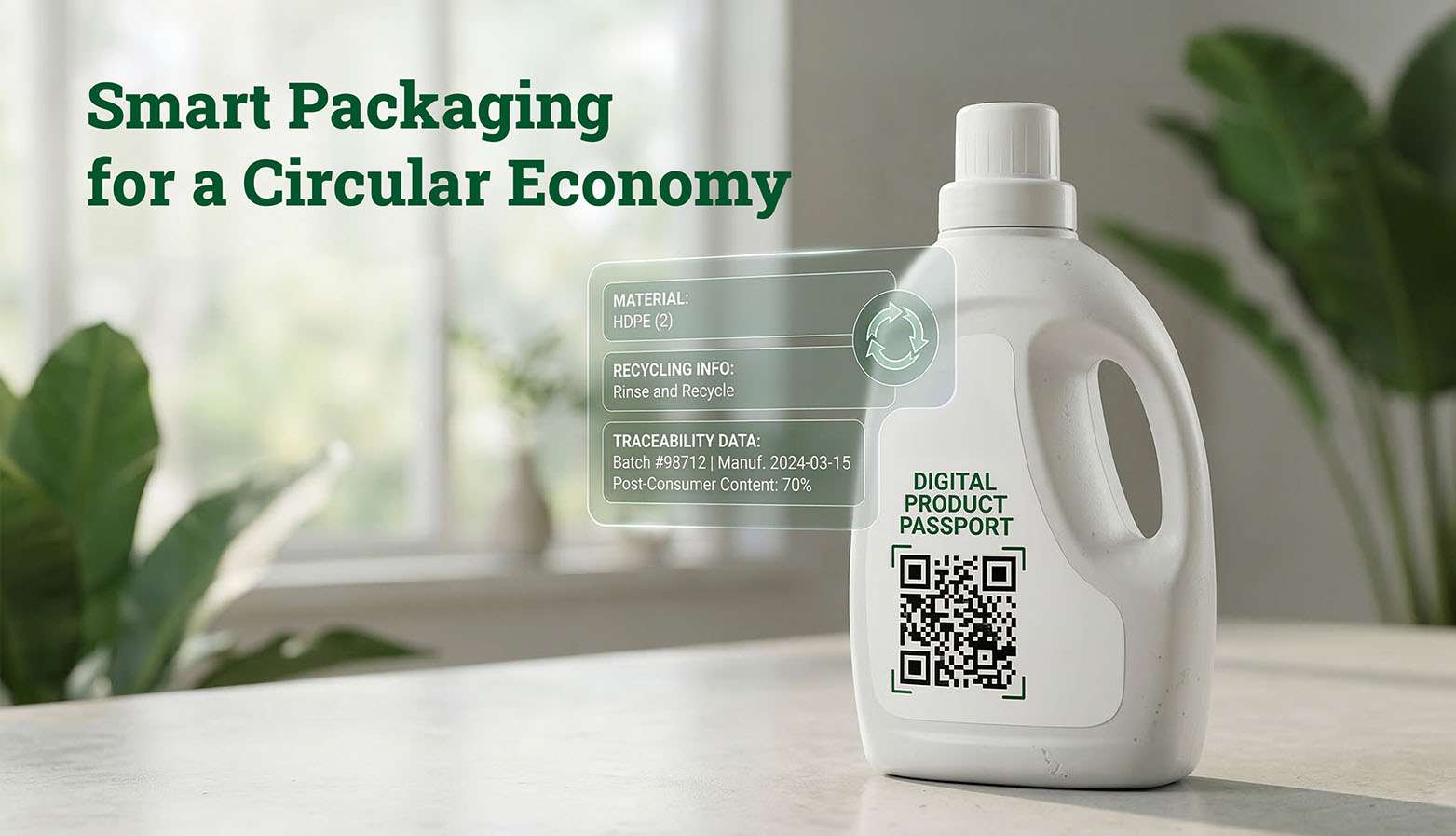
 Smart Packaging for a Circular Economy
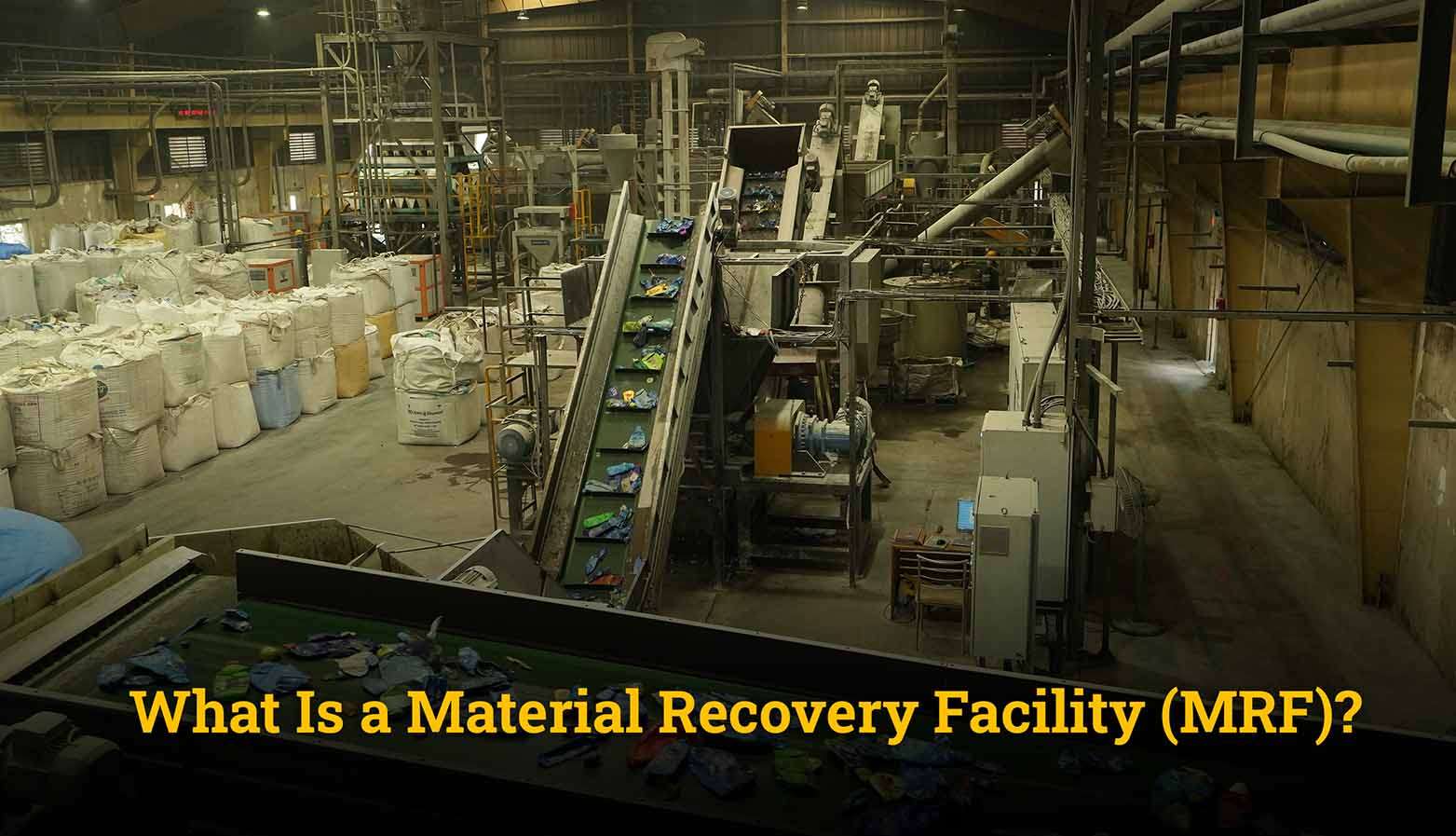
 What Is a Material Recovery Facility (MRF)?
 Plastic Contamination: Causes, Effects, and the Role of Recycling
 What Are Flexible Pouches? Types, Uses, and Recycling Challenges