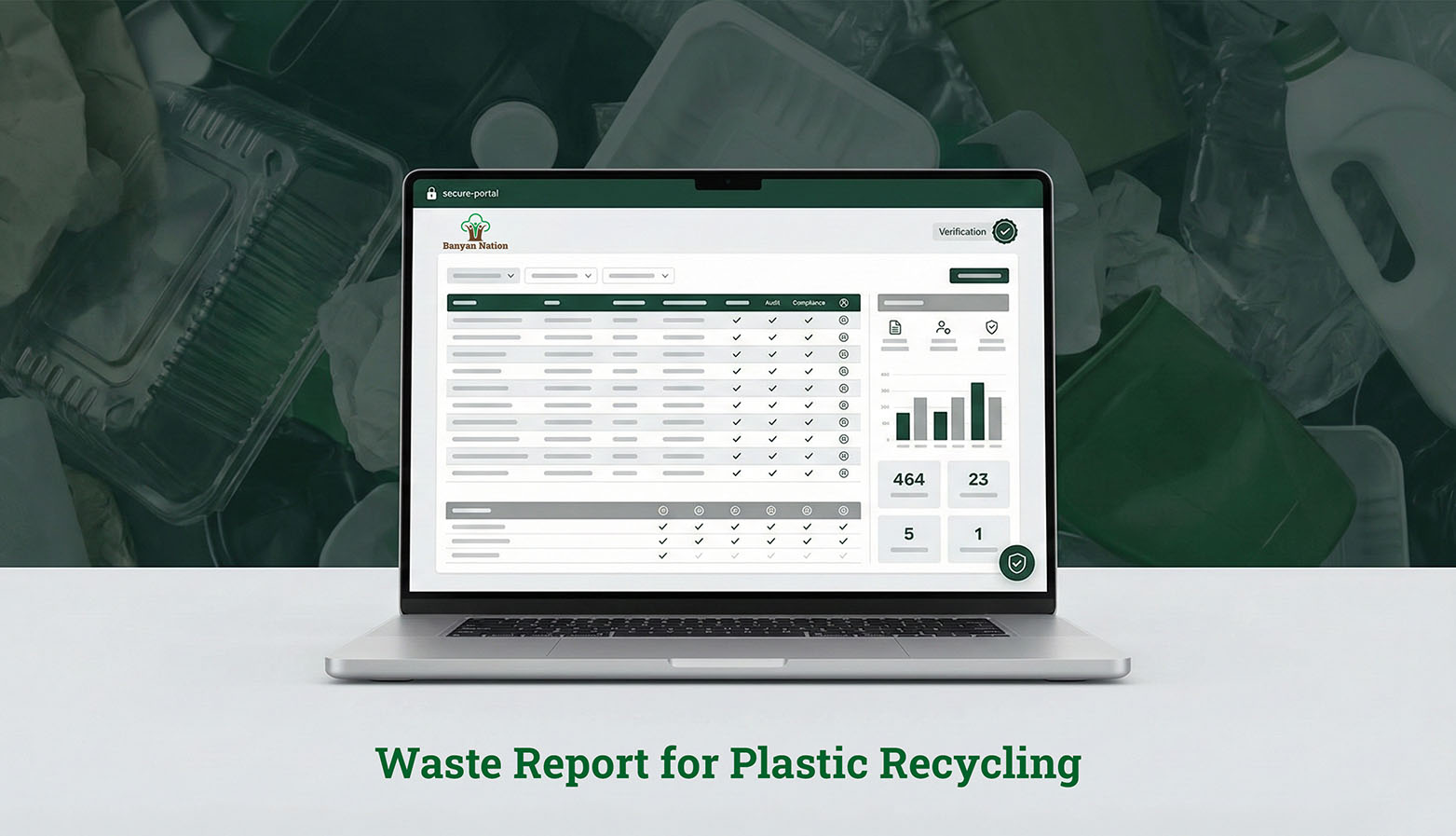
With the modern environmental and regulatory scenario, recycling as such is as good as it is certified. To the global corporations, especially those in the markets where the Extended Producer Responsibility (EPR) legislation is compulsory such as in India, transparent and auditable waste reporting has ceased being a bureaucratic formality; it is the foundation of the compliance to the sustainability requirement and brand integrity. A detailed waste report is a data-focused narration of the consumption, disposal, and recovery activities of a company, the only genuine assessment of the move to a circular economy. In the niche environment of plastic recycling, where the difference between downcycling and closed-loop, high-value material is of pivotal importance, an accurate waste report serves as a scientific evidence of claim. Sustainability promises are still mere talk without a strong data capture and verifiable documentation of the same. Such a need to have evidence has led to the shift of basic aggregate data to batch-specific, traceable documentation across the entire waste stream. Such a high degree of granular reporting on waste is necessary to comply with ever-increasing global reporting standards, in order to manage the financial risks of non-compliance, and to ensure the continued goodwill of those environmentally conscious investors and consumers who require physical proof of environmental responsibility.
Introduction
Waste management in the modern world relies heavily on data, shifting toward anecdotal assertions into quantifiable data. Any successful recycling program should be based on a comprehensive waste report, especially when the indigenous producers and brand owners are involved. The careful monitoring of the amount and nature of plastic waste produced and collected will allow companies to recognize the lack of efficiency, optimize the process, and, most importantly, to show their intention to be a true participant in the circular economy. The knowledge gained after a thorough waste audit report will enable the companies to go beyond paying to have their waste disposed to actively investing in resourceful waste management solutions that will yield maximum recovery and quality of the material. More so, the waste audit report is the main document regarding the legal compliance in the EPR rules, where the responsibility of plastic packaging end-of-life is an obligation.
What is a Waste Report?
A waste report is a systematic report showing the types of waste, amount of waste, source of waste and how the waste has been disposed of by an organization during a given time. This report may start with a waste audit which entails physical sorting and measurement of waste stream to make a proper baseline. With the plastic industry specifically in mind, the report on plastic waste is specific to the type of polymer, such as PET, HDPE, PP, and others, the types of packaging (rigid packaging, flexible packaging, multilayered packaging), and the final destination (recycled, co-processed, landfilled). The report on plastic waste has a direct relation with its credibility which in turn depends on the traceability of the data and preferably a clear chain of custody which should be from the collection point to the final recycled product. Such transparency allows the stakeholders to know the real environmental footprint of a firm.
Why Do Companies Need Waste Reports?
The waste report has ceased to be a fringe part of the business and has become the main business tool of contemporary businesses. Businesses require in-depth waste reports for strategic and compliance purposes:
Regulatory Compliance
According to the Plastic Waste Management Rules (Amendment), 2022, Producers, Importers, and Brand Owners (PIBOs) are required to file quarterly and annual plastic report on waste to the Central Pollution Control Board (CPCB) that will include their EPR targets and performances (CPCB, 2022).
Cost Optimization
A precise report on waste will recognize the unneeded waste production and not dividing it correctly, and it will result in the chance to decrease the disposal charges and the possibility to optimize the procurement of the materials.
Risk Management
Public reporting of waste will reduce the potential of fines, legal consequences, and reputation damage of non-adherence and unproven sustainability practices (also known as greenwashing).
Investment Attraction
Investors are becoming more dependent on ESG (Environmental, Social, Governance) information. An effective waste reporting model is essential to show the performance in the environment and to attract capital in ESG-oriented funds.
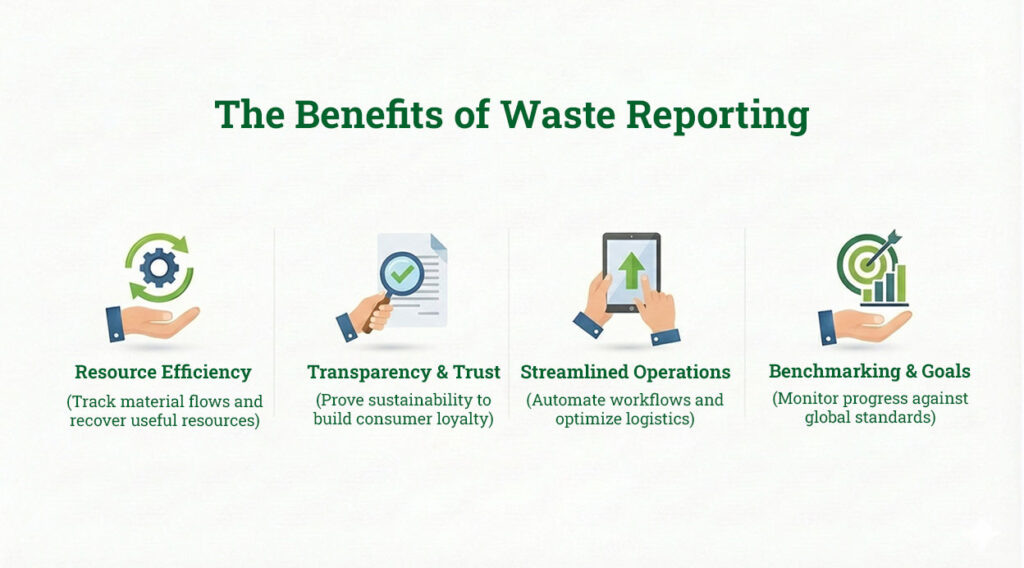
The Benefits of Waste Reporting
These multi-faceted advantages of waste reporting are received through robust waste reporting that turns a cost center into a competitive advantage source.
Enhanced Efficiency of Resources
With the help of tracking material flows, companies can trace the waste of materials and recover them more, transforming them into useful secondary resources.
Increased Transparency and Trust
Comprehensive waste reporting will help brands prove their sustainability, which will raise brand loyalty and trust among the consumers and shareholders.
Automated Processes
Waste audit reports present the information necessary to streamline the internal operations, enhance the logistics of the collections, and simplify the work of the waste vendors.
Benchmarking and Goal Setting
Periodic reporting creates a quantifiable benchmark, and the companies can monitor their progress based on the reduction goals (e.g., reduction of landfills by X per cent) and keep up with the international standards, such as the Global Reporting Initiative (GRI).
Examples of Improved Brand Performance through Better Reporting
Enhanced brands are developed by leading corporate social responsibility companies by using transparent report on waste data. To illustrate, a big FMCG organization that collaborates with Banyan Nation can openly record not only the quantity of recycled plastic, but also the quality (e.g., 5,000 tons of post-consumer polyolefins recycling and integrated into new primary packaging, which can be verified through the application of digital chain of custody). This is a competitive market that is distinguished by this particular, auditable reporting. Also, social impact can be demonstrated by detailed plastic waste reporting, e.g., the reports on how reporting helped formalize and livelihoods sustain the informal community of waste collection workers and how compliance is transformed into a compelling social narrative.
Why Waste Reporting is Crucial in Plastic Recycling?
The plastic waste report determines the credibility of the entire system of plastic recycling in terms of its value chain. Contrary to general waste streams, plastic recycling is highly purified, has a traceable source, and end-of-life status is verified. It cannot be done without strong plastic waste reporting which would result in:
Confirm Recycling
Brands have to demonstrate the rate of recycling of their materials to comply with the rules (e.g. FSSAI foods grade plastic).
Prevent Greenwashing
Traceable plastic waste reporting provides that recycling and EPR compliance claims involve actual physical movement of material that is audited rather than the acquisition of untested credits.
Secure the Material Quality
Intensive reporting by the recycler will include the technical information (type of polymer, contamination levels) needed to ensure that the overall result of the recycled resin will comply with the industrial standards.
Sustainability Reporting Standards at Banyan Nation
Banyan Nation has developed its technology platform with the aim of meeting the requirement of a traceable and high-integrity waste reporting. We are not limited to aggregate reporting to the batch-specific documentation:
Digital Chain of Custody
Our platform is unique, and it provides a record of plastic waste that has been collected (including GPS position and name of the collector) to the end product (a recycled resin pellet). This degree of traceability is what is needed in a high-integrity waste report.
Documentation EPR Compliant
Our system is designed to produce CPCB-compliant information and required documentation to the plastic waste reporting needs of our partners within the context of the EPR in India.
GRI and SASB Alignment
We provide data points that are compatible with the global sustainability reporting traditions (such as Global Reporting Initiative or Sustainability Accounting Standards Board), and this means that our partners are able to incorporate their recycling performance into their annual ESG reports without any difficulties.
Conclusion
The invisible infrastructure of the circular economy is waste reporting. It is a process that converts an unorganized pile of discarded content into activity, audited data. In managing the intricacies of plastic waste as well as EPR requirements, stringent waste reporting is the most effective in inherent risk management, demonstration of compliance, and the formation of authentic leadership in sustainability. Cooperation with tech-oriented firms such as Banyan Nation guarantees that your waste report does not merely comply, but will be market-leading with regard to transparency and integrity.
FAQ's
What is the purpose of a waste report?
The purpose of a waste report is to quantify, categorize, and track an organization’s waste streams to identify reduction opportunities, ensure regulatory compliance, optimize costs, and provide auditable data for sustainability disclosures.
What information is included in a waste report?
A comprehensive waste report includes the total volume or weight of waste generated, breakdown by material type (e.g., paper, metal, plastic), source of generation (e.g., production floor, office), and the final disposal method (e.g., recycled, landfilled, co-processed).
Is a plastic waste report mandatory for EPR compliance?
Yes. Under the Plastic Waste Management (Amendment) Rules, 2022, in India, Producers, Importers, and Brand Owners (PIBOs) must submit regular plastic waste reports (quarterly and annually) to the CPCB detailing their fulfillment of EPR obligations.
Making recycled packaging the norm.
CITATIONS:
- CPCB (Central Pollution Control Board). (2022).
Guidelines on Extended Producer Responsibility for Plastic Packaging.
Ministry of Environment, Forest and Climate Change, Government of India.
Retrieved from:
https://cpcb.nic.in/ - GRI (Global Reporting Initiative). (n.d.).
GRI 306: Waste 2020 Standard.
Retrieved from:
https://www.globalreporting.org/
(Standard referenced for sustainability reporting.) - ISB Global. (n.d.).
Benefits of automated reporting in waste management.
Retrieved from:
https://www.isb-global.com/knowledge-hub/benefits-of-automatic-reporting-and-how-to-make-it-happen/
 What Is a Zero Waste Lifestyle and How to Start: A Step-by-Step Guide for Beginners
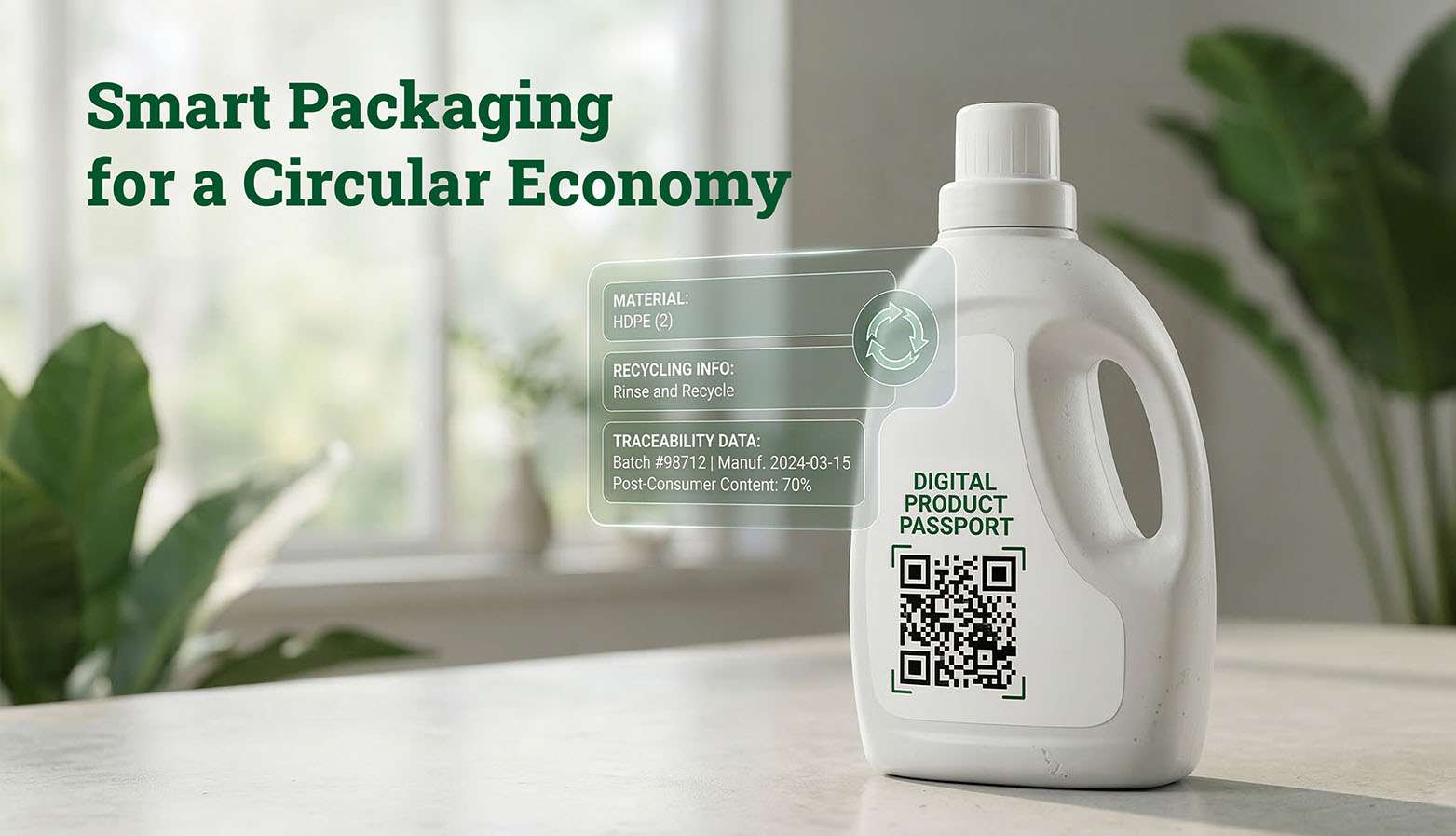
 Smart Packaging for a Circular Economy
 What Is a Material Recovery Facility (MRF)?
 Plastic Contamination: Causes, Effects, and the Role of Recycling
 What Are Flexible Pouches? Types, Uses, and Recycling Challenges