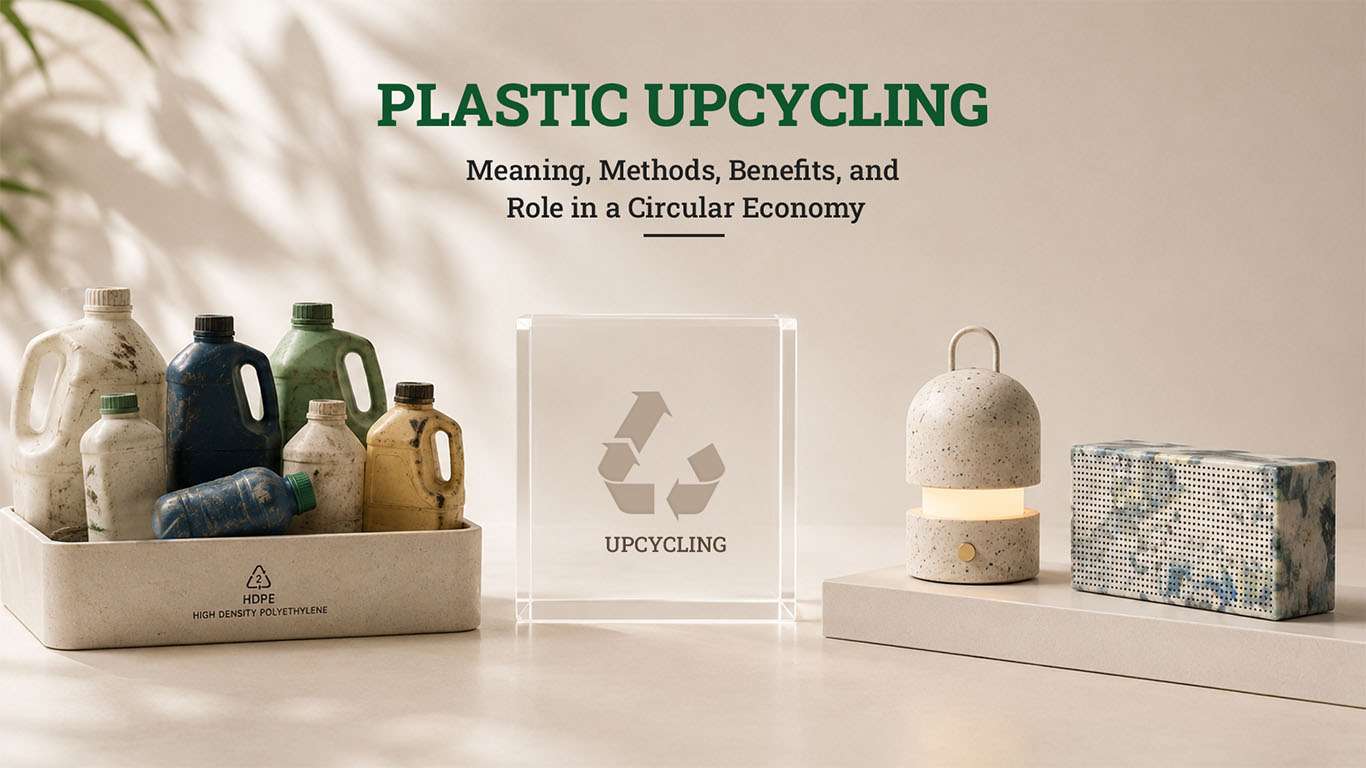
With the current trend for greener living, the method for upcycling plastic waste has proved to be a revolutionary remedy for dealing with the plastic waste problem. Waste management processes like upcycling and advanced recycling aim to transform discarded plastic items into products of higher value with reliability. The approach of reducing, reuse, and recycling associated with plastic upcycling aligns with the key principles of a circular economy, one that prioritizes long-term sustainability.
The linear model of consumption in which people take, make, and dispose is extremely erroneous; this mismanagement spells doom for everything all at once. Millions of tons of plastic are carelessly thrown into oceans, which is not only disastrous for nature itself but a severe risk to human health. Ever so often, we witness hope in the form of upcycling plastic waste and bringing it back to life, which provides a creative pathway for every individual to take steps towards contributing to a circular economy.
What is Plastic Upcycling?
Plastic upcycling is the process of transforming a product by waste material recovery and producing a new product with higher value. Upcycling as a process is versatile and has been adopted by not only industries but also individuals to prevent accumulation of plastic waste in landfills. Upcycling of plastics ensures that the product meets better or equal quality than the original product.
How Does Plastic Upcycling Work? (Key Methods and Processes)
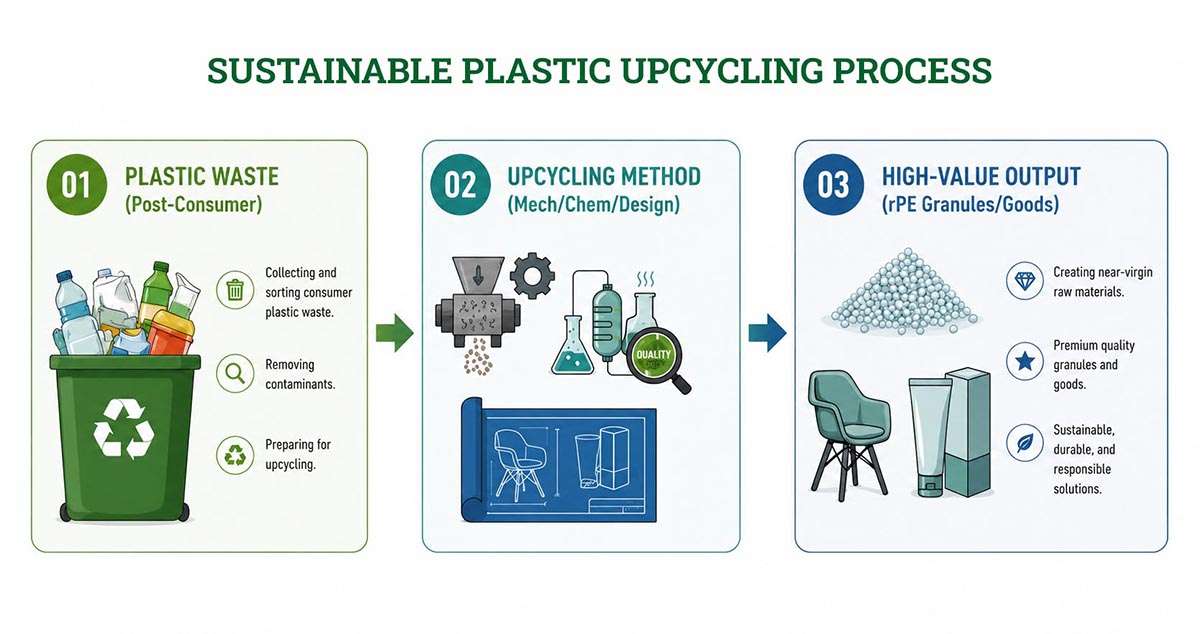
The upcycling of plastic waste depends on advanced sorting, cleaning, chemical, and mechanical engineering processes. Waste plastic upcycling transforms discarded packaging into high-performance materials through various ways:
1.Mechanical Upcycling
Mechanical Upcycling often involves modification and physical restructuring of the plastic without changing its molecular structure. This often leads to the formation of a new item with techniques including cutting, weaving, heat reshaping, or compression of the pre-used plastics. For example, bags, LDPE or PP film can be altered compressed into waterproof sheets used for wallets or tote bags, which is a lower-energy process than industrial melting
2. Chemical Upcycling (Pyrolysis, Gasification, Photoreforming)
Chemical upcycling of plastic waste focuses on breaking down plastic polymers to transform them into feedstocks for higher value products. The various methods of upcycling plastics offer benefits of reduced environmental footprints while enhancing the plastic’s end-use value while reducing the need for virgin plastic
- Pyrolysis Plastic Upcycling: Thermal degradation of plastic in the absence of oxygen to produce synthetic oil or feedstock.
- Gasification: Converts plastic waste into synthesis gas (syngas) for high-value chemical synthesis.
- Photoreforming: Uses solar energy and photocatalysts to convert plastic waste into useful chemicals and clean hydrogen fuel at ambient temperatures.
3. Creative / Design-Led Upcycling (DIY & Industrial Design)
The design process towards the repurposing of plastic into products with functional designs must be considered creative. Designers and manufacturers can engage in this process by transforming household upcycled packaging into high-end architectural panels, durable outdoor furniture, fashion accessories, and upcycled plastic products,
What are the Benefits of Upcycling Plastic Waste?
Transitioning from simple waste disposal to value-addition yields significant advantages across environmental, economic, and social domains.
Environmental Benefits
The most important benefit of plastic upcycling lies in the direct reduction of greenhouse gas emissions, and extraction of fossil fuels. The demand and production of virgin material can be impacted by the application of upcycled plastic into synthetic fibers and textiles for clothing and similar products. This also helps in reducing the carbon footprint associated with new product manufacturing. It prevents millions of tons of plastic from polluting marine ecosystems and diverts heavy volume from municipal landfills.
Economic Benefits
Upcycling opens major market opportunities by creating a closed-loop supply chain. High-grade upcycled plastics provide cost stability against volatile virgin polymer prices derived from crude oil. Companies and Brands have can integrate upcycled plastic products which help in reducing raw material costs, lower carbon tax liabilities, and meet increasingly strict global compliance mandates and EPR mandates.
Social Benefits
In emerging economies like India, plastic upcycling integrates informal waste collection networks into organized, ethical supply chains. Fair-wage employment, safer working conditions, and formal recognition for waste pickers turn environmental recovery into a tool for social upliftment and economic inclusion.
Examples of Upcycled Plastic Products Across Industries
Examples of upcycled plastic products are present in numerous sectors. The prominence of upcycled plastic products is seen in the textile sector, with plastic being upcycled at the end of its life cycle into yarn. A prime example of upcycled plastic products in this sector is evident with the sustainable option available to companies, where 20 plastic bottles can be used to produce one t-shirt.
Let’s explore other unique models that are gaining popularity:
Chemical upcycling: The use of plastic waste material to produce tiles, bricks, and insulation boards is now possible for manufacturers.
Furniture: Used plastic is recycled into chairs, tables, and other ornamental products.
Automotive: Quadro, Ford’s electric trucks, and many more have different parts made from plastic that have been upcycled.
Packaging: High grade recycled plastic containers can be made which are reusable and recyclable.
Clothing: Apparel companies such as Adidas, made a partnership with Parley for the Oceans, and helps to produces shoes and apparel out of recycled plastic waste.
Construction: Heavy-duty piping, composite decking, insulation panels can be made from upcycling
Role of Plastic Upcycling in Waste Management and Circular Economy
A true circular economy depends on keeping materials in continuous use at their highest performance level. Plastic upcycling in the circular economy bridges the gap between raw waste collection and high-value manufacturing.
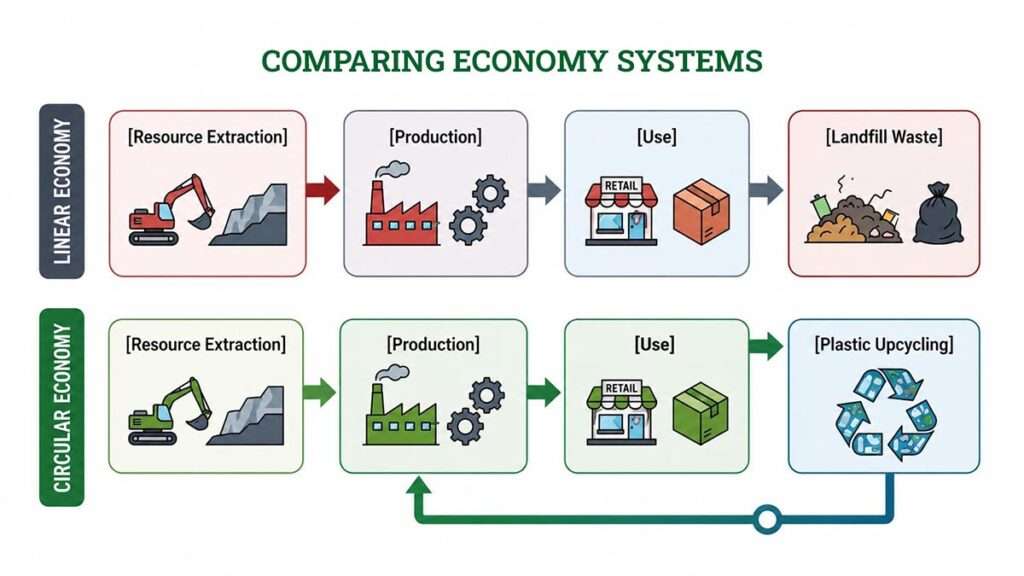
Upcycling gives individual items (often creatively) a longer life. Upcycling can be considered a comprehensive method for achieving waste reduction and sustainable resource utilization.
Challenges and Future of Plastic Upcycling
The plastic waste upcycling journey starts with the pivotal steps of collecting discarded plastic products. A range of infrastructural and technical challenges are often faced here due to the presence of contaminated, mixed, or non-recyclable plastics.
Key challenges faced in the upcycling of plastic waste include:
- Separating and sorting: Multilayer plastics or products made from different types of plastic often make the process time-consuming.
- Residues of food and other chemicals can result in lower standards and quality of upcycled plastic products.
- Multiple reprocessing cycles can cause some plastics to lose structural integrity.
- Dominant linear model of plastic product handling for cheap production and resulting in disposable goods.
- Need of big infrastructure and washing technology to remove contamination and pigmentation from the waste collected
The future of plastic upcycling relies on technological innovation and policy enforcement. Regulatory frameworks like Extended Producer Responsibility mandate brands to incorporate higher percentages of PCR content into their packaging. Driven by AI-powered optical sorting, advanced deodorization, and transparent supply chain tracking, high-grade upcycled plastics are fast becoming standard raw materials for global packaging.
Conclusion
Plastic upcycling can be a great addition to a basket of strategies for moving towards a circular economy. It is an interesting application of plastic waste and environmental technology, which also includes new types of materials and products. Transforming waste to value is where plastic upcycling plays a major role; it helps in conserving resources and reducing pollution. The contribution to driving a circular economy also lies with the consumers and can start with buying upcycled plastic products like tote bags made from repurposed plastic bags. Transformation of the waste and plastics sector by upcycling is gaining popularity as a mantra for long-term sustainability-driven corporate and customer behavior. In a circular economy, every bottle, bag, and piece of discarded plastic starts as a resource, and the right management of them makes a contribution towards achieving a world without waste.
FAQ's
What is the difference between plastic upcycling and recycling?
Traditional recycling often degrades plastic quality over time (downcycling), producing lower-grade items that eventually end up as waste. Plastic upcycling enhances or maintains the purity and performance of post-consumer plastic, turning it into near-virgin quality materials for high-value applications.
Can all types of plastic be upcycled?
Most rigid and flexible thermoplastics—such as High-Density Polyethylene (HDPE), Low-Density Polyethylene (LDPE), Polypropylene (PP), and PET—can be upcycled using advanced mechanical or chemical processing. However, heavily contaminated or multi-layered thermoset plastics remain more challenging to process.
What are some common examples of upcycled plastic products?
Common examples include FMCG personal care and laundry detergent bottles made from recycled HDPE (rHDPE), eco-friendly apparel made from recycled PET bottles, industrial piping, and durable outdoor furniture.
Are upcycled plastic products of lower quality?
No. Advanced upcycling technologies remove contaminants, odors, and impurities, yielding recycled granules that match virgin resins in mechanical strength, safety, and performance.
How does plastic upcycling contribute to a circular economy?
Plastic upcycling keeps polymers in high-value usage loops indefinitely. By replacing virgin plastics with high-grade post-consumer resins, it eliminates landfill waste, conserves finite fossil fuels, and minimizes carbon emissions.
What is the difference between upcycling and downcycling plastic?
Upcycling retains or elevates a material’s value and structural integrity, enabling its reuse in primary or high-performance products (e.g., turning a shampoo bottle into a new shampoo bottle). Downcycling breaks the material down into a lower quality grade, restricting its reuse to lower-tier applications like park benches or speed bumps before ultimate disposal.
 Zero Emissions Day 2026: What It Is, Why 21 September and How to Take Part
 World Cleanup Day 2026: Date, Theme and How You Can Take Part
 What is Polypropylene Plastic?
 What Is a Carbon Footprint? Meaning, Calculation & How to Reduce It
 Life Cycle Assessment (LCA): Steps, Phases, Standards & a Real Example