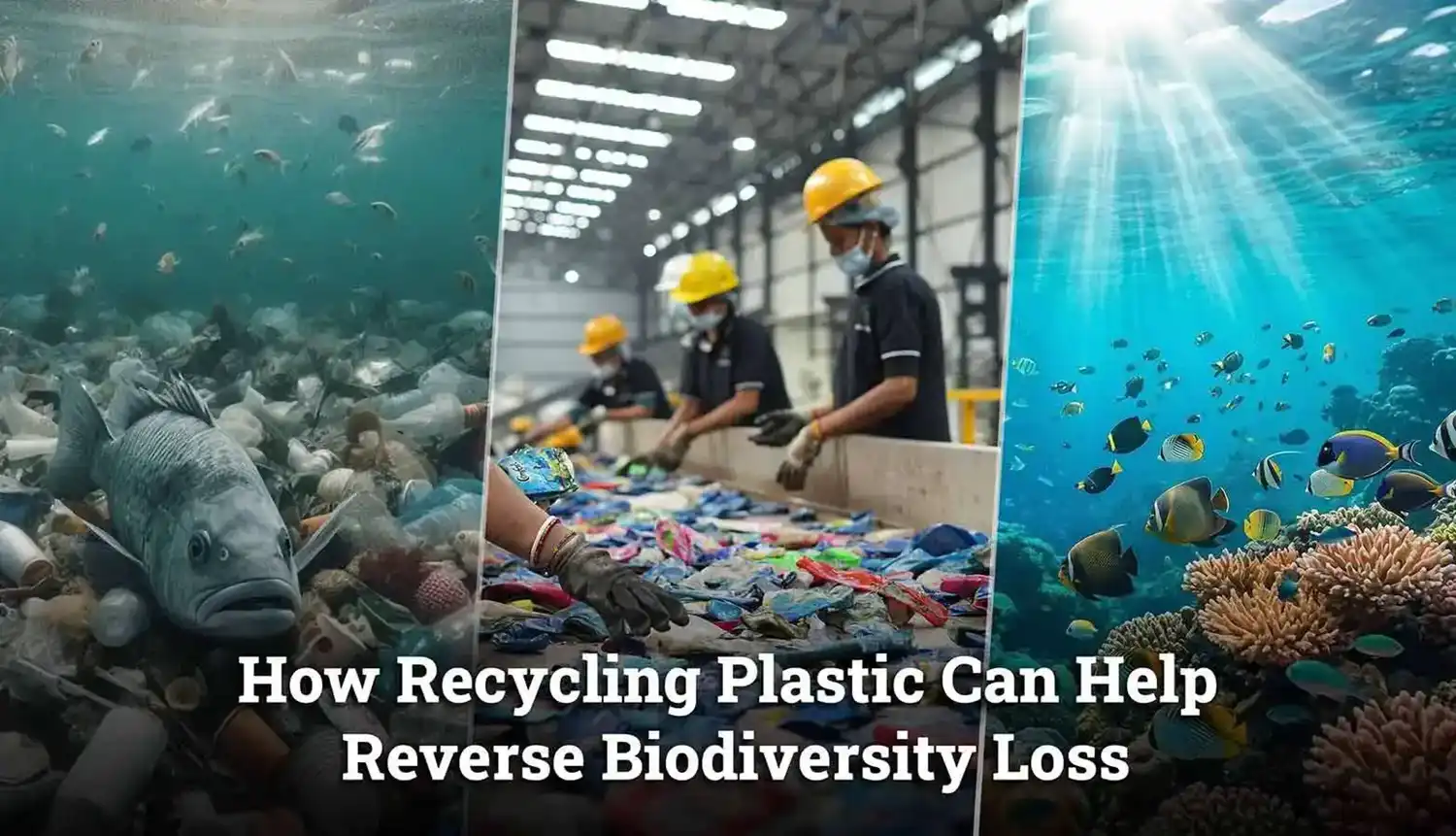
Climate change is frequently mentioned as the global environmental crisis but the lack of biodiversity is also a significant issue to the ecosystems of our planet. Biodiversity is defined as the diversity of life on earth, both the smallest microorganisms and the biggest mammals and the complexity of interrelationships among them. We are today experiencing a disastrous lack of biodiversity occasioned in large part by pollution and destruction of habitat that is man-made. Plastic waste is one of the major offenders in this downfall and it has permeated every nook and cranny of the natural world, into deep ocean trenches and mountain tops. When plastic enters the environment, it does not sit there and instead, it decomposes into microplastics that enter the food chain and cause a severe shortage of biodiversity as species are ingested, entangled and poisoned by chemicals. It is possible that by focusing on recycling high-quality plastic materials, we can greatly decrease the number of virgin material taken out of the Earth, which would save the habitats in which the specified species can be found. To deal with the absence of biodiversity we need to make a systemic change in our post-consumer waste management approach. With proper recycling of plastic, we are not only dealing with garbage, we are also effectively protecting our forests, rivers, and oceans. This balance must be restored since the lack of biodiversity further will pose a threat to the very ecosystem services, including pollination, purifying water, and carbon sequestration, upon which human civilization relies to sustain itself in the long term.
Introduction
The current epidemic of biodiversity loss is a silent crisis that impacts on all living organisms. Although evolution includes the natural extinction phenomenon, the present rate of biodiversity loss is estimated to be tens to hundreds of times faster than the average rate of the last 10 million years.
To overcome this we must know that:
- Ecosystems are healthy when they are well balanced in terms of species.
- Plastic pollution is a continuous interferon to this fine balance.
- Circular economic practices that appreciate resource recovery can reduce the loss of biodiversity.
Biodiversity Loss Meaning
To get a solution to the problem, it must be defined. The loss of biodiversity has a connotation, the reduction in the population of species, genetic diversity, and abundance of species in a given biological community. The biodiversity loss meaning is in simple terms, the diluting of the web of life that sustains our planet.
Having a closer look at the meaning of the biodiversity loss, we will be able to comprehend it as the irreversible loss of specialized functions in an ecosystem. The extinction of one species will cause a domino effect which can lead to the destruction of an entire habitat.
Causes of Biodiversity Loss
There are several primary causes of biodiversity loss, most of which are accelerated by industrial expansion and poor waste management. Identifying the causes of biodiversity loss is the first step toward creating effective conservation strategies.
Key drivers include:
- Habitat Destruction: Clearing land for mining and oil extraction to produce virgin plastic.
- Pollution: Chemical runoff and plastic debris that turn fertile lands into toxic zones.
- Climate Change: Greenhouse gas emissions from the production of new synthetic materials. Understanding these causes of biodiversity loss helps us realize that our consumption patterns have direct ecological consequences.
Reasons for Loss of Biodiversity
The reasons for loss of biodiversity are numerous and most of them are escalated by industrial development and poor disposal of the wastes. The identification of the reasons for loss of biodiversity is the first step to the development of effective conservation strategies.
Key drivers include:
- Habitat Destruction: The oil mining and extraction to clear virgin plastic clear land.
- Pollution: Chemical run-off and plastic waste that transform fertile lands to poisonous lands.
- Climate Change: Discharges of greenhouse gases due to the manufacture of new synthetic materials. With such reasons for biodiversity loss, we are now in a better position to understand the fact that our consumption habits have an ecological effect.
Effects of Biodiversity Loss
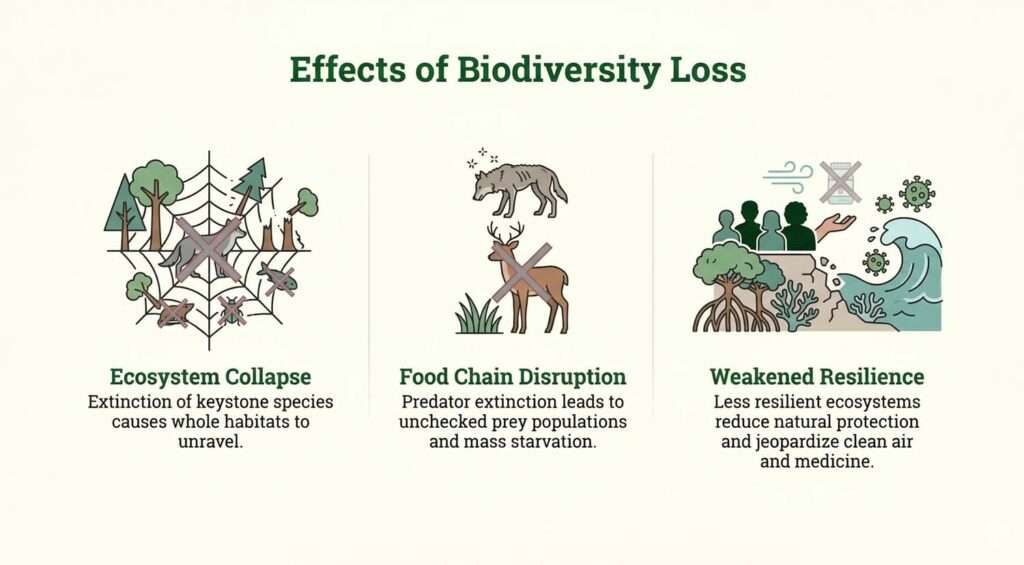
The effects of loss of biodiversity are experienced well beyond the wilderness. As the effects of biodiversity loss are taking place, we are losing the natural buffers that protect us against zoonotic diseases, floods, and food insecurity.
Biodiversity loss meaning has the following primary effects:
- Ecosystem Collapse: Extinction of so-called keystone species, which bind habitats.
- Food Chain Disruption: This happens when the predators no longer have their prey, leading to mass starvation.
- Weakened Resilience: The second most dangerous effect of the loss of biodiversity is that the ecosystems will be less resilient to natural disasters. The reason is that the impacts of the loss of biodiversity ultimately come back to human health because we relied on nature to access medicine and clean air.
How Recycling Plastic Helps Reduce Biodiversity Loss
The consequences of biodiversity loss are reversible provided we alter our approach to managing materials. The consequences of biodiversity loss and recycling are closely interconnected: when we close the circle of plastic, we relieve the burden on the natural world.
Recycling helps through:
- Saving Habitats: Minimizing land-clearing of oil and gas exploration.
- Avoiding Ingestion: Removing plastic of the stomachs of both marine and terrestrial animals.
- Reduction of Emission: Recycled plastic consumes much less energy, reducing the pace of climate-induced impacts of the loss of biodiversity.
Biodiversity Loss and Recycling: The Connection
The connection between effects of biodiversity loss and recycling is in the extraction stage of production. Whenever we consume recycled resin, we avoid the environmental degradation that takes place during the process of fossil fuel drilling. The direct outcome of untreated waste is the reduction of biodiversity and it is through better management of waste that we halt this process.
Moreover, the relationship between the loss of biodiversity and recycling points out that:
- Degradation of biodiversity is irreversible, and hence prevention (recycling) is superior to cure.
- The loss of biodiversity in our oceans can be stopped by ending the movement of the so-called ghost nets and single-use plastics with the help of improved recovery systems.
Role of Banyan Nation in Reducing Biodiversity Loss
At Banyan Nation we consider our work as a direct intervention to biodiversity degradation. When we gather and recycle post-consumer plastic to Better Plastic™, we will be certain that millions of kilograms of waste would never make it to the fragile ecosystems, where it would lead to biodiversity loss. Our technology keeps the plastic in the economy and out of the environment so that the natural world would not be exposed to the long-term effects of the loss of biodiversity and the inefficiency of recycling.
Conclusion
The challenge of our generation is to reverse the absence of biodiversity on our planet. We can start repairing our ecosystems by knowing what the biodiversity loss means and by tackling the issues that cause the decline of biodiversity. Recycling of plastic is not merely a logistic process but a critical practice of conservation. The outcomes of biodiversity loss are overwhelming, and with the interrelation of biodiversity loss and recycling, we have a distinct direction. We should conserve our diversity of life by ensuring that circularity becomes the new normal.
FAQ's
What industries impact biodiversity the most?
The agriculture, mining, and plastic manufacturing industries have the highest impact due to habitat conversion and resource extraction.
How can individuals help reduce biodiversity loss?
Individuals can help biodiversity reduction by reducing single-use plastic consumption, supporting brands that use 100% PCR content, and participating in local waste segregation.
What is the connection between waste management and biodiversity?
Effective waste management prevents pollutants from entering natural habitats, thereby protecting species from the toxic effects of biodiversity degradation.
Making recycled packaging the norm.
CITATIONS:
- WWF. (2024). Living Planet Report: The State of Global Biodiversity.
- UN Environment Programme. (2025). Plastic Pollution and Its Impact on Species Survival.
- IPBES. Global Assessment Report on Biodiversity and Ecosystem Services.
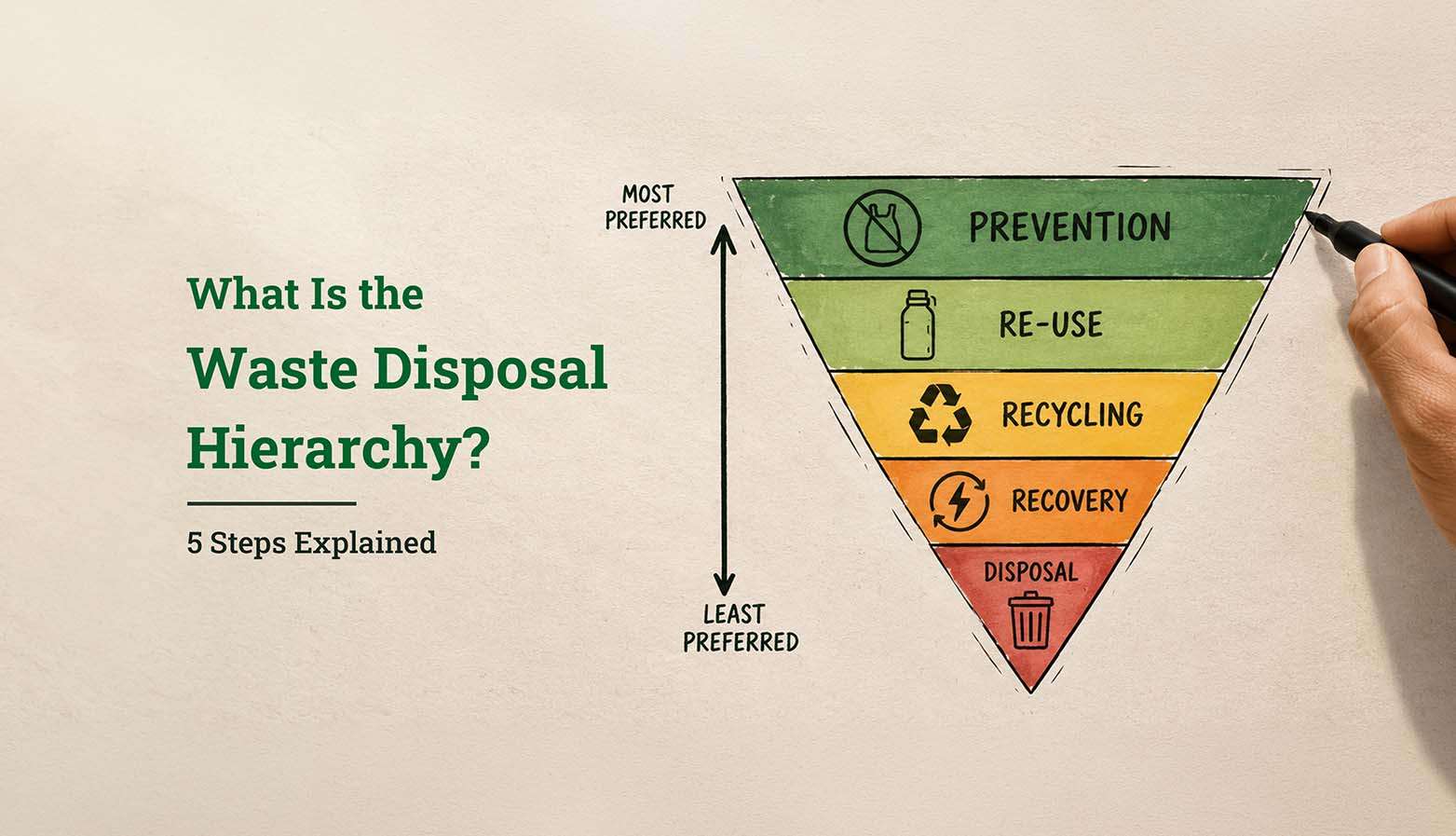
 What Is the Waste Disposal Hierarchy? 5 Steps Explained
 What Is ABS Plastic? Properties, Uses & Recycling
 International E-Waste Day 2026: What It Means and How to Take Part
 What is Waste Disposal: Methods, Types, and Real-World Examples
 What Is Polyolefin? Types, Properties, Uses and Recyclability