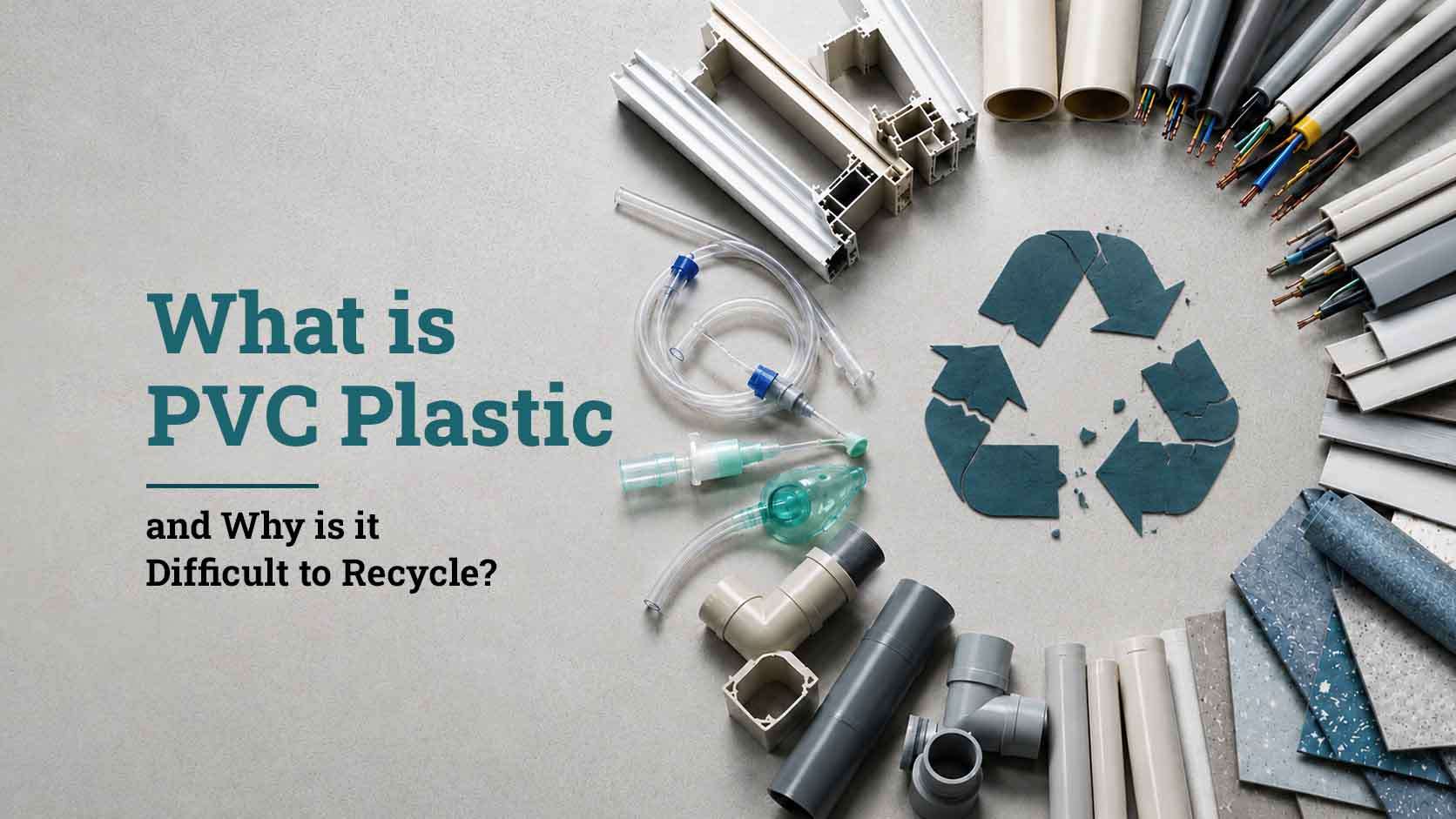
As one of the more problematic synthetics in the world’s plastic industry, the simple name PVC is given to this polymer. Polyolefins, such as polypropylene and polyethylene, are known for their relatively easy reprocessing, whereas PVC is a big challenge in the current municipal and industrial waste management. Millions of tons of PVC are entering into the global waste stream each year, because it is widely used in both structural building materials and consumer product manufacturing. Due to its different chemical composition, which contains a high proportion of chlorine, however, this polymer cannot be mechanically recycled in the usual way. It emits corrosive gases during traditional recycling extruding that can affect the machinery components and render nearby plastic batches in the surroundings unusable. In addition, since a wide variety of chemical additives are added to the polymers, such as heavy metal stabilizers and phthalate plasticizers, efforts to safely recover pure polymer resins become more complicated. Industries need to tackle technical issues with regard to PVC accumulation if they are to create a true sustainable economy. The significance of its unique chemical characteristics, applications, and specific disposal guidelines enables modern enterprises to better assess the sustainable material alternatives, sustain and optimize sorting technologies, and minimize long term ecological risks of the persistent industrial waste.
Introduction
The assessment needs to take into account the benefits of the high structural strength of PVC plastic for modern production, while accounting for the low end-of-life recovery of it. Due to its outstanding moisture, chemical and electrical resistance, PVC plastic has joined seamlessly in the manufacturing process all over the world.
Uniqueness of PVC plastic market is:
- Chemical composition: High chlorine content imparts natural flame resistant properties, but makes recycling difficult.
- Material Versatility: It can be designed to be a fully rigid structure or extremely flexible membrane.
High production costs: sustainable alternatives are less competitive in terms of cost than are widely adopted industrial approaches.
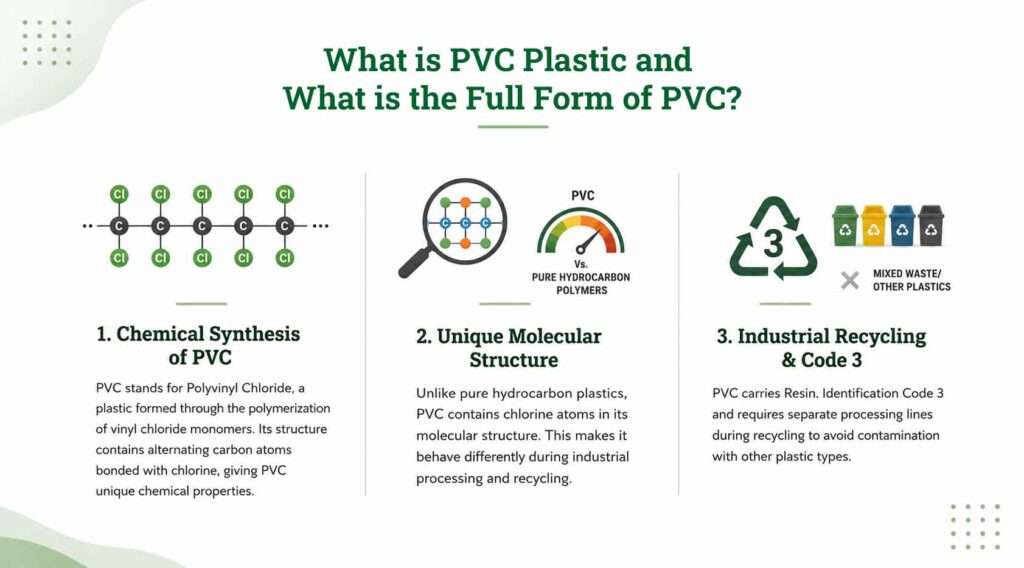
What is PVC Plastic and What is the Full Form of PVC?
To fully understand the chemistry of this material one needs to see this chemical’s scientific name;full form of PVC is polyvinyl chloride. Polyvinyl chloride plastic is formed by the polymerization of vinyl chloride monomer, which means that when synthesized, an alternating chain of carbon atoms is surrounded by chlorine atoms.
This particular molecular structure is responsible for the difference in how polyvinyl chloride plastic processes as compared to a pure hydrocarbon polymer. The industrial waste sorter needs to know the full form of PVC plastic, because if the plastic contains polyvinyl chloride, it has to be processed on a different line to avoid cross contamination, as it has resin identification code 3.
Types of Polyvinyl Chloride
This polymer’s physical properties depend on its chemical compounding. The main polyvinyl chloride types are differentiated by their flexibility, or how they respond to mechanical forces.
The common polyvinyl chloride types used in the industrial production are as follows:
- Rigid PVC (RPVC / uPVC): It is a highly rigid, impact resistant polymer that is totally free of added plasticizers.
- Flexible PVC (FPVC): A material with a high percentage of plasticizers and is highly flexible and pliable.
- Chlorinated PVC (CPVC): Additions of extra chlorine in PVC to give improved heat resistant properties and higher structural stability at high temperature.
PVC Plastic Examples Used in Daily Life
Consumer markets are so dependent on PVC that a simple pvc plastic example of it can be used to illustrate it. A PVC plastic model can vary from structural to consumer, it’s extremely flexible.
The use of types of polyvinyl chloride in everyday products include:
- Blister Packaging: Transparencies of hard plastic for the containment of pharmaceuticals, electronics and retail hardware.
- Vinyl Flooring: These waterproof, flexible tiles and sheets are often used in busy areas of homes and businesses.
- Faux Leather Apparel: Handbags, shoes and jackets made with flexible membranes coated with polyurethane.
Application of PVC Across Industries
PVC is used in a number of high value applications, and is one of the most consumption-heavy resins in the world. Application of PVC plastics play a crucial role in construction and the heavy industry due to its unique characteristics.
The main markets that use this material are:
- Building and Construction: Using rigid profiles for building exterior siding, window frames, electrical conduit shielding and municipal water pipes.
- Medical Equipment: Developing medical-grade formulations with flexibility for use in intravenous (IV) fluid bags, oxygen masks and dialysis tubing.
- The application of protective underbody coatings, interior dashboard trims and flexible wire harness insulation are among the areas in automotive engineering where coating protection is required.
The wide variety of PVC plastic applications reinforces the need for waste segregation at source because you won’t be able to recover them as a uniform mixture!
Why is PVC Difficult to Recycle?
Low temperature stability and high chemical contamination risk of PVC are the main challenges to make PVC recycling a large-scale process. In the mechanical heating process, the polymer produces hydrochloric acid gas that can attack the processing machinery, and reduce the quality of the recycled plastic batch.
Moreover, PVC has a limited ability to be recycled because of the many different chemical additives added to it. The high amount of phthalates found in flexible variants and the heavy metal stabilizers used in rigid variants creates an unpredictable toxic mix when processing a mixed batch. This low recyclability of PVC compounds is such that even a small percentage of this polymer will contaminate a large batch of more easily recyclable plastics such as PET or HDPE.
PVC Recycling Process Explained
If specialized facilities try to recycle PVC plastic, they’ll have to select between mechanical and chemical PVC plastic recycling processes. The PVC recycling process explained is quite complex due to the polymer’s structure.
The possible processing options are:
- Mechanical Recycling: The waste is sorted, ground into small flakes, washed and pelletized. The process is usually reserved for clean scraps of plastic which are not plasticized, such as pipe off-cuts used in industries.
- Chemical Recycling (Pyrolysis/Gasification): High heat, no oxygen in reactors to cleave polymer down to basic chemical components, which the polymer processors can then separate and safely collect as Chlorine Gas.
Environmental Impact of PVC Waste
One of the main concerns of modern environmental scientists is the long-term effects of PVC environmental impact. The long lifespan of the material means that the environmental footprint of PVC waste is a major concern for the environment.
The major environmental risks are:
- Dioxin Generation: Poorly designed incineration or open burning of the waste can emit extremely carcinogenic dioxins and furans.
- Chemical Leaching: Toxic phthalate plasticizers and heavy metals can slowly leach out of the landfilled material into the surrounding soil and groundwater systems.
- Microplastic Pollution: Fragments of waste become toxic micro plastics that can incorporate persistent organic pollutants (POPs) in the aquatic + terrestrial food chain.
Conclusion
The material has a very high durability and low production cost, which means that its use in heavy industry is still going to be continued, however, its non-recyclability shows the need for advanced material innovations. To address the challenges of polymer contamination, proper waste segregation, dedicated processing facilities, and a commitment to safer and ecocertified alternatives are essential. Addressing these structural problems today will enable industries to be more successful in mitigating their hazardous waste imprints and contribute to a truly sustainable circular economy.
FAQ's
Is PVC plastic recyclable?
Technically yes, but practically it is rarely recycled. It carries a global recycling rate of less than 1% because its high chlorine content and complex chemical additives make standard mechanical reprocessing economically unviable and damaging to machinery.
Is PVC harmful to the environment?
Yes. Throughout its lifecycle from production to disposal, it poses environmental risks. It releases hazardous chlorine gas during manufacturing, leaches toxic plasticizers into landfills, and generates highly toxic dioxins if incinerated improperly.
What are the challenges in PVC waste segregation?
The primary challenge is that it is often combined with other materials, such as in multi-layered electronics or composite construction panels. Additionally, flexible variants look identical to benign plastics like polyethylene, making automated optical sorting difficult without specialized infrared technology.
What is the recycling code for PVC plastic?
It is categorized under Resin Identification Code 3 (RIC 3), often marked with the number 3 inside a universal chasing arrows triangle symbol.
Making recycled packaging the norm.
CITATIONS:
- Agency for Toxic Substances and Disease Registry (ATSDR). Toxicological Profile for Vinyl Chloride and Polyvinyl Chloride.
- European Council of Vinyl Manufacturers (ECVM). The Technical Reality of Mechanical and Chemical Recycling Pathways for PVC.
- Journal of Hazardous Materials. (2025). Thermal Degradation and Corrosive Gas Evolution of PVC Contaminants in Mixed Plastic Waste Streams.
 World Cleanup Day 2026: Date, Theme and How You Can Take Part
 What is Polypropylene Plastic?
 What Is a Carbon Footprint? Meaning, Calculation & How to Reduce It
 Life Cycle Assessment (LCA): Steps, Phases, Standards & a Real Example
 Types of Plastic Recycling: Methods, Categories, and Recycled Plastic Types Explained