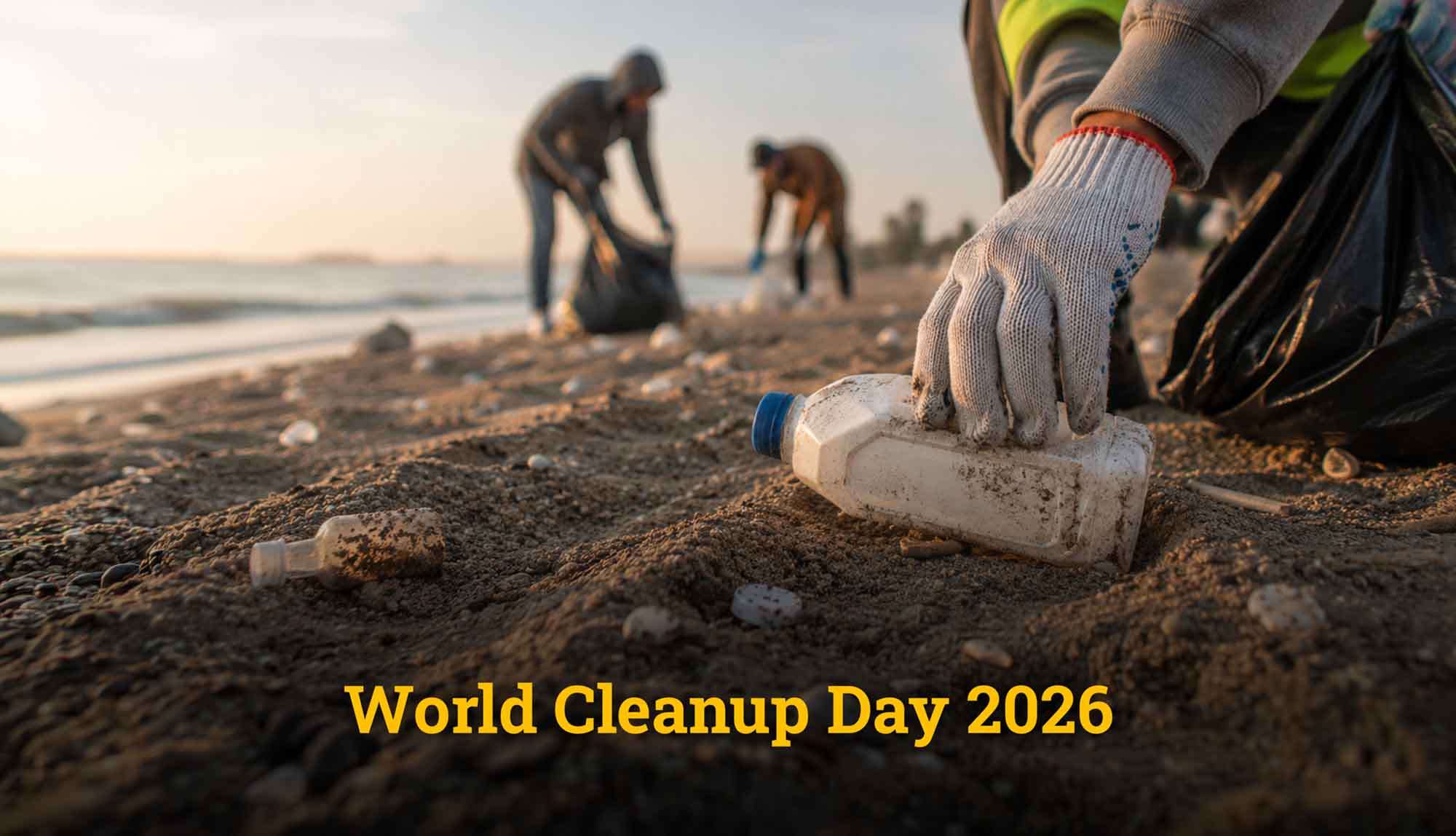
World Cleanup Day is a civic action movement that has mobilized millions of citizens, local communities and organisations around the world to clean up mismanaged litter on beaches, rivers, forests and city streets! On this U.N. recognized international cleanup day more than 190 countries will mobilise volunteers to fight against pollution and it will be celebrated on 20 September 2026. More than 25 million individuals acted in 2025 to contribute to waste collection and proved how citizen participation can make an environmental difference. The movement on international cleanup dayis not only about picking up rubbish, it’s a reminder of the linear consumption model we are not sustainable with. All plastic debris collected during a drive is a failure in the waste management system and raw material recovery. The first step towards action is to understand the history, scope world cleanup day date and steps of the world cleanup day. Micro-collections create a sense of ownership amongst citizens while fostering a sense of community with local solutions such as circular packaging design and post-consumer recycling.
What Is World Cleanup Day? Origin, UN Recognition and Global Scale
In understanding the history of the world cleanup day date it is clear how small community actions can become a global movement. It began in Estonia in 2008, when a group called Let’s Do It!, consisting of 50,000 citizens, got together to clean the country in 5 hours.
This local initiative sparked a global movement and in 2018 this inaugural International edition brought together 18 million people from 157 countries. In 2024, the United Nations General Assembly designated September 20 as an official UN observance, starting in that year, due to the great value of this day to Sustainable Urban Development and marine conservation. As today, the clean world day aims to tackle the issue of mismanaged waste, promote environmental responsibility and promote the circular Economy management of materials at the international level.
When Is World Cleanup Day 2026? Date and Cleanup Weekend Explained
The official world cleanup day date is the 20th of September 2026, Sunday. September 20 is the main day of action, but activities can continue over the wider “World weekend” for schools, corporate groups and municipal governments to organise large clean-up events.
Calendar Year | Official Observation Date | Event Status & Notes |
2024 | Friday, 20 September | Inaugural official United Nations observance |
2025 | Saturday, 20 September | Over 25 million participants across 190 countries |
2026 | Sunday, 20 September | World Cleanup Day 2026 global mobilization |
Having a specific date on the international calendar for World Cleanup Day enables municipal, non-profit and corporate organisations to plan logistics, get permits and plan waste recovery loops early.
World Cleanup Day 2026 Theme and What It Means
This year’s theme of the International Cleanup Day is focused on the fight against mismanaged waste, digital waste mapping and the movement from cleanups to circularity. This theme for the global cleanup day 2026 is about waste reduction, waste prevention and local environmental action, highlighting the direct link between local waste prevention and cleaner and more circular cities.
Cleanups aren’t about quick fixes; the movement is based on data from litter collection service to expose systemic deficits in municipal infrastructure. Littered locations are encouraged to be mapped using mobile applications, with different categories of waste streams to make producers responsible. Global cleanup day is a link between public awareness and waste management reform, since it ties the collection of litter with sustainable product design and recovery.
Global Cleanup Day Impact: The Numbers Behind the Movement
The historical growth of this global movement highlights the power of civic participation in driving environmental action.
Year | Active Volunteers | Participating Countries | Key Movement Milestone |
2008 | 50,000 | 1 (Estonia) | Initial “Let’s Do It” civic movement launched |
2018 | 18 Million | 157 | First coordinated global edition of the drive |
2025 | 25 Million | 190 | Mobilized over 25M people globally in one day |
Cumulative Target | 139+ Million | 212 | Total historical participants uniting for a clean world day |
How to Organise or Join a Cleanup on World Cleanup Day 2026
Organizing an effective litter drive for international world clean up day requires careful planning, proper equipment, and clear waste handling procedures.
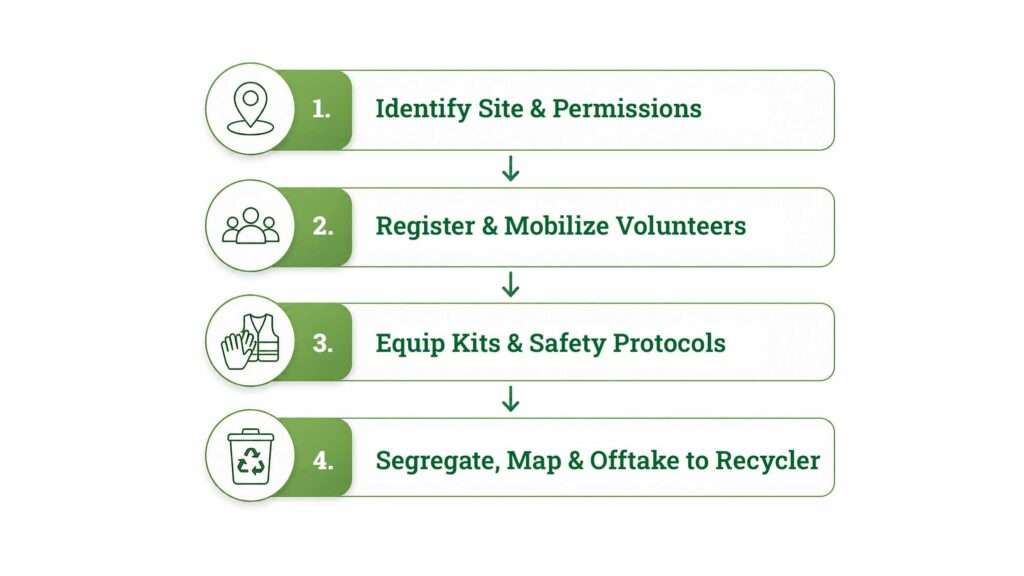
1. Identify and Survey the Cleanup Site
Choose a public space that needs some work, like a polluted riverbank, a beach, a public park or an urban neighbourhood. Do a preliminary site survey to assess terrain safety, estimate waste volume, and assess access points.
2. Secure Municipal Permits and Local Approvals
Contact local city councils or municipal authorities to get required permits for a international world clean up day public event. Ask the local government to take away large bins of trash at the end of the drive.
3. Register Your Event on the Global Platform
Register your international world clean up day event in the official Let’s Do It World portal or on local national clean-up networks. Registration ensures that local volunteers, corporate teams and community members are able to discover and participate in your initiative.
4. Gather Essential Equipment and Safety Gear
Enabling volunteers to wear hard-wearing work gloves and high-visibility vests, supply them with reusable or recycled waste collection bags, trash pickers and clean drinking water stations to keep them safe and hydrated.
5. Brief Volunteers on Safety and Waste Segregation
Conduct a quick safety briefing before beginning work. Teach participants how to manage sharp objects, stay away from hazardous materials and collect waste separately and categorise it as recyclables, organic waste and residual trash.
6. Map the Littered Area Using Digital Tools
Incentivize volunteers to report litter hotspots via waste mapping applications. Geospatial data on plastic waste can be used to locate those areas where illegal plastic waste is being dumped and can help the municipal planners and the environmental researchers in optimizing collection routes.
7. Coordinate Offtake with Authorized Recyclers
Cooperate with local waste management service providers or registered recycling facilities to pick up sorted waste. Collect plastics, glass and metals that are recyclable and not disposed of in municipal landfills, but rather treated at a recycling plant.
8. Report Final Cleanup Metrics
Reported to the national coordinators the weight of waste streams collected, the number of volunteers present and site location data for the movement, to contribute to the global movement reporting.
Why Cleanups Alone Don’t Solve Plastic Waste in India
Clean world day efforts are significant for raising public awareness and removing immediate litter from sensitive ecosystems and habitats, but are not a solution for the plastic pollution problem on their own. Every year, India produces millions of tonnes of plastic waste. Much of it goes uncollected in formal systems because waste segregation at the source is not adequate and cities’ waste collection systems are already stretched thin.
Plastic waste that is discarded in aquatic systems or municipal landfills become harmful micro-plastics and pick up environmental pollutants. In addition, the high-value plastics such as PET bottles are recovered by the informal waste sector (mainly waste pickers) while flexible multi-layer packaging and low value polyolefins are not.
Clean-ups are a short term emergency measure. A long-term solution is to connect the dots between waste collection and industrial recycling. The best results of any cleanup activity relies on the quality of waste separation – if recovered plastics are contaminated with a lot of organic waste, are contaminated or mixed in with other plastics, these can still be disposed of in landfills even after being cleaned.
From Cleanup to Circularity: How Banyan Nation Closes the Loop
In Banyan Nation, we strive to make waste recovery a closed loop process. The collection of plastic waste from streets and from the natural environment is just the beginning of the path towards sustainability; the next step involves recycling the collected material into high purity industrial raw materials.
We use the digitally traceable collection supply chain and scientific decontamination technologies to turn post-consumer polyolefins (HDPE and PP) into Better Plastic™, our range of near-virgin quality PCR resins.
Our recycled granules provide consistent melting characteristics, high tensile strength and odorless quality, and can be dropped easily into the existing high-speed blow-moulding and injection-moulding production lines. This enables major brands from FMCG and automotive sectors to meet their Extended Producer Responsibility (EPR) requirements, reduce scope 3 GHG and recycle plastic during drives into circular products.
FAQ's
Is World Cleanup Day the same as International Cleanup Day?
Yes, world cleanup day is often referred to interchangeably as International Cleanup Day or Global Cleanup Day. It represents the unified global event coordinated by Let’s Do It World and recognized by the United Nations on September 20.
Who started World Cleanup Day?
The movement was started in Estonia in 2008 by the “Let’s Do It!” civic organization, where 50,000 citizens came together to clean up countrywide waste in five hours.
Is World Cleanup Day an official UN day?
Yes. On December 8, 2023, the United Nations General Assembly officially adopted resolution 78/122, designating September 20 as an official UN observance on the annual international calendar.
How can companies in India participate in World Cleanup Day 2026?
Companies can participate by organizing employee volunteering drives, sponsoring cleanup equipment for local non-profits, mapping corporate supply chain waste, and integrating post-consumer recycled (PCR) plastics into their packaging to support circularity.
What should I do with the plastic collected during a cleanup?
Collected plastic should be sorted at the site by polymer type (such as PET, HDPE, and PP). Clean, segregated recyclables should be handed over to authorized recycling partners or re-processors to ensure they are recycled into new secondary materials rather than dumped in landfills.
Making recycled packaging the norm.
CITATIONS:
- United Nations General Assembly. (2023). Resolution 78/122: World Cleanup Day Observance (A/RES/78/122).
- UN-Habitat & United Nations Environment Programme (UNEP). (2026). Global Observance of World Cleanup Day: Advancing Circular Economy in Urban Waste Systems.
- Let’s Do It World (LDIW) Annual Report. Global Civic Action Impact Metrics and Waste Mapping Data Analysis.
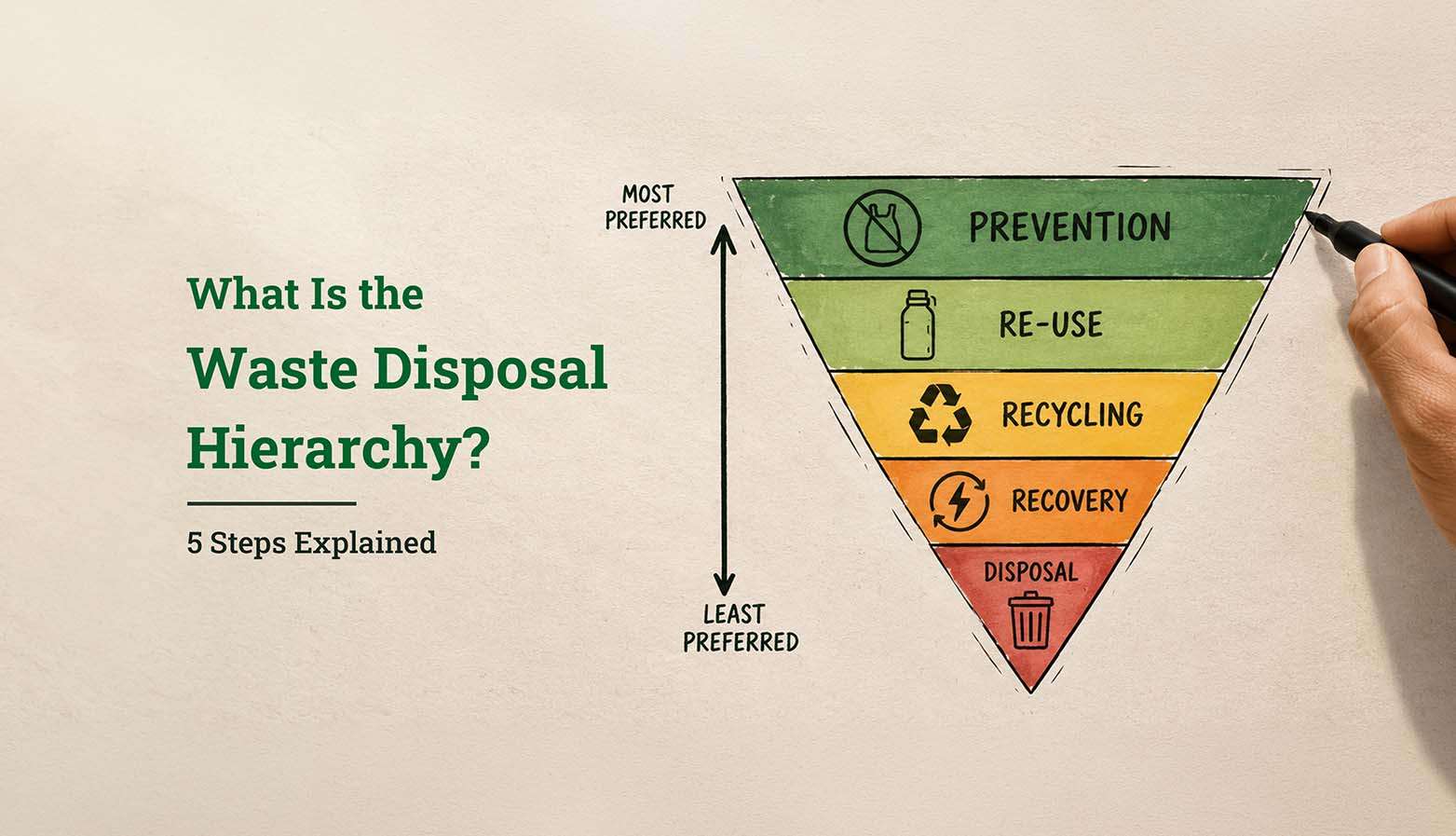
 What Is the Waste Disposal Hierarchy? 5 Steps Explained
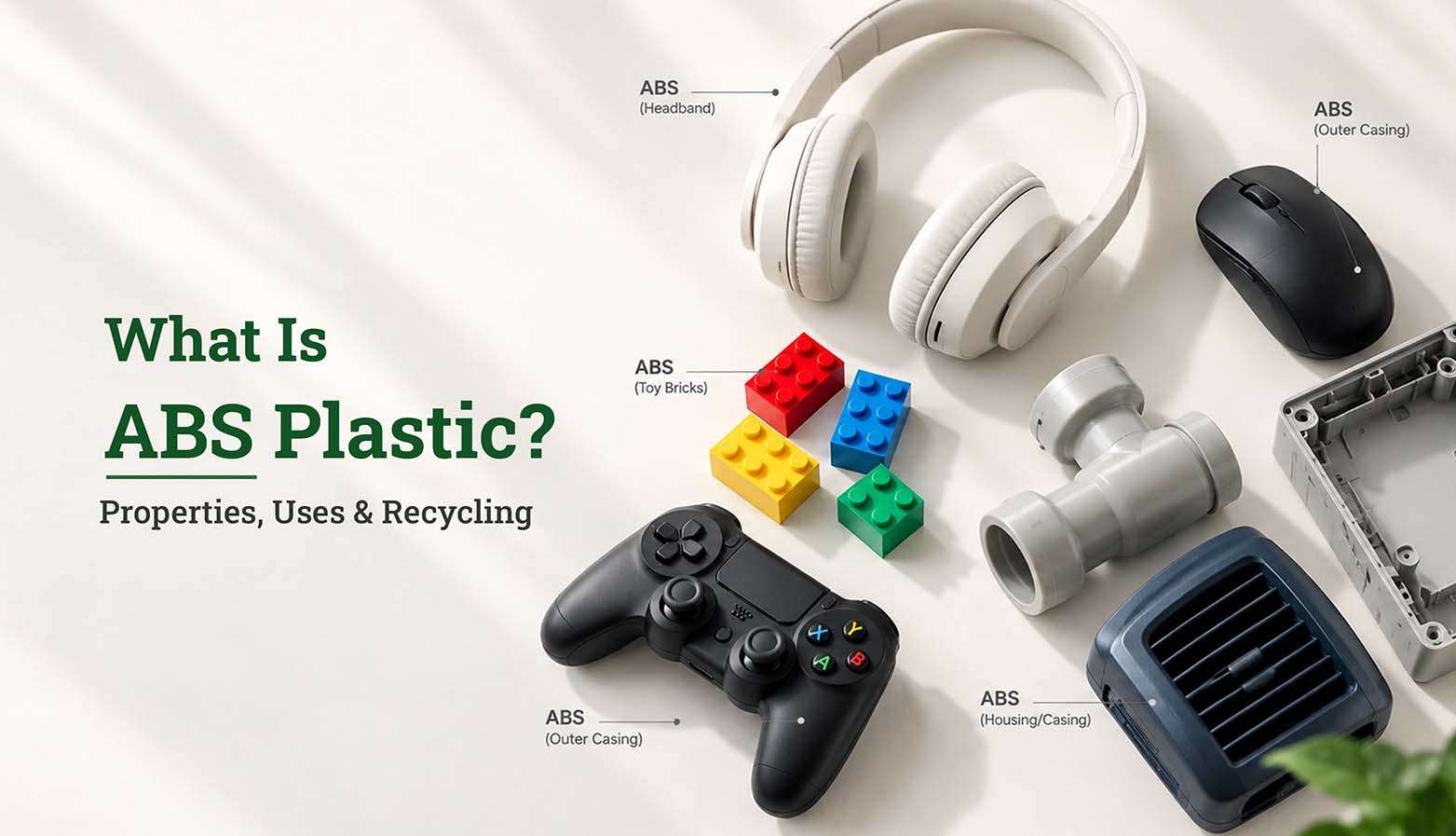
 What Is ABS Plastic? Properties, Uses & Recycling
 International E-Waste Day 2026: What It Means and How to Take Part
 What is Waste Disposal: Methods, Types, and Real-World Examples
 What Is Polyolefin? Types, Properties, Uses and Recyclability