Today, when critical resources are becoming scarce and global climate requirements are becoming more demanding, it is no longer a basic corporate decision to establish a formalized system for recycling plastic waste, but an absolute macro-economic necessity. Our dependence on the extraction of raw fossil fuels is enormous, moving millions of tons of synthetic polymers through global manufacturing systems each and every day, and causing enormous climate risks. Standard consumer packaging is designed for many years to come, but is often thrown away after just one functional use, creating a mismatch between the product and the environment, which has a significant impact on municipal infrastructure and endangers the health of natural ecosystems. The modern industrial landscape has developed a multi-staged plastic recycling process, which transforms plastic waste into high quality raw materials, in order to prevent this loss of resources. If they can learn recycling plastic waste in a systematic, high-purity process, they will be able to uncouple industrial growth from the use of finite and crude-oil-based resources. As international carbon tax rules strengthen and Extended Producer Responsibility (EPR) regulations come into effect, which will introduce more severe penalties on linear business practices, mastering the technical aspects of mechanical and chemical material processing is an essential requirement for brands to futureproof their supply chains. By moving from landfills to closed-loop material recovery, progressive businesses can effectively reduce their Scope 3 (indirect) GHGs, reduce important planetary biodiversity and create an economically sustainable circular production system.
What is Plastic Waste Recycling and How Does It Work?
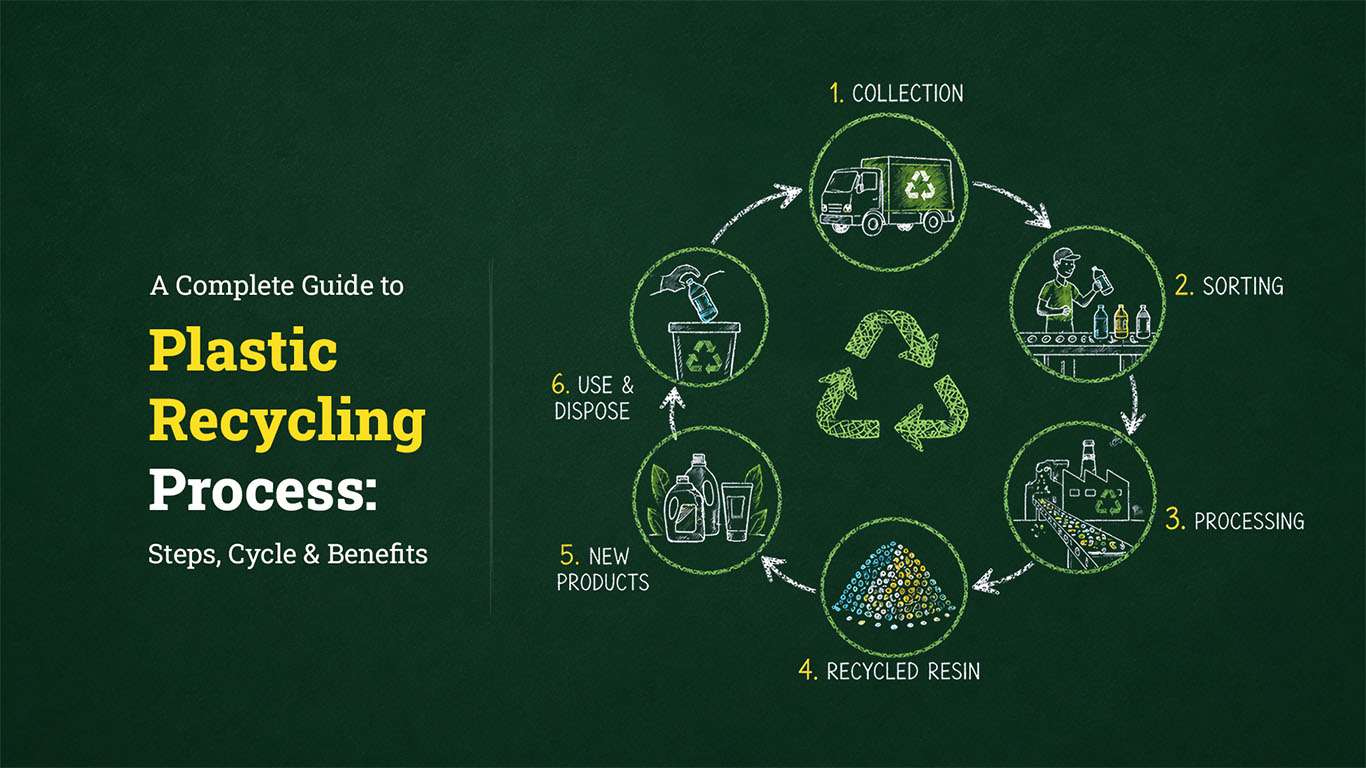
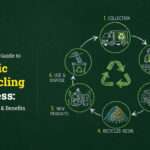
Recycling plastic waste is an industrial process, and it demands new thinking beyond merely collecting plastic waste at the curb. The main principle of plastic recycling is to gather the polymers that have been used in products and, after removing any structural contaminants, to mechanically reform them into uniform raw pellets. The stages of plastic recycling of are broadly as follows:
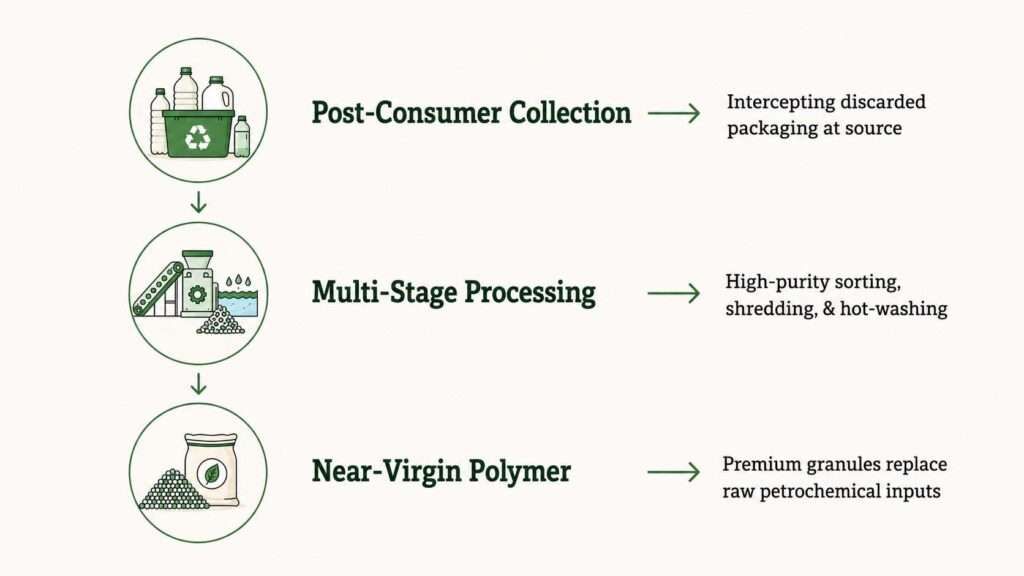
This recovery plan has two main approaches:
- Mechanical Recycling: The most common approach, in which plastics are sorted, washed, shredded and extruded under heat without changing the basic molecular chains.
- Chemical Recycling (Advanced Recycling): A new process that involves using thermal or chemical reactors to recycle hard-to-recycle polymers back to their starting polymers (monomers) so that they can be used again to make complex plastics.
The 6 Essential Plastic Recycling Steps
So, let’s look at how plastic is recycled. The average plastic recycling steps can be summarized and broken down into the following 6 essential steps:
Making a dirty, brittle waste package into a food-safe or industrial-grade resin, requires a well-controlled series of steps. By skipping one step in the plastic recycling steps at a time, it is possible to render these batches extremely contaminated and cause mechanical problems later in the process. Let’s look at the plastic recycling process step by step.
Step 1: Collection and Traceability (Supply Chain Integration)
The first plastic recycling steps in the plastic recycling process sequence is to collect the raw plastic waste from households, businesses and from informal waste collection sites. In current circular models, collection needs to be accompanied by full digital traceability, which will allow to check the origin of the material, and ensure compliance with stringent environmental standards.
Step 2: Sorting and Categorization (Resin and Color Sorting)
The mixed materials are then directed to high capacity recovery sites once consolidated. Since mixing the different chemical resins imbrutos the value of the batch, the advanced plants use near-infrared (NIR) optical sensors which sort the products according to the resin code and color profile.
Step 3: Shredding and Size Reduction
The separated plastics are fed into high impact shredding machines after careful separation. This machine can cut into the small uniform Plastic flakes, which maximizes the surface area for deep cleaning and facilitates material transport, from large bottles, containers and industrial scraps.
Step 4: Washing and Decontamination (Proprietary Cleaning)
The plastic flakes are then washed under high intensity to remove any traces of product, adhesive labels, dirt and organic impurities in the plastic. During this step in the plastic recycling process, it is critical that the temperature is controlled and alkaline chemical washes are used to remove micro-sized contaminants that may be stuck to the plastic surface’s surface.
Step 5: Melting and Pelletizing (Extrusion of PCR Resins)
The polymer flakes are taken into a completely cleaned and dried condition directly into a thermal Plastic extruder. The material is then brought to its exact melting point, passed through fine filtering screens to remove any small particles, and cut into small uniform Post-Consumer Recycled (PCR) granules.
Step 6: Manufacturing New Products (Closing the Loop)
These high purity pellets are sold back to consumer goods brands and large manufacturing facilities in the last part of the plastic recycling stages. These companies then recycle the pellets again, and melt them into new bottles, electronic cases, or building components.
The Plastic Recycling Cycle: How to Recycle Plastic
In order to optimize material recovery, along the entire global supply chain, the mechanism of how to recycle plastic needs to be understood. This ongoing cycle of how to recycle plastic means that when a product reaches the end of its use, it is immediately diverted from landfills, and returned to the processing system.
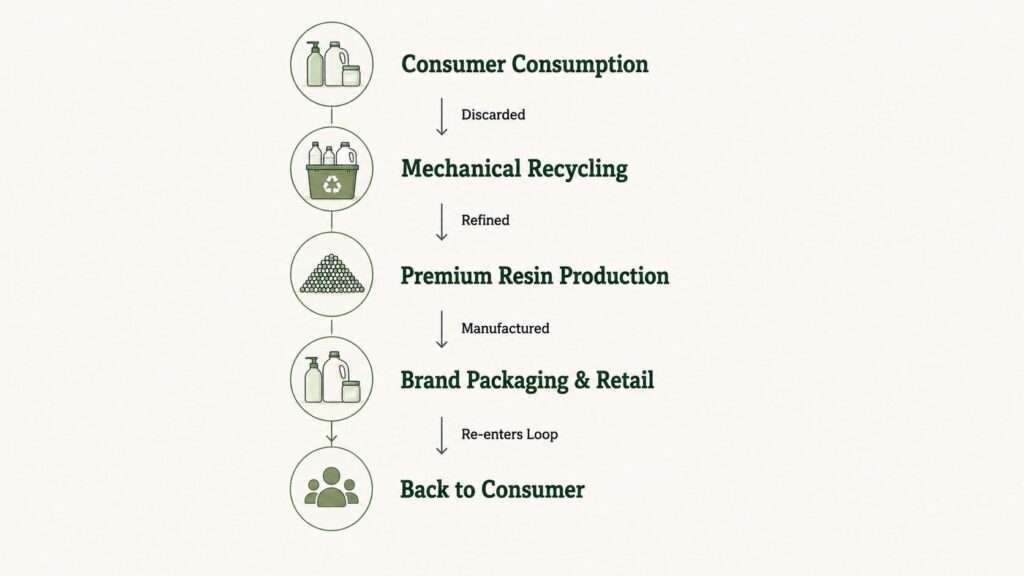
Plastic recycling process steps require that each consumer’s practice fits easily into the municipal plastic sorting systems. Everyday users help processing facilities work more efficiently by ensuring that they empty and rinse containers before placing them in dedicated dry-waste containers.
How to Reuse Plastic vs. How to Recycle It
Learning about how plastic is recycled reveals large-scale solutions of industry, but learning about how to reuse plastic offers a fast approach to prolong the life of a product before it has even reached a recycling plant.
- How to Reuse Plastic: Refills a rigid detergent jug multiple times or uses a shipping crate as a storage container (NO chemical alteration).
- How Plastic is Recycled: Recycling processes involve severely shredding and melting the plastic, returning the polymer to the raw feedstock, for a new product.
Common Types of Recyclable Plastics (Resin Codes Explained)
Synthetic polymers do not all exhibit the same thermal response. Plastic waste recycled must be carefully sorted by the official Resin Identification Codes (RIC) in order to operate an effective plastic waste recycling process.
Resin Code | Chemical Designation | Common Uses | Recyclability Status |
RIC 1 | Polyethylene Terephthalate (PET) | Water bottles, soda packaging | Highly Recyclable: High market demand |
RIC 2 | Milk jugs, shampoo containers | Highly Recyclable: Excellent physical stability | |
RIC 4 | Squeeze bottles, shrink wraps | Moderately Recyclable: Requires specialized lines | |
RIC 5 | Yogurt tubs, car parts, caps | Highly Recyclable: Rapidly expanding capacity |
What Are the Key Benefits of Recycling Plastic?
Scaled, technology-enabled polymer recovery brings significant ecosystem and business benefits of recycling plastic that can be exploited directly. These benefits of recycling plastic demonstrate that a circular economy can have a positive impact on business performance.
Benefits of recycling plastic include:
- Significant Energy Saving: Production with PCR granules, which are recycled, can save up to 80% of electrical energy compared to refinery production of fresh crude oil.
- The circular economy of plastics: For every ton of post-consumer plastic recovered we save on our long-term dependence on fossil fuel extraction for plastics production.
- Landfill Divergence: Light, bulky packaging waste prevents millions of tons of non-biodegradable waste from filling up the limited land space in municipalities.
Overcoming Challenges in the Plastic Recycling Process
The historical purity gap is the major technical obstacle that has been obstructing global plastic recycling procedure and initiatives. The post-consumer waste streams are dominated by food residue, multi-layered films and toxic additives which can easily contaminate standard recycling batches. This is where our model at Banyan Nation comes in.
Combined with an all-inclusive, digital collection platform and state of the art mechanical hot washing and scientific decontamination, we have re-engineered the traditional polymer recovery loop. Our proprietary technology can take post-consumer polyolefins (HDPE and PP) and transform them into a line of high-quality near-virgin quality PCR resins called Better Plastic™. Removing the odors, colors and physical limitations that have long plagued recycled plastics makes it easy for global FMCG brands to retrieve the material, and safely meet their sustainability goals, without the use of virgin petrochemicals.
FAQ's
What's the best way to recycle plastic?
The best solution on how to recycle plastic waste is to begin source separation and make sure plastics are kept dry, clean and totally separate from organic food waste at the time of disposal. This will maintain the physical quality of the product and avoid cross contamination of batches.
How efficient is the plastic recycling process?
The type of resin and sorting technology are very important factors in determining efficiency. In addition to the high purity levels of simple polymers such as PET and HDPE, the recovery rate of multi-layered waste or unsegregated waste streams is much lower, and can be achieved at high purity with modern facilities that employ near-infrared optical sorting.
How can I reduce plastic waste in my daily life?
You can make a difference by purchasing recycled material with a high post-consumer recycled content, by buying reusable products and by joining local bottle return and refill programs.
Can plastic bags be recycled?
Thin films can not be sorted in the regular municipal curbside recycling, as they tend to stretch and wrap around the rotating sorting machinery causing mechanical problems. The only way is to pick them up at designated spots and send them to separate film-recycling centres.
Making recycled packaging the norm.
CITATIONS:
- Association of Plastic Recyclers (APR). Global Mechanical Extrusion and Sorting Standards for Post-Consumer Polyolefins.
- Ministry of Environment, Forest and Climate Change. (2026). Updated National Directives for Extended Producer Responsibility (EPR) and Digital Material Tracking.
- Journal of Applied Polymer Science. Thermal Degradation Dynamics and Volatile Organic Compound Elimination in Mechanical Recycling Loops.
 How Upcycling Plastics Supports a Circular Economy
 World Nature Conservation Day 2026: Date, Theme, History & Why It Matters
 Sustainable Packaging Solutions: Materials, Benefits, and How to Make the Switch
 A Complete Guide to the Plastic Recycling Process: Steps, Cycle & Benefits
 What is a Circular Economy? Meaning, Advantages, and Key Examples