When you pick up an item labelled biodegradable, you might have felt better making a choice that doesn’t end up in landfill. But what happens to the item once you throw it into the bin?
Biodegradable plastic in simple terms is a plastic that microorganisms like bacteria, fungi, and algae can convert into water, carbon dioxide (or methane), and biomass under specific environmental conditions. Unlike products based on fossil fuels that stay in the environment for long years, biodegradable plastic is designed to degrade through natural biological processes.
Biodegradable plastic is however designed for specific environmental conditions, and the breakdown of this particle depends on the conditions such as sunlight, moisture, oxygen, and heat. These are special materials designed for particular conditions and cannot be considered as a magic material that vanishes
What Is Biodegradable Plastic and How Does It Break Down?
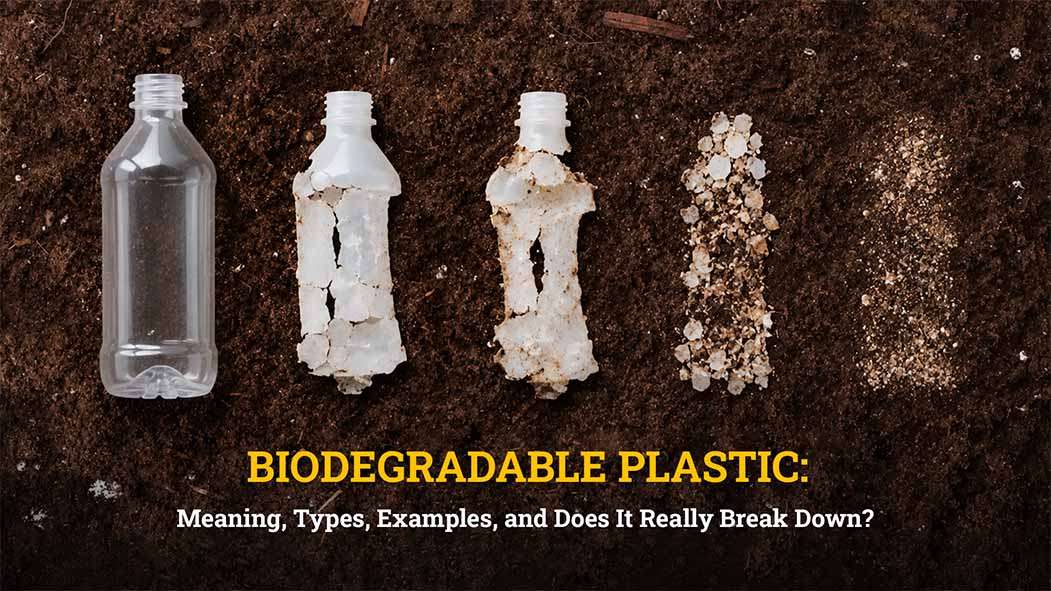
When we talk about a plastic that is biodegradable, we are referring to a material chemically engineered to degrade through biological action. This process can be split into three distinct steps:
- Fragmentation (Biodeterioration): Heat, UV light, moisture, and mechanical pressure crack the plastic’s long polymer chains into smaller fragments.
- Microbial Digestion (Bio-fragmentation): Microorganisms secrete natural enzymes that chew up these fragments into simpler organic molecules.
- Assimilation and Conversion: Microbes consume these molecules, turning them into carbon dioxide, water, and organic biomass in open environments, or methane in airless environments.
This cycle ends only when it is supported by ideal surroundings such as warmth, moisture, oxygen, and plenty of microbes. Because of this, many biodegradable plastics will not break down quickly in ocean, landfill, or an open roadside dump where those conditions don’t exist. The United Nations Environment Programme (UNEP) summarized their research around the material suggesting the many of these materials can stay nearly as long as the conventional plastics if not met with the right composting environment.
Types of Biodegradable Plastic Materials
Not all biodegradable plastic materials are created equally. They rely on different raw sources and require specific environments to break down properly.
Material | Made from | Common uses | Breaks down in: |
PLA (Polylactic Acid) | Fermented plant starches like corn or sugarcane | Food packaging, 3D printing, disposable cups | Industrial composting facilities (needs high heat and humidity) |
PHA (Polyhydroxyalkanoates) | Bacterial fermentation of sugars or lipids | Medical sutures, farm films, food wraps | Soil, freshwater, and marine environments |
PBAT (Polybutyrate Adipate Terephthalate) | Petrochemical feedstocks | Compostable trash bags, agricultural mulch | Home and industrial composting setups |
PBS (Polybutylene Succinate) | Plant-derived or synthetic succinic acid | Catering disposables, plant pots, paper coatings | Industrial composters and natural soil |
Starch Blends | Thermoplastic starch mixed with PBAT or PLA | Carry bags, food container linings | Home and industrial compost setups |
Cellulose-Based Plastics | Plant cell walls and wood pulp | Transparent films, display bags, window envelopes | Soil, fresh water, and home compost |
Biodegradable Polymers: Natural vs. Synthetic Examples
Plastics are built from long chains of molecules called polymers. So, what are biodegradable polymers? They are designed with chemical bonds which can be split using natural enzymes. When we talk about a plastic that is biodegradable, we are referring to a material chemically engineered to degrade through biological action.
Biodegradable polymers examples generally fall into two categories:
- Natural Biodegradable Polymers:
- Starch
- Cellulose
- Chitosan
- Natural proteins (like gelatin or soy)
- Polyhydroxyalkanoates (PHA)
- Synthetic Biodegradable Polymers:
- Polylactic Acid (PLA)
- Polycaprolactone (PCL)
- Polybutylene Succinate (PBS)
- Polybutyrate Adipate Terephthalate (PBAT)
- Polyvinyl Alcohol (PVA)
Biodegradable Plasticware: Cutlery, Plates, Cups, and Straws
Following the national ban on single-use plastics in July 2022 in India, traditional single-use plastic packaging was restricted. This led to an increase in biodegradable products. Many of the biodegradable plasticware you see today, like cutlery, cold cups, straws, etc. are made from PLA, sugarcane fiber or starch blends. These PLA forks and cups require an industrial composting facility operating above 55°C (131°F) to degrade. This is impossible to execute in typical home compost or landfill. Under current rules, only certified biodegradable or compostable items meeting strict IS/ISO standards are permitted as alternatives.
Biodegradable Bags: What Are They Made Of, and Are They Better?
Most flexible biodegradable bags are made from polymer blends like PBAT combined with cornstarch or PLA.
There must be a clear differentiation on true biodegradable from oxo-degradable options. Oxo-degradable plastics are made of standard fossil fuel mixed with chemical additives which helps them to fragment quickly when exposed to sunlight. This means that they break down into microplastics instead of truly degrading into organic material.
Pros | Cons |
Leaves no toxic microplastics behind when fully composted | Needs specialized, high-heat composting to break down efficiently |
Made partly or fully from renewable plant materials | Costs more to manufacture than standard polyethylene bags |
Helps keep organic waste out of landfills when processed properly | Can ruin batches of regular plastic if mixed into recycling bins |
Biodegradable Plastic Bags in India: Rules and Certification
Under the Plastic Waste Management Rules 2024 Amendment, regulations on biodegradable plastics are clearly mentioned. According to this guidance, a material can only be considered biodegradable if it is 100% degraded in the targeted environments without leaving behind toxic chemicals or microplastics.
Manufactures should get official certification and approval from the Central Pollution Control Board- CPCB to sell products legally. Details such as the manufacturer’s name, license number, and disposal strategy must be mentioned on the packaging. Businesses and consumers can verify the legitimacy of the product by checking the CPCB’s official list of vendors who are certified.
Biodegradable Plastic Packaging: Benefits and Limitations
There are enough benefits and some limitations while considering a switch to biodegradable
- Benefits:
- Long-term after-effects of conventional plastics can be avoided when sent to proper composting setups.
- High dependency on fossil fuel can be reduced while using alternative plant feedstocks like corn or sugarcane.
- Composting becomes easier for contaminated packaging with organic food waste in the right environment
- Limitations:
- Without specific temperature, humidity, and microbial conditions, decomposition is a challenge
- Standard recycling streams get contaminated if they are thrown into regular plastic bins.
- This costs more to produce than traditional packaging materials.
- Composting centers designed specifically for this are limited in the country.
Biodegradable vs. Compostable vs. Recycled Plastic: What’s the Difference?
Feature | Biodegradable Plastic | Compostable Plastic | Recycled Plastic |
Meaning | Breaks down via microbes into natural elements over an unspecified amount of time. | Breaks down into non-toxic biomass, water, and CO2 within a set timeframe under compost conditions. | Made by melting and processing post-consumer or industrial plastic into clean usable resin. |
Where It Goes | Industrial compost facilities, specialized systems, or home compost. | Commercial or home composting setups. | Mechanical recycling plants, sorting facilities, and wash lines. |
India’s Infrastructure | Developing; requires specialized collection and sorting. | Limited; relies heavily on dedicated organic waste handling. | Well-established across formal and informal recycling networks. |
Microplastic Risk | Low when certified; higher if confused with oxo-degradable options. | Zero when processed under proper composting conditions. | Low, as polymers remain bound inside structural recycling loops. |
Best Used For | Food-soiled packaging, agricultural films, organic waste liners. | Single-use food disposables, bio-waste collection bags. | Durable packaging, personal care bottles, containers, crates. |
Banyan Nation’s Role in Keeping Plastic in a Circular Loop
Biodegradable plastic can be considered a capable alternative to conventional plastics when supported with a proper composting setup. While it remains an alternative, mechanical recycling is considered one of the most efficient, scalable ways to manage rigid packaging. Banyan Nation works to support this circular economy in India by taking post-consumer plastic waste and transforming it into high-quality recycled resins.
By repurposing plastic to recycled granules that match virgin plastic performance, Banyan Nation stands as a practical partner to biodegradable products supporting the initiative.
Together, these complementary solutions help brands meet Extended Producer Responsibility (EPR) requirements and build a more sustainable packaging ecosystem.
FAQ's
What is biodegradable plastic made of?
It is made either from plant sources (like cornstarch, sugarcane, and cellulose) or synthetic petrochemicals engineered with bonds that natural microbes can consume.
What are common biodegradable plastic examples?
Everyday biodegradable plastic examples include PLA coffee cups, PBAT shopping bags, PHA medical sutures, starch-blend takeaway containers, and cellulose food wraps.
How long does biodegradable plastic take to decompose?
It varies dramatically. In an industrial composter with high heat, it can break down in 90 to 180 days. In a cold landfill or ocean, that same item could take years or decades.
Are biodegradable bags allowed in India?
Yes, provided they comply with the Plastic Waste Management Rules, carry certification from the CPCB, and leave no microplastics behind when they break down.
Is biodegradable plastic better than recycled plastic?
Neither is inherently better-they suit different applications. Biodegradables are great for single-use items heavily contaminated with food waste, whereas recycled plastic is far better for bottles and durable containers where keeping materials in a closed loop saves energy.
Can biodegradable plastic be recycled?
No. You should never put biodegradable plastic into standard recycling bins. It degrades at lower temperatures and will contaminate batches of standard plastics like PET or HDPE.
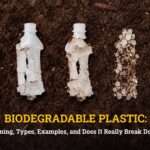 Biodegradable Plastic: Meaning, Types, Examples, and Does It Really Break Down?
 ESG Full Form: What Is Environmental, Social and Governance? Meaning, Pillars and Examples
 National Energy Conservation Day 2026: Date, Theme, History and How to Save Energy
 National Pollution Control Day 2026: Date, Theme, History and How to Take Part
 What Is Mono Material Packaging? Benefits for Recyclability