LLDPE full form is Linear Low-Density Polyethylene, it is a flexible and extremely tough thermoplastic material of the polyethylene polyolefin group and is used extensively as a packaging film, liner and molded container. LLDPE is the most versatile polymer for flexible packaging and industrial films due to its tensile strength, puncture resistance and extensibility.
The advantage of what is LLDPE over the traditional low-density polyethylene is that it is a linear polymer backbone with uniformly distributed short branches. This unique architecture of the polymer chains allows the converter to produce thinner, lighter films, known as down-gauging, and at the same time retain a rugged quality that provides protection for the film during shipping and handling. LLDPE plastic plays a vital role in the supply chain of an array of products from pallet stretch wrap to milk pouches, agriculture mulch films to rotomolded water tanks, and many more.
For brands dealing with the Extended Producer Responsibility (EPR) and circular packaging regulations, it is crucial to understand the meaning of LLDPE in plastic, the processes behind the production of LLDPE resin grades, and how post-consumer flexible films are recovered. Banyan Nation provides a detailed breakdown of all you need to know about the characteristics of LLDPE materials, their uses and recycling options.
What Is LLDPE and How Is It Made?
It is beneficial to examine the polymerization chemistry of LLDPE in order to better understand what it is at the molecular level rather than just what LLDPE full form is. LLDPE is produced from ethylene monomers (C2H4) and a controlled amount of higher alpha-olefin comonomers, typically 1-butene, 1-hexene or 1-octene, in low-pressure gas-phase or solution reaction systems, using Ziegler-Natta or metallocene catalysts.
This is a catalytic reaction which forms a straight, linear hydrocarbon chain with short uniform side branches instead of the long irregular branches as with conventional LDPE. This linear structure allows LLDPE to deform easily when subjected to stress and keeps its polymer chains from separating, thereby providing LLDPE with a higher strength, toughness, and extensibility than LDPE at the same density.
Based on the comonomer and catalyst system employed, manufacturers provide four main grades of LLDPE resin:
- C4-LLDPE (Butene grade): Low cost general purpose resin used in trash bags and daily liners.
- C6-LLDPE (Hexene grade): Good toughness and tear resistance for heavy duty shipping sacks.
- C8-LLDPE (Octene grade): Excellent impact and puncture strength requirements in demanding industrial films.
- mLLDPE (Metallocene LLDPE): Ultra-uniform molecular weight distribution to provide optimum clarity, seal strength and ability to down-gauge.
Key Properties of LLDPE Plastic
The combination of the balanced mechanical toughness and flexibility along with chemical stability of LLDPE plastic makes it the commercial leader. The table below is a summary of the key physical characteristics of the typical LLDPE plastic (to ASTM International and MatWeb Polymer Property Data):
Material Property | Typical Value or Behaviour | Practical Packaging Advantage |
Density | 0.915-0.940g/cm3 (ASTM D792) | Yield of lightweight materials; can float in water for float-sink sorting. |
Tensile Strength (at Yield) | 10-30MPa (ASTM D638) | High load-bearing capacity before permanent deformation |
Elongation at Break | $400\% – 800\%$ (ASTM D638) | Unique flexibility for pallet wrapping that won’t snap, crack or tear. |
Puncture & Impact Resistance | High (Dart Drop >100-500+g) | Tolerant against sharp corners, rough transportation and heavy loads |
Flexibility | High across $-70^\circ\text{C}$ to $+80^\circ\text{C}$ | Maintains flexibility when stored in deep-freeze and cold chain |
Chemical Resistance | Resistant to dilute acids, alkalis, and alcohols | Suitable for liquid pouches, agri-chemicals and drum liners. |
Environmental Stress-Crack Resistance (ESCR) | Very High (>1,000hours) | Resists splitting when tension or chemicals are applied over long periods of time |
Heat-Sealing & Clarity | Broad heat-seal window; moderate-to-high clarity (highest in mLLDPE) | Designs dependable, leak-free seals on fast packaging lines |
LLDPE vs LDPE vs HDPE: What’s the Difference?
All three resins are members of the polyethylene polyolefin family, but the density of their resins, stiffness and end-use applications are determined by the differences in their chain branching:
Feature | LLDPE | LDPE | HDPE |
Full Form | Linear Low-Density Polyethylene | Low-Density Polyethylene | |
Density | 0.915-0.940g/cm3 | 0.910-0.925g/cm3 | 0.941-0.965g/cm3 |
Molecular Structure | Linear backbone with uniform short branches | Highly branched with long, irregular side chains | Linear backbone with minimal branching; tightly packed |
Strength & Toughness | High tensile, tear, and puncture resistance | Moderate strength; softer feel | Highest rigidity, stiffness, and tensile strength |
Flexibility | Very flexible and highly stretchable | Highly flexible with superior optical clarity | Rigid and semi-flexible |
Primary Processing | Blown/cast film extrusion, rotomolding | Blown film extrusion, injection molding | Blow molding, injection molding, pipe extrusion |
Typical Products | Stretch wrap, heavy-duty sacks, milk pouches | Bread bags, squeeze bottles, bubble wrap | Milk jugs, detergent bottles, water pipes |
LLDPE Granules and Resin Grades Explained
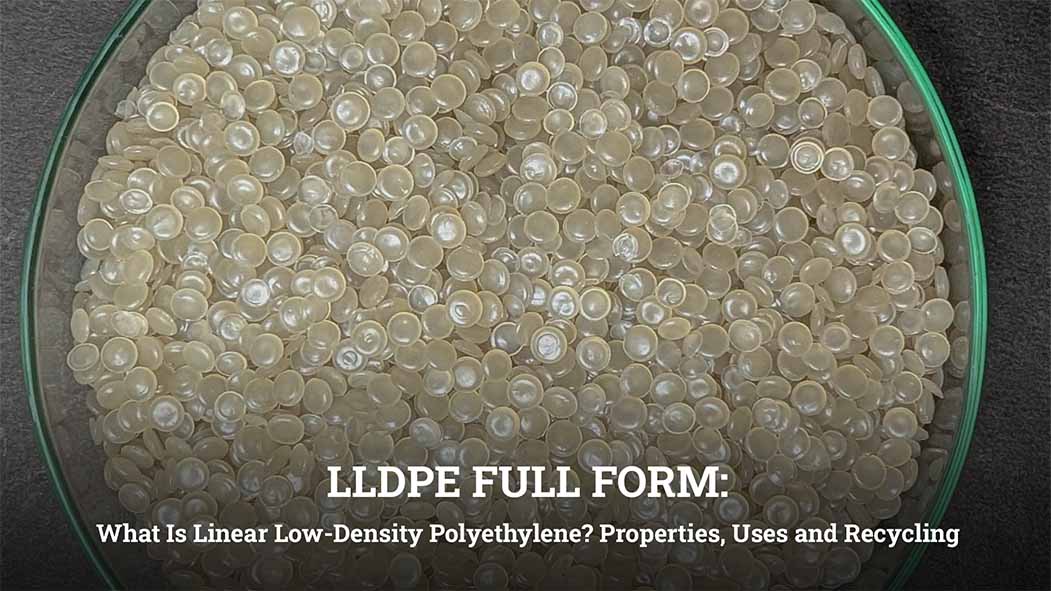
In commercial manufacturing, the LLDPE granules are small, uniform cylindrical or spherical plastic pellets which are delivered to the converter as the raw feedstock for thermal processing. Convertors do not purchase one polymer, but rather choose LLDPE granules that meet two important specifications, namely density (which determines the stiffness and barrier properties) and Melt Flow Index (MFI) (which measures the melt viscosity):
- Film Extrusion Grades (Low MFI: 0.5-3.0g/10min): High melt strength needed for blown film bubbles and high speed cast stretch film lines.
- Rotomolding Grades (Medium MFI: 3.0-8.0g/10min): A range of flowability which will coat the heated hollow molds evenly without sagging.
- Injection Molding Grades (High MFI: 15-50+g/10min): Low viscosity – suitable for fast injection of thin wall lids/closures.
Virgin granules are made from fossil ethylene but post-consumer recycled LLDPE granules are made by washing, melting and filtering used flexible films, reducing carbon emissions for brands. Check out Circular Feedstock Options on Banyan Nation’s Plastic Granules page.
LLDPE Film: Types and Packaging Applications
More than 70% of all the LLDPE material is used for flexible film. There are 6 main converter packaging applications that use LLDPE film:
- Stretch and Cling Film: Selected for extreme elongation (up to 300%+) and puncture resistance to ensure that loads in the warehouse are tightly secured when they are palletized.
- Collation Shrink Film: Tough and tear resistant, splits in heat tunnels and is used to bundle beverage multipacks and canned products.
- Industrial Drum and Box Liners: Of high environmental stress-crack resistance (ESCR) and chemical inertness for lining bulk containers.
- Food and Milk Pouches: Provides high and leakproof sealing capability at high temperatures and flexibility at low temperatures to prevent bursting during milk transportation.
- Agricultural and Mulch Film: Provides UV stabilized toughness and soil puncture resistance for greenhouse covers and crop beds.
- Mono-Material Laminates: Composed of oriented polyethylene (MDO-PE) for the tough inner sealing layer of recyclable stand-up pouches.
Common LLDPE Products and Uses Beyond Film
LLDPE products are used in a wide range of structural and industrial applications in various industries besides flexible packaging:
- Rotomolded Water Tanks & Chemical Bins: Residential construction, and agriculture uses seamless, impact resistant storage tanks.
- Flexible Pipes and Drip Irrigation Tubing: Used in agriculture and in municipal plumbing because they are highly stress crack resistant and bendable.
- Wire and Cable Jacketing: Selected for electrical and telecom applications for dielectric insulation and low-temperature flexibility.
- Chemical Resistant Film: Used in civil engineering, mining and landfill containment to form a leak-proof barrier to chemicals.
- Lids, Closures, and Squeeze Containers: For FMCG and food packaging applications where flexible snapfit lids do not crack.
- Outdoor Playground Equipment and Toys: Shaped into sturdy, weatherproof products.
Is LLDPE Recyclable? Recycling Code and Process
LLDPE can be mechanically recycled. LLDPE is compatible with LDPE, sharing Resin Code #4, because of its similar melting points and densities that enable it to be reprocessed with LDPE in recycled polyethylene (rPE) streams.
Step-by-Step LLDPE Recycling Process:
- Collection & Aggregation: Film offcuts and flexible wrappers are collected from post-industrial film offcuts and dry-waste / post-consumer flexible wrappers.
- Sorting: Automated Near-InfraRed (NIR) optical sorters remove polyethylene films from mixtures of polypropylene (PP), PET and PVC.
- Shredding & Friction Washing: Films are cut into flakes and washed in hot wash friction lines which remove dirt, food and labels.
- Drying & Agglomeration: Washed film flakes are mechanically dried and agglomerated to assure easy feeding into extruders.
- Melt Filtration & Pelletisation: The polymer is melted and passed through a fine mesh screen changer to remove micro-contaminants, degassed under vacuum, and finally cut into uniform recycled LLDPE resin granules.
Food/soil contamination, heavy surface printing inks, and non-recyclable multilayer laminates (PE laminated with PET or Aluminium foil) are the challenges in recycling post-consumer flexible films in India. The brands, however, are subject to the strict collection and recycled content standards for flexible packaging under the Plastic Waste Management Rules and Extended Producer Responsibility (EPR) in India. Find out more about types of plastic recycling and polyolefin materials in our guides.
Banyan Nation’s Role in Recycling Flexible Polyethylene Packaging
To close the loop on flexible packaging, advanced decontamination and intensive quality controls are needed to ensure the recycled resins are able to effectively and reliably run on high-speed extrusion lines. Banyan Nation is one of India’s early vertical plastic recyclers that recycles post-consumer polyethylene like rigid containers, flexible packaging streams, converts them into consistent and traceable recycled granules & resins (Better Plastic™).
With data driven collection networks, proprietary cleaning systems and precision compounding, Banyan Nation allows consumer brands to use verified material traceability to replace virgin fossil plastics, to reduce carbon emissions upstream, and to meet statutory Extended Producer Responsibility (EPR) obligations. Dive into our circular solutions from flexible packaging recycling, recycled plastic granules, and recycled polyethylene (rPE) resins.
FAQ's
What is the full form of LLDPE in plastic?
The LLDPE full form in plastic is Linear Low-Density Polyethylene. It is a flexible, tough thermoplastic copolymer from the polyolefin family widely used to manufacture stretch films, pouches, liners, and rotomolded containers.
What is the difference between LDPE and LLDPE?
Carbon credits are issued by various independent standard-setting bodies and
LDPE (Low-Density Polyethylene) has a heavily branched molecular structure with long, irregular side chains, giving it high optical clarity and softness. LLDPE has a linear backbone with uniform short branches, giving it significantly higher tensile strength, puncture resistance, and stretchability than LDPE.
registries, such as Verra (which oversees the Verified Carbon Standard – VCS), Gold Standard, and the American Carbon Registry (ACR), among others. These bodies establish the rules and methodologies for projects to generate verifiable credits.
Is LLDPE food-safe?
Yes. Virgin food-grade LLDPE resin is BPA-free, chemically inert, and approved by global regulatory bodies (such as the US FDA and FSSAI) for direct food contact, including milk pouches, bread bags, and freezer wraps.
Which recycling code is LLDPE?
LLDPE falls under Resin Identification Code #4 (shared with LDPE). Both polymers belong to the low-density polyethylene family and can be mechanically recycled together into secondary polyethylene granules.
What are LLDPE granules used for?
LLDPE granules are melted and processed by manufacturers to extrude pallet stretch wrap, agricultural mulch films, food and dairy pouches, heavy-duty industrial liners, flexible irrigation pipes, cable insulation, and rotomolded water storage tanks.
Making recycled packaging the norm.
CITATIONS:
- Peacock, A. J. (2000). Handbook of Polyethylene: Structures, Properties, and Applications. CRC Press / Marcel Dekker.
- ASTM International. (2023). Standard Test Methods for Density (ASTM D792) and Tensile Properties of Plastics (ASTM D638). ASTM Standards.
- Ministry of Environment, Forest and Climate Change (MoEFCC), Government of India. (2022). Plastic Waste Management (Amendment) Rules & Guidelines on Extended Producer Responsibility (EPR) for Plastic Packaging. Gazette of India.
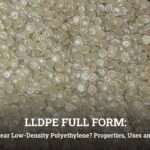 LLDPE Full Form: What Is Linear Low-Density Polyethylene? Properties, Uses and Recycling
 Biodegradable Plastic: Meaning, Types, Examples, and Does It Really Break Down?
 ESG Full Form: What Is Environmental, Social and Governance? Meaning, Pillars and Examples
 National Energy Conservation Day 2026: Date, Theme, History and How to Save Energy
 National Pollution Control Day 2026: Date, Theme, History and How to Take Part